

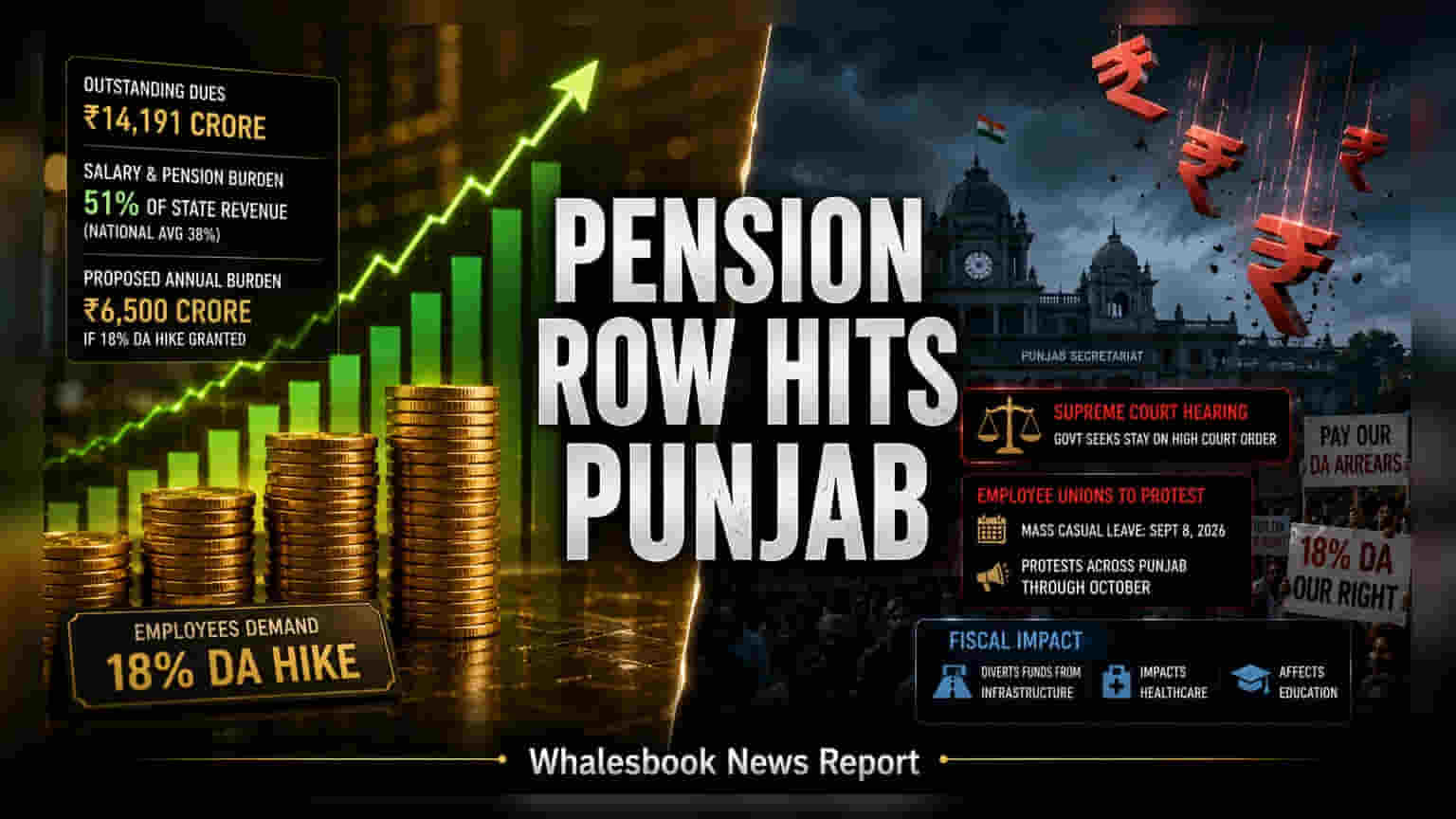
The Punjab government has moved the Supreme Court to challenge a High Court order requiring the immediate release of Rs 14,191 crore in pending Dearness Allowance (DA) arrears. With state salary and pension liabilities already consuming 51% of revenue, the administration warns that this payout is fiscally unfeasible. Meanwhile, employee unions have announced mass protests starting September 8, deepening the administrative standoff.
The Punjab government is currently locked in a critical fiscal and legal standoff with state employees over the payment of outstanding Dearness Allowance (DA) and relief arrears. The state administration has filed a Special Leave Petition in the Supreme Court, seeking to stay a Punjab and Haryana High Court order that directed the government to clear approximately Rs 14,191 crore in dues within a fortnight.
The core of the conflict lies in the state's tight financial position. State officials have stated that salary and pension obligations currently account for 51 percent of total state revenue, significantly exceeding the national average of 38 percent. Finance Minister Harpal Singh Cheema has argued that the state cannot support a mechanical increase in DA percentages. Instead, the government has proposed ensuring parity with Central government employees through a revised, overall compensation package, rather than matching specific DA hike percentages, which officials claim would place an unsustainable Rs 6,500 crore annual burden on the exchequer.
From the perspective of employee unions, the demand centers on the release of an 18 percent DA hike, which they argue is owed to them. These unions, led by the Sanjha Mulazam Manch, have rejected the government's proposal. The dispute has moved from boardrooms to the streets, with unions announcing a mass casual leave for September 8, 2026, and a series of planned protests targeting ministers and legislators throughout October. This ongoing friction threatens to disrupt administrative operations across the state.
The financial implication for the state is significant. Officials contend that complying with the High Court order would divert funds away from essential public infrastructure, healthcare, and education sectors. Additionally, the court-mandated 6 percent simple interest on delayed payments adds further pressure to the state’s financial planning.
Investors and observers are monitoring the situation closely, as the state government is already managing a heavy debt burden. With assembly elections approaching within the next six months, the outcome of the Supreme Court hearing and the government's ability to maintain essential services during the announced strikes will be the key developments to track. The legal battle in the Supreme Court and the intensity of the upcoming protests will determine the next phase of this financial and administrative challenge.