

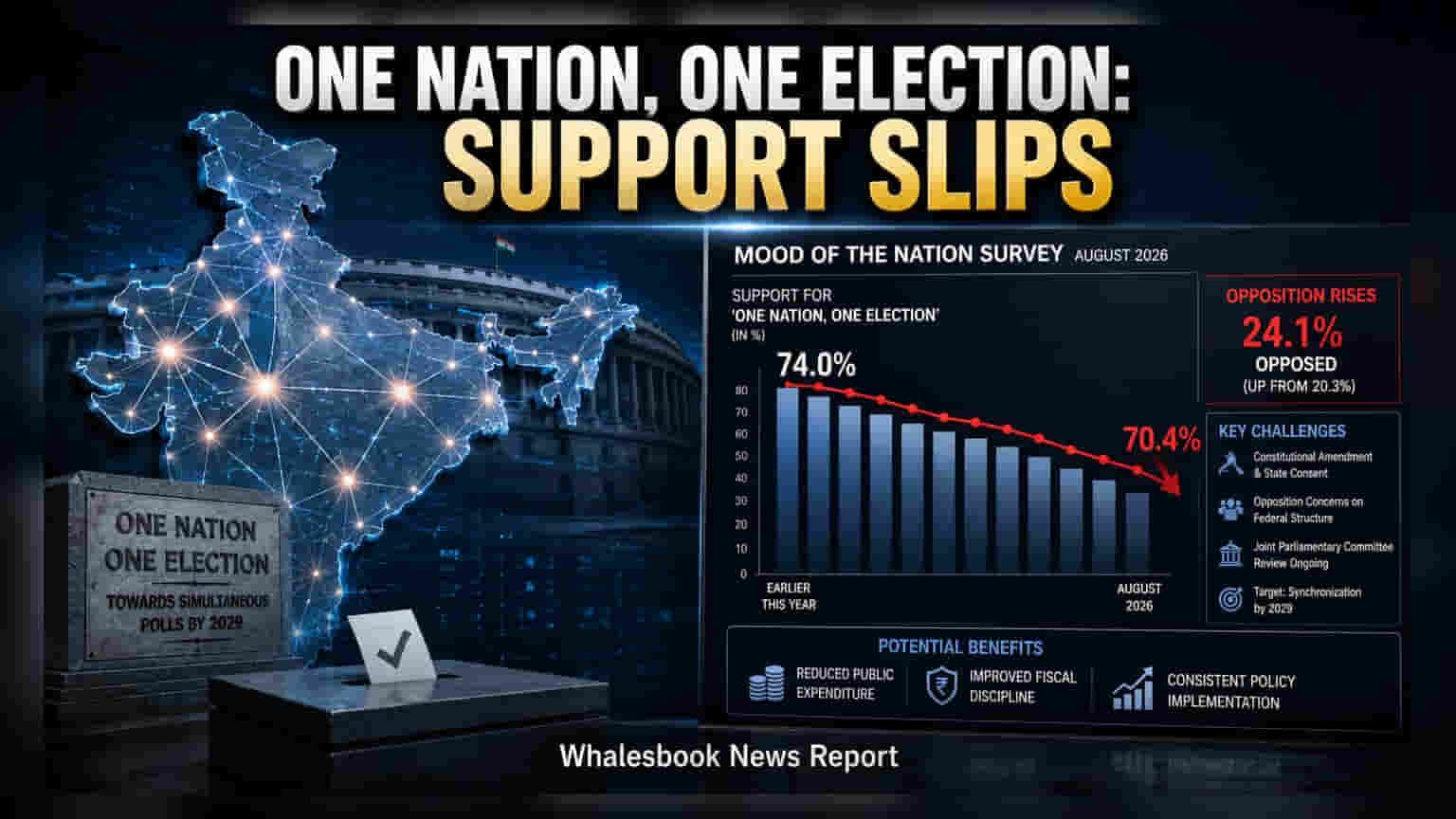
Latest survey data shows 70.4% support for simultaneous elections, down from 74% in January 2026. The government aims to synchronize Lok Sabha and state assembly polls by 2029 to reduce fiscal costs and administrative disruption. However, the proposal faces ongoing constitutional and political challenges that investors and policymakers are closely monitoring.
Public support for the initiative to synchronize Lok Sabha and state assembly elections has seen a slight decline, according to the August 2026 'Mood of the Nation' survey. The data shows 70.4% of respondents now favor the move, compared to 74% earlier this year. Despite this shift, the government remains committed to the project, which aims to bring all major electoral cycles into a single window by 2029.
The proposal, widely discussed as 'One Nation, One Election,' is designed to address the challenges of near-constant election campaigning in India. Advocates of the plan argue that frequent elections divert significant government resources and manpower, which could otherwise be directed toward public services like infrastructure, education, and healthcare. From an economic perspective, proponents suggest that aligning election cycles could reduce the overall public expenditure on polls and potentially minimize the periods of policy uncertainty that often precede elections.
However, the path to implementation faces complex hurdles. A 31-member Joint Parliamentary Committee is currently reviewing the Constitution (129th Amendment) Bill, 2024, along with related legal proposals. This process requires not only parliamentary approval but also a high degree of cooperation from state governments. Because the central government lacks the legal authority to unilaterally dissolve state assemblies to force a synchronized cycle, the success of the initiative depends on achieving a broad political consensus.
Political dissent remains a significant factor. Several opposition parties have raised concerns regarding the potential impact on India's federal structure, arguing that simultaneous polls could marginalize regional issues. These groups have pledged to oppose the legislative changes, citing constitutional concerns about the current democratic framework. The polarized nature of this discourse is reflected in the rising number of respondents expressing opposition to the plan, which has climbed to 24.1% in the latest survey.
For stakeholders and the public, the primary monitorable in the coming months will be the legislative progress within the Joint Parliamentary Committee. The government’s stated goal of achieving synchronization by 2029 relies on the necessary constitutional amendments being passed by 2028. Beyond the political debates, the economic impact—specifically the potential for improved fiscal discipline through reduced poll-related spending and more consistent policy implementation—remains a key factor that will shape the long-term benefits of this policy.