

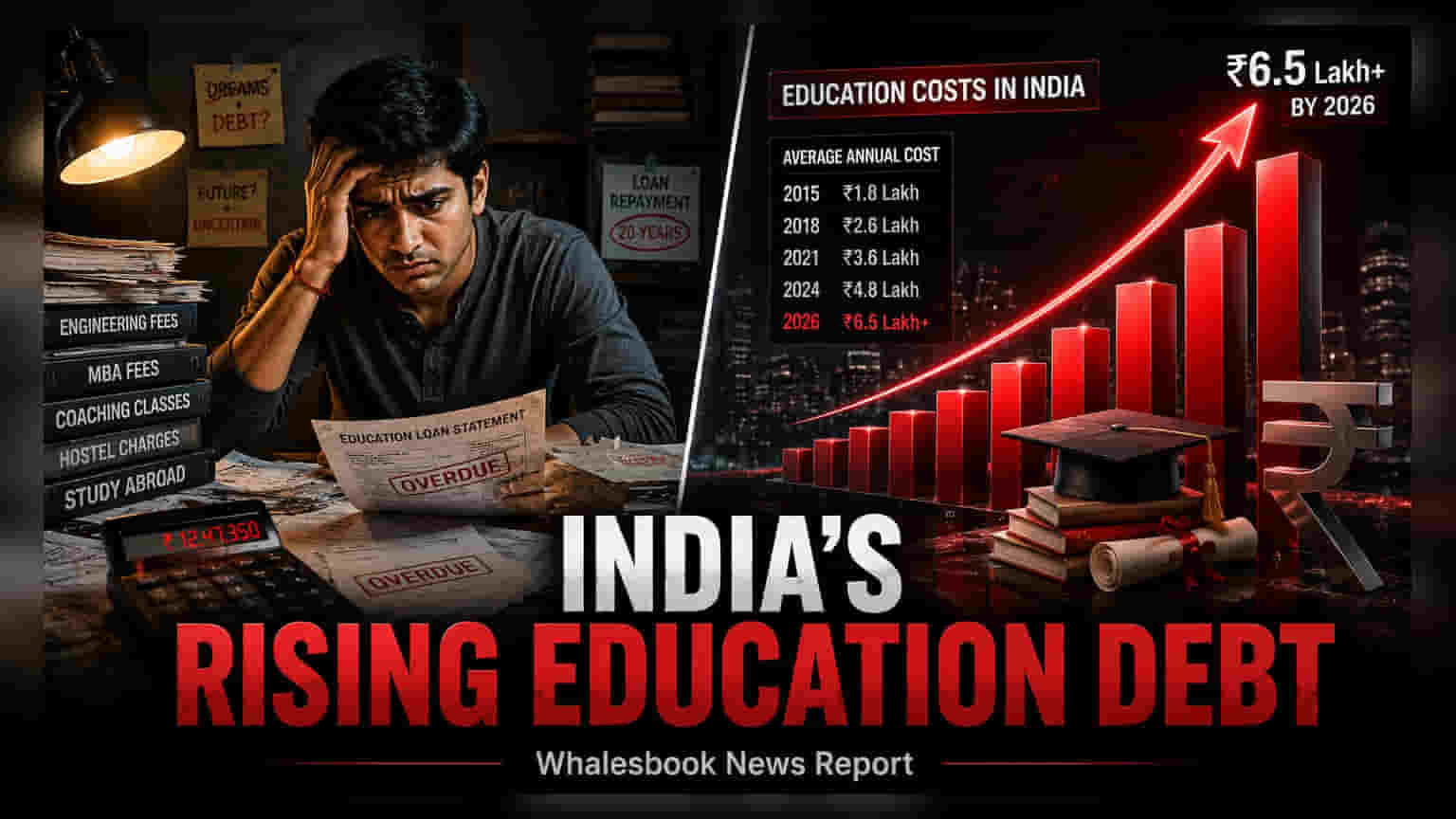
Indian household spending on education is outpacing income growth, driven by a 16.7% annual rise in private coaching costs. Families now dedicate nearly 3% of their income to education to secure limited seats in top medical and engineering colleges. This trend highlights the financial strain on households and the growing reliance on largely unregulated private tutoring services.
The surge in private coaching expenses has become a critical financial burden for Indian households, as the cost of after-school tutoring grows faster than average income. Recent data indicates that education spending is climbing at a 15.7% compound annual rate, significantly outpacing the 11.9% growth in household earnings over the past ten years. As a result, families are now spending nearly 3% of their total income on education, marking a decade-long high compared to the 1.95% recorded in the 2014-15 period.
Competition Drives Coaching Demand
The rising cost is directly linked to intense competition for limited seats in prestigious medical and engineering institutions. For instance, the National Eligibility Cum Entrance Test (NEET) recently saw approximately 2.3 million students competing for roughly 140,000 undergraduate medical seats. Within the engineering sector, registrations for the Joint Entrance Examination (JEE) reached nearly 1.6 million in 2026, while the top 100 engineering colleges collectively offered only about 134,000 seats. This supply-demand gap has solidified the role of private coaching as a perceived necessity for students aiming to secure admission to these top-tier institutions.
Regulatory and Spending Trends
The private coaching sector remains largely fragmented and operates with minimal oversight. While the central government issued guidelines in January 2024 aimed at curbing high fees and misleading marketing, the enforcement of such rules is complicated because education is primarily under the jurisdiction of state governments. Current data shows that 38% of secondary school students were enrolled in private tutoring in 2025, up from 30% in 2018. Furthermore, the average portion of household education budgets allocated specifically to coaching has risen to 16%, a trend that is increasingly felt by families in rural areas and those with students in higher secondary grades.
At the macro level, government spending on education as a percentage of total expenditure has shown a declining trend over the last decade. While the Ministry of Education was allocated approximately 1.39 trillion rupees for the 2026-27 budget, this figure represents roughly 2.6% of total government spending. Because education is a shared federal and state responsibility, this relative decline in public funding places additional pressure on households to bridge the gap through private expenditure. Investors monitoring the consumer sector may note that while discretionary spending on coaching is rising, it often comes at the expense of other household expenditures, potentially affecting long-term consumer demand in other segments. The key monitorable for the industry remains potential future state-level regulatory interventions that could impact the pricing power of large coaching chains.