

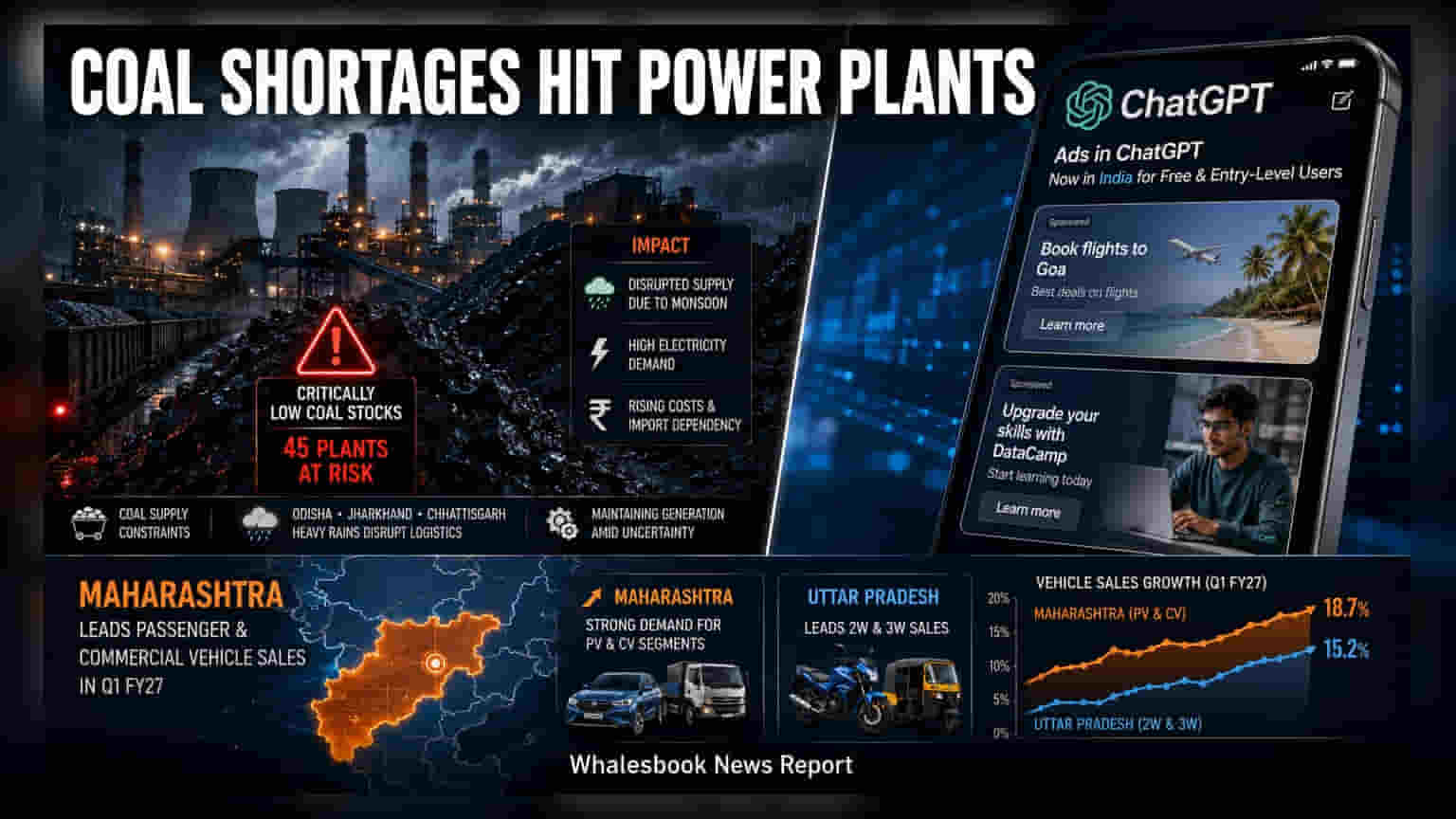
Thermal power plants are struggling with coal inventories due to heavy monsoon disruptions, while new auto sales data shows Maharashtra dominating passenger vehicles. Investors should monitor how power producers manage fuel logistics and how regional demand trends influence auto manufacturers.
Thermal power producers are navigating a challenging supply environment as monsoon rainfall in key mining regions like Odisha, Jharkhand, and Chhattisgarh has severely disrupted coal transportation. Recent data indicates that 45 thermal power facilities across India are currently operating with critically low coal inventories. This logistical bottleneck comes at a time when electricity demand remains high due to prevailing weather conditions, forcing power companies to manage their fuel stocks with increased caution to maintain steady generation levels.
Power Sector Efficiency in Focus
The immediate challenge for power utilities lies in maintaining plant load factors while fuel availability remains uncertain. Historically, logistics delays during peak monsoon months can lead to localized power generation risks or increased reliance on expensive imported coal for some private players. Investors should monitor quarterly updates for potential impacts on fuel costs and operating margins. Companies with strong long-term supply agreements and diversified fuel sourcing may be better positioned to mitigate these short-term logistics shocks compared to those reliant on spot market purchases.
Regional Demand Trends in Auto Sector
Turning to the automotive industry, the latest data from the Society of Indian Automobile Manufacturers for the first quarter of fiscal year 2027 provides a clear picture of regional consumption patterns. Maharashtra has solidified its position as the leading market for passenger and commercial vehicle sales. This concentration of demand for higher-value vehicles suggests strong purchasing power in the state’s urban centers and robust commercial activity, which is a positive indicator for major original equipment manufacturers (OEMs) focused on premium segments.
Conversely, Uttar Pradesh has emerged as the leader in the two-wheeler and three-wheeler segments. This divergence highlights a bifurcated market: one driven by premiumization and infrastructure-led commercial growth in industrial hubs, and another driven by mass-market, rural, and semi-urban mobility needs. For auto stocks, this data suggests that companies with a well-balanced portfolio—catering to both high-end passenger demand in industrial states and mass-market demand in rural-heavy states—may see more consistent volume growth.
Policy and Tech Updates
In other market developments, the government is intensifying efforts to attract foreign direct investment into the insurance and pension sectors. This focus on global capital integration is aimed at expanding insurance penetration by 2047, which could eventually improve the capital position and competitive landscape for listed insurance entities. Simultaneously, the digital advertising sector is seeing shifts as OpenAI launches ad integrations for its free and entry-level users in India. While this primarily affects the tech and media landscape, it serves as a reminder of how digital consumption habits are evolving, potentially influencing how companies allocate their advertising budgets in the coming quarters.