 Whalesbook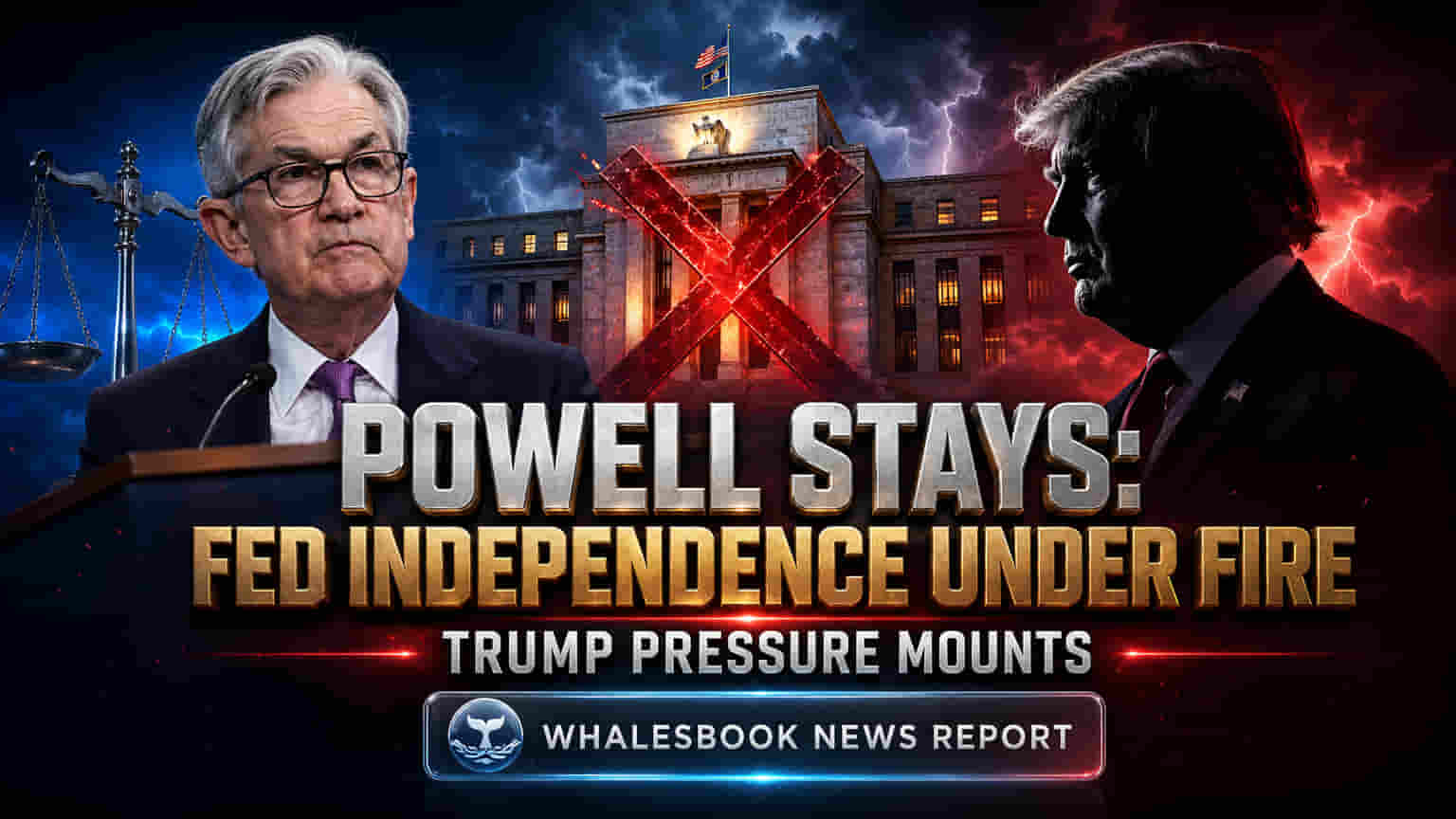


Powell to Remain Fed Governor
Jerome Powell will remain on the Federal Reserve's board of governors after his term as Chair ends, a strategic move to defend the institution's autonomy against mounting political pressure. This unprecedented step comes as the central bank navigates a complex economy with rising inflation and differing policy views.
Defending Independence Amidst Attacks
Powell will continue as a governor after his Chair term expires on May 15, 2026, a decision unseen since 1948. He stated it was to defend against what he called "unprecedented" legal attacks, particularly investigations into the Fed's renovation projects. Powell intends to stay until the "investigation is well and truly over with finality and transparency." His decision highlights concerns about the erosion of the Fed's independence, which is crucial for making monetary policy without short-term political interference. Although the Department of Justice has dropped its probe into Powell regarding the renovations, which eased Kevin Warsh's path to confirmation, Powell's move shows lingering worries about the precedent set by such actions.
Rate Hold Amidst Strong Dissent, Inflation Concerns
In its April 2026 meeting, the Federal Open Market Committee (FOMC) kept the federal funds rate unchanged at 3.50%-3.75% for the third meeting in a row. The meeting, however, revealed significant internal division. A record four officials dissented: three disagreed with forward guidance that suggested future rate cuts, while one, Governor Stephen Miran, called for an immediate cut. This level of dissent, the highest since October 1992, points to deep disagreements on the best course forward. Inflation remains high at 3.3% for the year ending March 2026, partly driven by a 12.5% jump in the energy index in March due to rising global prices and Middle East developments. Meanwhile, the labor market remains strong, with the unemployment rate falling to 4.3% in March, though hiring growth has slowed.
Warsh Set to Take Helm as Fed Chair
Kevin Warsh's nomination to become the next Fed Chair has passed the Senate Banking Committee and is expected to be confirmed by the full Senate soon, clearing the way for him to take over by mid-May. Warsh, a former Fed governor, has pledged "regime change" at the central bank, suggesting potential changes to economic models and how the Fed communicates. Although known for a hawkish stance on interest rates in the past, Warsh has more recently supported rate cuts. He attributes current inflation to factors like tariffs and government spending, rather than just strong demand. His preference for inflation targets based on a range, instead of the Fed's current 2% goal, signals a potential shift from current policy. The market's response to his nomination has been mixed, with some expecting easier monetary policy and others worried about potential alignment with administration demands for lower rates.
Concerns Remain Over Fed Independence and Policy Direction
While the U.S. Attorney's office dropped its investigation into Powell, concerns about political interference have not completely disappeared. Powell's decision to stay on the board, even for a period, emphasizes the ongoing struggle for institutional integrity. The significant dissents within the FOMC raise questions about potential policy paralysis or errors under new leadership, especially if building consensus becomes challenging. Warsh's shifting stance from hawkishness to recent dovish remarks creates uncertainty about his exact policy direction, potentially making it harder to unite the committee. The presence of both a former and current Fed Chair on the board could increase internal divisions, although Powell plans to stay out of the spotlight. The past legal challenges and ongoing pressure from the administration to lower rates set a concerning precedent, potentially encouraging future political efforts to influence monetary policy and damaging the Fed's global credibility.
Market Reassesses Rate Outlook Amid Uncertainty
Market expectations have quickly shifted after the Fed's recent dovish hints and ongoing inflation worries, worsened by geopolitical issues. Futures markets now largely see no chance of interest rate cuts in 2026, with some even predicting potential rate increases in 2027 as other central banks might need to tighten policy to fight inflation. Treasury yields have risen in response, reflecting increased uncertainty and changed rate forecasts. With a divided FOMC and new leadership whose policy path is unclear, the Federal Reserve faces a difficult period. It must work to maintain price stability and employment while protecting its independence.