

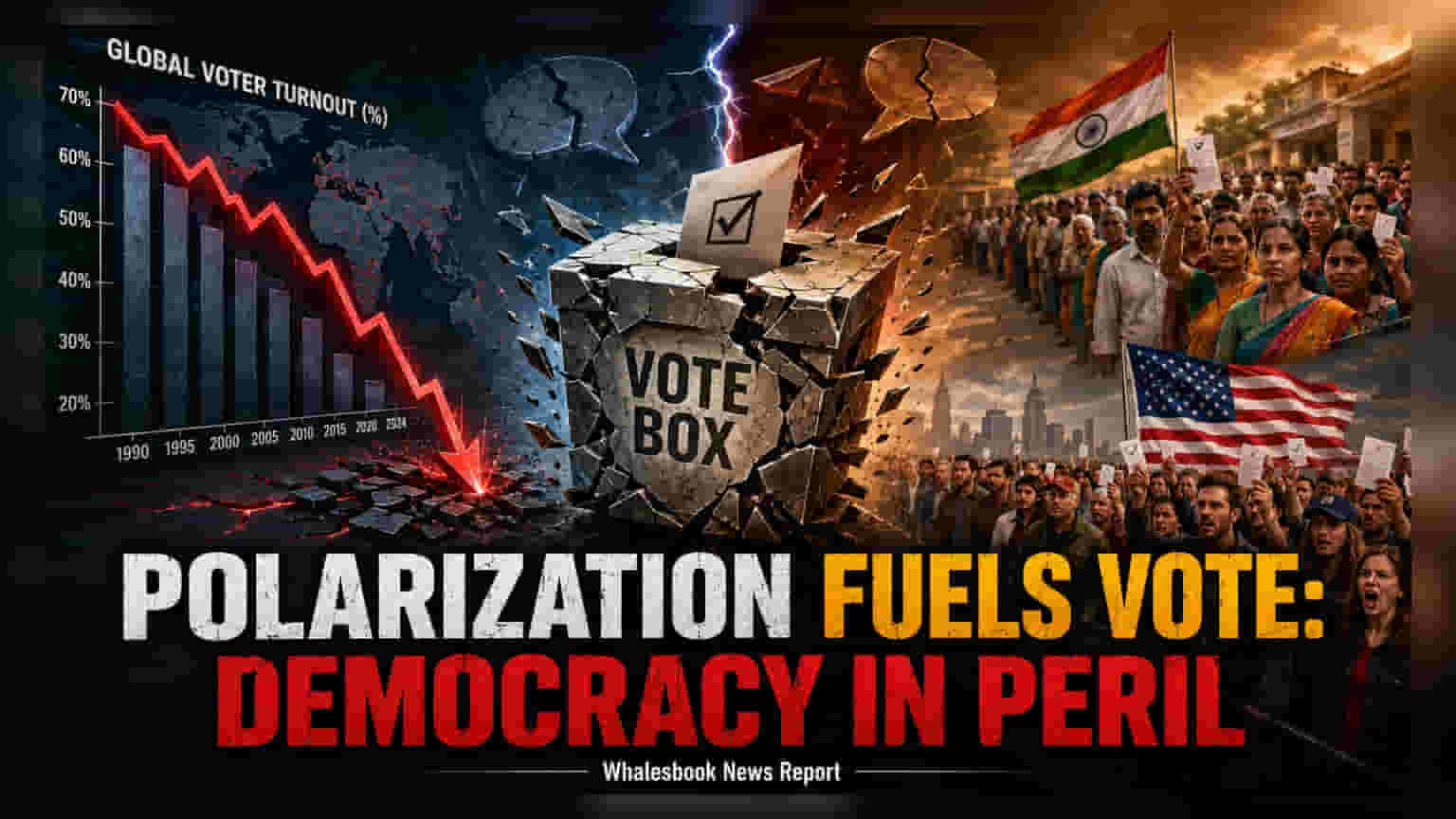
Rising political polarization is driving higher voter participation in India and globally, according to recent analysis. For investors, this trend is significant because political stability, social cohesion, and the predictability of government policy are essential pillars for long-term economic growth and institutional confidence.
In the world of finance, market analysts often view political stability as a key foundation for economic progress. Recent studies indicate that political polarization is currently acting as a major driver for voter turnout in many global democracies, including India. While high participation is a sign of a healthy democracy, the underlying reasons for this engagement—often fueled by affective polarization or intense disagreement—create a unique macro-environment that investors monitor closely.
Impact on Investment Climate
For the Indian stock market and foreign investors, the primary concern during periods of high political intensity is the predictability of policy. Investors generally prefer environments where reforms, taxation, and regulatory frameworks are consistent and stable over the long term. When voter turnout is driven by extreme polarization, the political landscape can become more unpredictable. This is not about any specific political outcome, but rather about the stability of the democratic culture that supports business.
Institutional investors, such as those managing mutual funds or pension portfolios, often assess 'sovereign risk' or 'political risk' when allocating capital. A highly polarized environment can sometimes lead to sharp shifts in government focus or populist measures that may conflict with long-term fiscal discipline. However, India’s economic narrative has historically remained resilient, supported by the independence of institutions like the Reserve Bank of India and a robust legal framework that functions independently of election cycles.
Monitoring Market Stability
While higher voter turnout signals active civic participation, the market's focus remains on the continuity of economic policies that foster growth. Periods of intense election campaigning—often characterized by aggressive rhetoric—can create temporary market volatility. Historical data suggests that markets often experience short-term fluctuations around election times, but they tend to stabilize once the government is formed and the policy agenda becomes clear.
Investors are typically not concerned with the political ideology of the winning party as much as they are with the stability and pro-growth intent of the policies that follow. A cohesive society is generally better for business, as it minimizes the risks of social unrest or disruption, which can negatively impact local operations, supply chains, and consumer confidence.
Key Monitorables for Investors
Going forward, the focus for market observers will be on how this high level of engagement translates into governance. When a democracy sees high turnout, it can provide a strong mandate for a government to push through significant structural reforms. Conversely, if the polarization remains unresolved, it might lead to legislative gridlock.
For the average investor, the takeaway is to look beyond the daily political headlines. Market volatility driven by sentiment or election cycles is often temporary. The core of a sound investment thesis should remain on the fundamental strengths of a company—its revenue growth, debt management, and ability to navigate changing economic conditions, regardless of the broader political climate.