

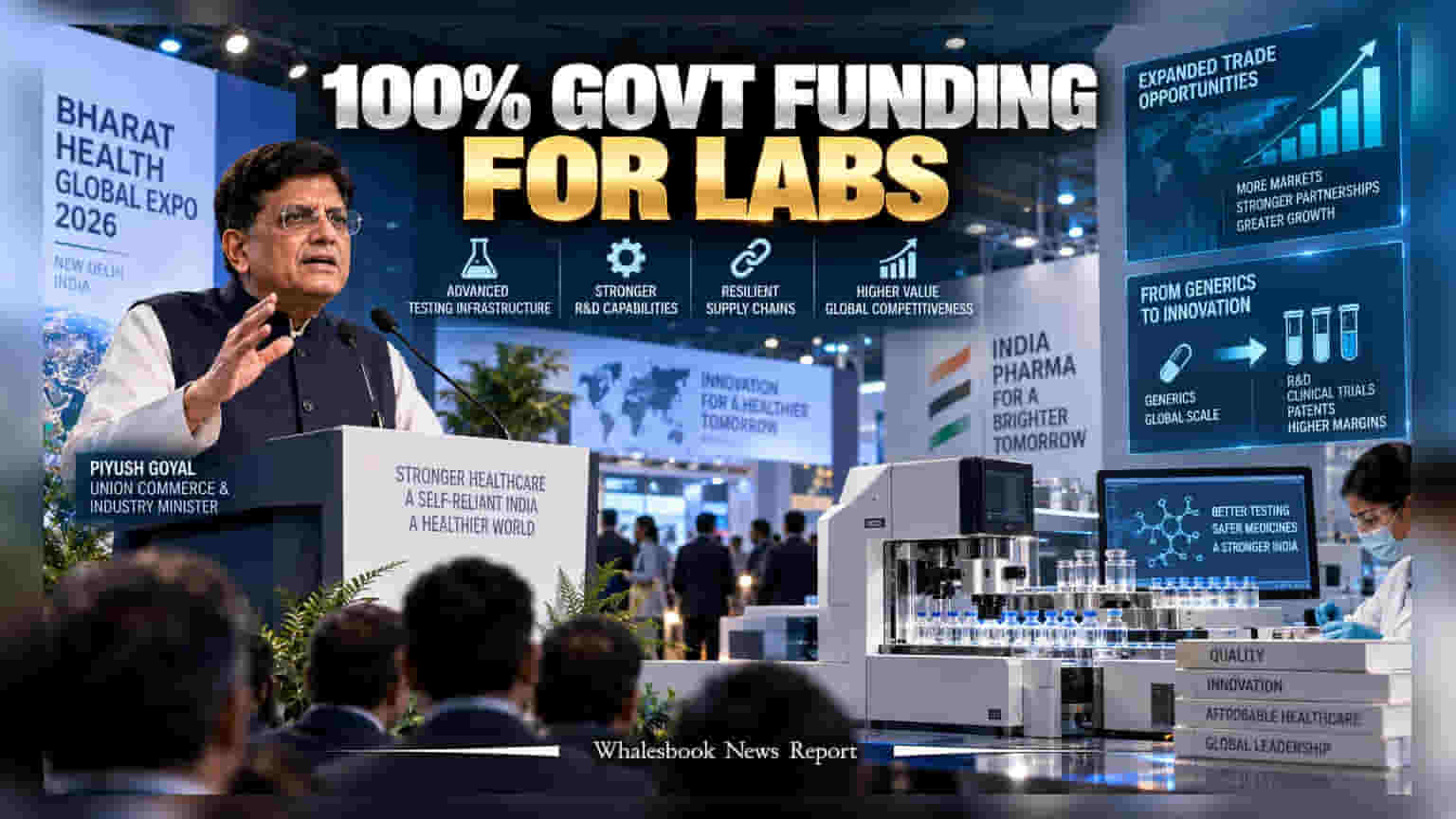
Union Minister Piyush Goyal has called on the pharmaceutical industry to leverage government schemes for testing infrastructure, which currently remain underutilized. This push aims to encourage firms to move beyond basic generics toward research and innovation, a critical shift for enhancing long-term competitiveness and reducing supply chain risks.
Union Commerce and Industry Minister Piyush Goyal has challenged the domestic pharmaceutical industry to better utilize available government financial support for upgrading testing infrastructure. Speaking at the Bharat Health Global Expo 2026 in New Delhi, the Minister noted that while mechanisms exist for the government to provide funding for advanced testing hardware, the industry has yet to submit significant requests for such assistance. This gap represents a missed opportunity for companies to improve their technical capabilities and quality standards.
The Minister's comments highlight a broader push to move the Indian pharmaceutical ecosystem up the value chain. While India has established itself as a global leader in generic medicine manufacturing, there is an urgent need to pivot toward higher-value innovation, including clinical trials, research and development, and patenting. By adopting global regulatory best practices and upgrading laboratory facilities, firms may be better positioned to increase their competitiveness in regulated markets.
Building resilient and diversified supply chains emerged as another key focus during the discussions. The pharmaceutical sector often relies on imports for critical inputs like Active Pharmaceutical Ingredients and Key Starting Materials. Dependence on specific geographies for these components exposes companies to supply chain vulnerabilities, particularly amid global geopolitical shifts or trade restrictions. The Minister emphasized that building local, self-reliant infrastructure is not just about cost-efficiency but is a necessary strategy for long-term operational stability.
For investors, these policy signals suggest a shift in the sector's long-term business model. Companies that invest in R&D and manufacturing excellence are generally expected to command higher margins compared to those strictly focused on low-cost generic production. However, the path to innovation involves risks, including higher upfront capital expenditure and the uncertainty of successful product development. Investors may monitor whether companies begin to actively utilize government incentives for facility upgrades and how this impacts their capital allocation.
Beyond lab infrastructure, the government is highlighting the importance of leveraging international trade agreements. These frameworks are designed to open new markets for Indian medical professionals and products, but their success depends on the industry's ability to align with global standards and capitalize on these opportunities. The next important step for the sector will be observing how individual companies respond to these calls for modernization and whether there is an increase in industry-led initiatives to improve R&D spending and supply chain localization.