

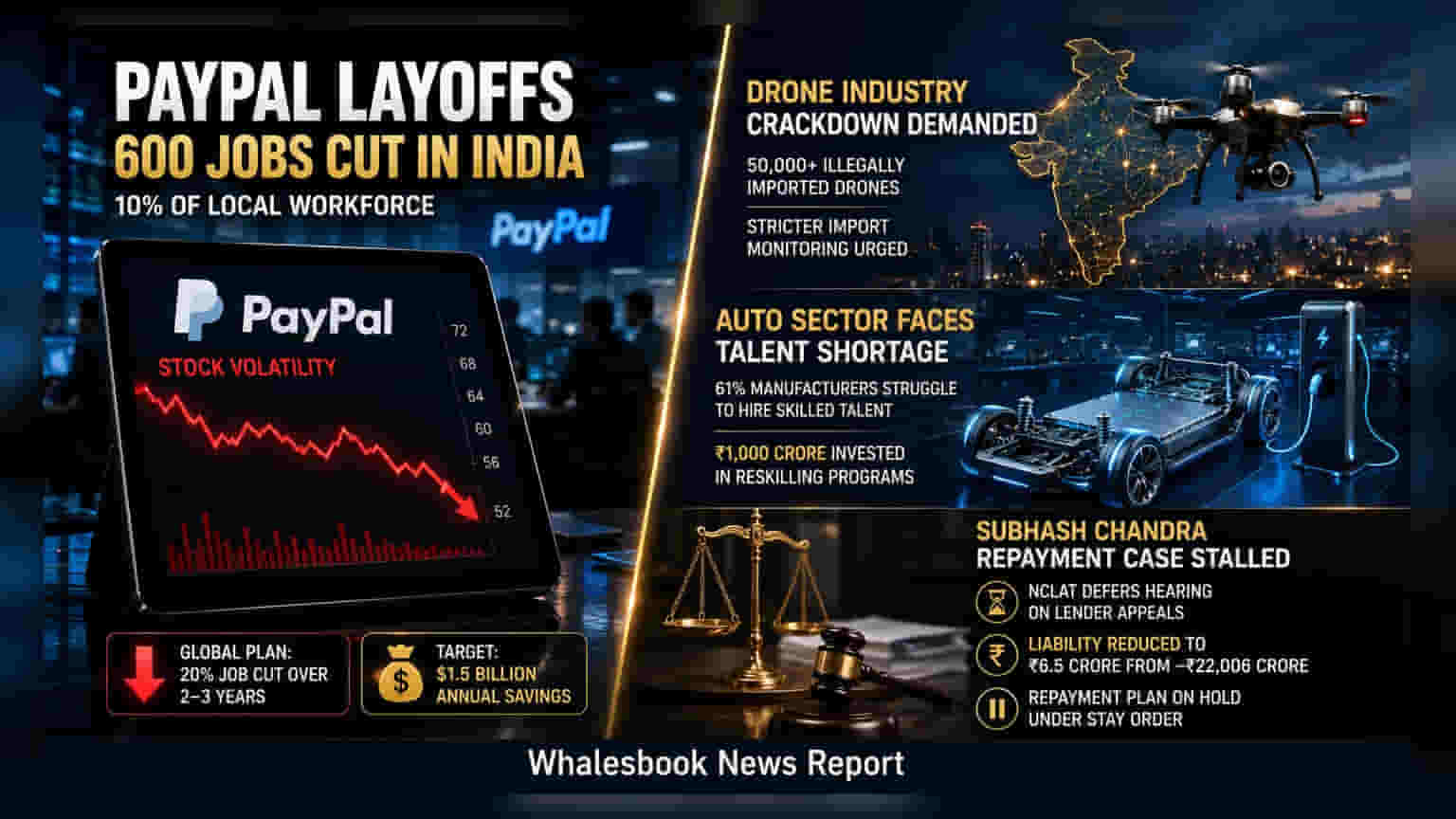
PayPal has cut approximately 10% of its India staff as part of a wider global plan to reduce costs and prioritize AI. This move follows recent stock volatility and failed acquisition talks. Meanwhile, other key sectors face challenges, including legal delays in the Subhash Chandra case and a talent gap in the automotive industry.
PayPal has initiated a workforce reduction in India, impacting approximately 600 employees, which represents about 10% of its local headcount. This action is part of a larger global strategy to eliminate 20% of its total staff over the next two to three years. The goal of this restructuring is to achieve at least $1.5 billion in annual cost savings and shift the company's focus toward artificial intelligence integration and core product improvements.
This development follows a period of high volatility for PayPal’s stock, particularly after reports of failed acquisition talks involving a consortium led by Stripe and Advent International. Investors are now watching to see how these operational changes affect the company's ability to maintain profitability and compete against digital payment rivals like Apple Pay in a changing market.
In other developments, legal proceedings related to the Subhash Chandra repayment case remain stalled. The National Company Law Appellate Tribunal has deferred hearings on appeals filed by lenders, including Canara Bank and Union Bank of India. These institutions are challenging a previous order that had drastically reduced the liability of Subhash Chandra to ₹6.5 crore from approximately ₹22,006 crore. The repayment plan remains on hold under an existing stay order.
Separately, the Indian drone industry is reporting concerns regarding the proliferation of non-compliant equipment. The Drone Federation of India has identified over 50,000 illegally imported drones and has requested the Directorate General of Civil Aviation and the Directorate of Revenue Intelligence to enforce stricter import monitoring. The federation asserts that improved regulation is necessary to ensure safety and support domestic manufacturing.
The automotive sector is also facing operational hurdles during its transition to electric vehicle manufacturing. While the industry is directing nearly ₹1,000 crore toward reskilling programs, a significant talent shortage persists. Data from the Boston Consulting Group and the Automotive Component Manufacturers Association of India indicates that 61% of component manufacturers are struggling to hire staff with the required skills in electronics, software, and mechatronics. Smaller suppliers, in particular, face difficulty in funding the infrastructure and training needed to bridge this gap.