

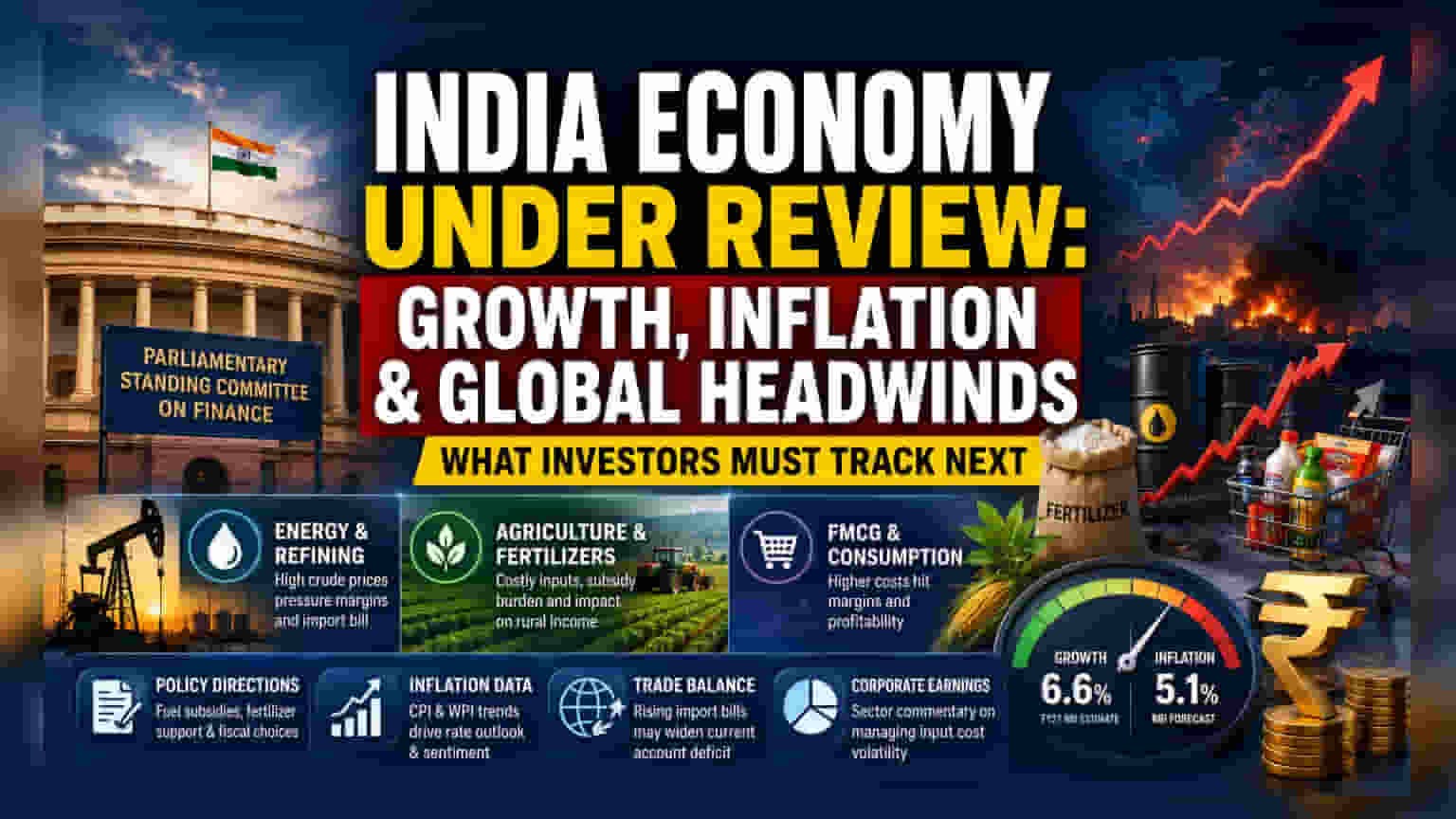
A parliamentary standing committee is reviewing India's economic trajectory as global geopolitical tensions impact inflation and growth. The study focuses on rising import costs for crude oil and fertilizers, which are affecting fiscal and monetary policy. This comes as the RBI projects FY27 GDP growth to moderate to 6.6%, prompting investors to monitor macro-economic stability.
What Happened
The Parliamentary Standing Committee on Finance has formally added "Evolving Economic Conditions in the Country" to its agenda for the 2025-26 period. The committee, chaired by Bhartruhari Mahtab, is conducting a detailed examination of India’s economic stability in the face of ongoing global uncertainties. This study seeks to engage with key stakeholders, including the Ministry of Finance and the Reserve Bank of India (RBI), to better understand the impact of external pressures on domestic growth.
The Growth and Inflation Reality
India’s economy saw a robust expansion of 7.7% in the 2025-26 fiscal year, largely driven by domestic demand and investment activity. However, the outlook for the current fiscal year (FY27) has become more cautious. The Reserve Bank of India (RBI) recently revised its GDP growth projection downward to 6.6%, compared to an earlier estimate of 6.9%.
This moderation is primarily linked to global headwinds, particularly the West Asia conflict that intensified in early 2026. The conflict has exerted upward pressure on crude oil and fertilizer prices, which are critical inputs for the Indian economy. RBI forecasts also suggest inflation risks remain elevated, with the inflation estimate adjusted to 5.1%, reflecting concerns over the rising costs of energy and logistics.
Why Sector Sensitivity Matters
Investors are closely monitoring the impact of these geopolitical developments on specific sectors:
- Energy and Refining: As a net importer of crude oil, India remains highly vulnerable to global price fluctuations. Elevated prices increase the import bill and affect the working capital and margins for oil marketing companies.
- Agriculture and Fertilizers: Fertilizer production is energy-intensive, and prices have risen significantly. This creates a dual pressure for the government: managing the subsidy burden or facing higher costs for the agricultural sector, which could influence rural income.
- FMCG and Consumption: Fast-moving consumer goods companies often face margin pressure due to higher packaging and transportation costs. When fuel prices remain high, companies often struggle to pass on the full cost increase to consumers, impacting bottom-line profitability.
Fiscal and Monetary Policy Focus
The committee’s review is expected to touch upon the delicate balance between maintaining fiscal health and supporting growth. With crude oil prices showing volatility, the government faces policy choices regarding subsidies, fuel taxes, and infrastructure spending. The RBI’s stance remains cautious, having kept the repo rate unchanged at 5.25% in its June 2026 review to balance inflation management against economic growth needs.
What Investors Should Track Next
The key monitorables for market participants include:
- Policy Directions: Any shifts in government policy regarding fuel subsidies or fertilizer support to offset global price shocks.
- Inflation Data: Monthly CPI and WPI prints, as they directly influence interest rate expectations and consumer sentiment.
- Trade Balance: Developments in the current account deficit as higher import bills for crude and fertilizers could strain foreign exchange reserves.
- Corporate Earnings: Management commentary from sensitive sectors—particularly oil, agriculture, and manufacturing—regarding their ability to manage input cost volatility.