

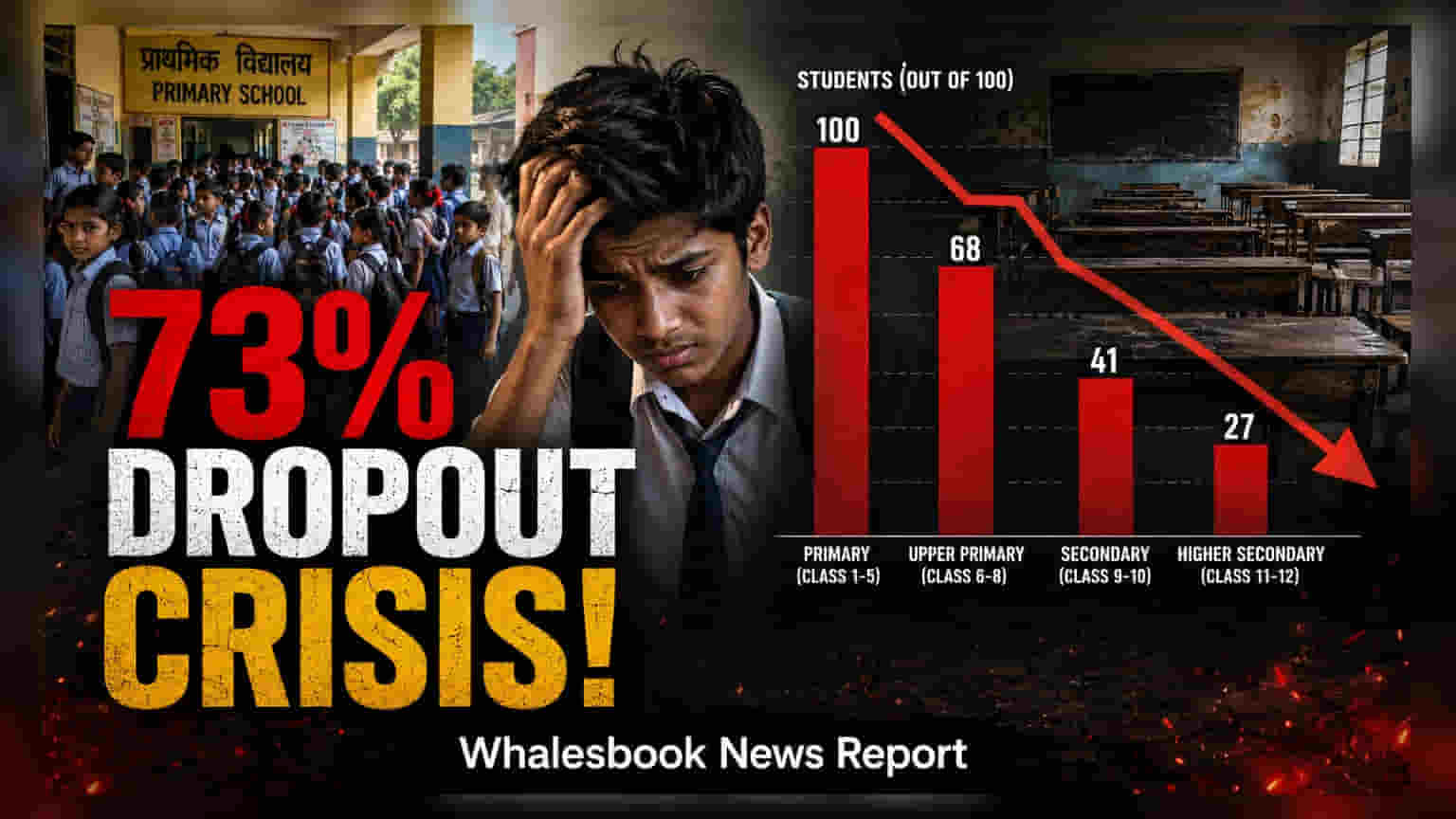
A parliamentary committee report revealed that 73% of students in Indian government schools drop out before completing higher secondary education. The data highlights a sharp decline in enrollment and significant infrastructure gaps. These findings underscore systemic challenges in education policy and budget utilization, which are critical factors for long-term human capital development in the Indian economy.
A parliamentary committee has raised concerns regarding the state of public education, reporting that 73% of students leave the school system before reaching higher secondary education. This decline, outlined in the Committee on Estimates' 10th Report for 2026-27 presented to the Lok Sabha, points to significant gaps in the accessibility and availability of senior secondary schooling across the country.
The data, sourced from UDISE 2024-25, reveals a sharp decline in student enrollment as they progress through different educational stages. While government schools cater to over 61 million children at the primary level, this number falls to roughly 40 million in upper primary and shrinks to approximately 23 million in secondary school. By the time students reach the higher secondary stage, the enrollment count drops to about 16 million. The report identifies a structural mismatch in school availability, noting that there are over 911,000 primary schools across India, but only about 90,866 higher secondary institutions to accommodate students progressing through the system.
Beyond enrollment numbers, the panel highlighted infrastructure challenges, particularly for Children with Special Needs (CwSN). An audit of school facilities revealed that more than half of the country’s schools currently lack essential accessible infrastructure. Of the total 1.47 million schools surveyed, a substantial number still lack ramps with handrails or specific toilets designed for special-needs students. The committee emphasized that these gaps create significant barriers to universal education and contradict the inclusive goals of the National Education Policy.
The committee also flagged inefficiency in how allocated funds are used by the Ministry of Education. For the 2024-25 period, the report noted that financial utilization for CwSN-friendly toilets was notably low, with only Rs 2.60 lakh spent against a budget of Rs 482 lakh. Similarly, the utilization of funds for the recruitment of special educators was limited, with only Rs 80.50 lakh deployed from a total allocation of Rs 962 lakh. This underutilization suggests a need for better policy execution and stricter monitoring of financial targets.
For the broader economy, these findings underscore the challenges involved in ensuring a skilled workforce, as basic education is the foundation of human capital. The committee has recommended that the Ministry of Education improve its budget execution and prioritize the conversion of existing primary and secondary schools into full higher secondary institutions. The next phase for stakeholders and policymakers will be to track whether the government accelerates infrastructure upgrades and improves the efficiency of education fund utilization to reduce the dropout rate.