

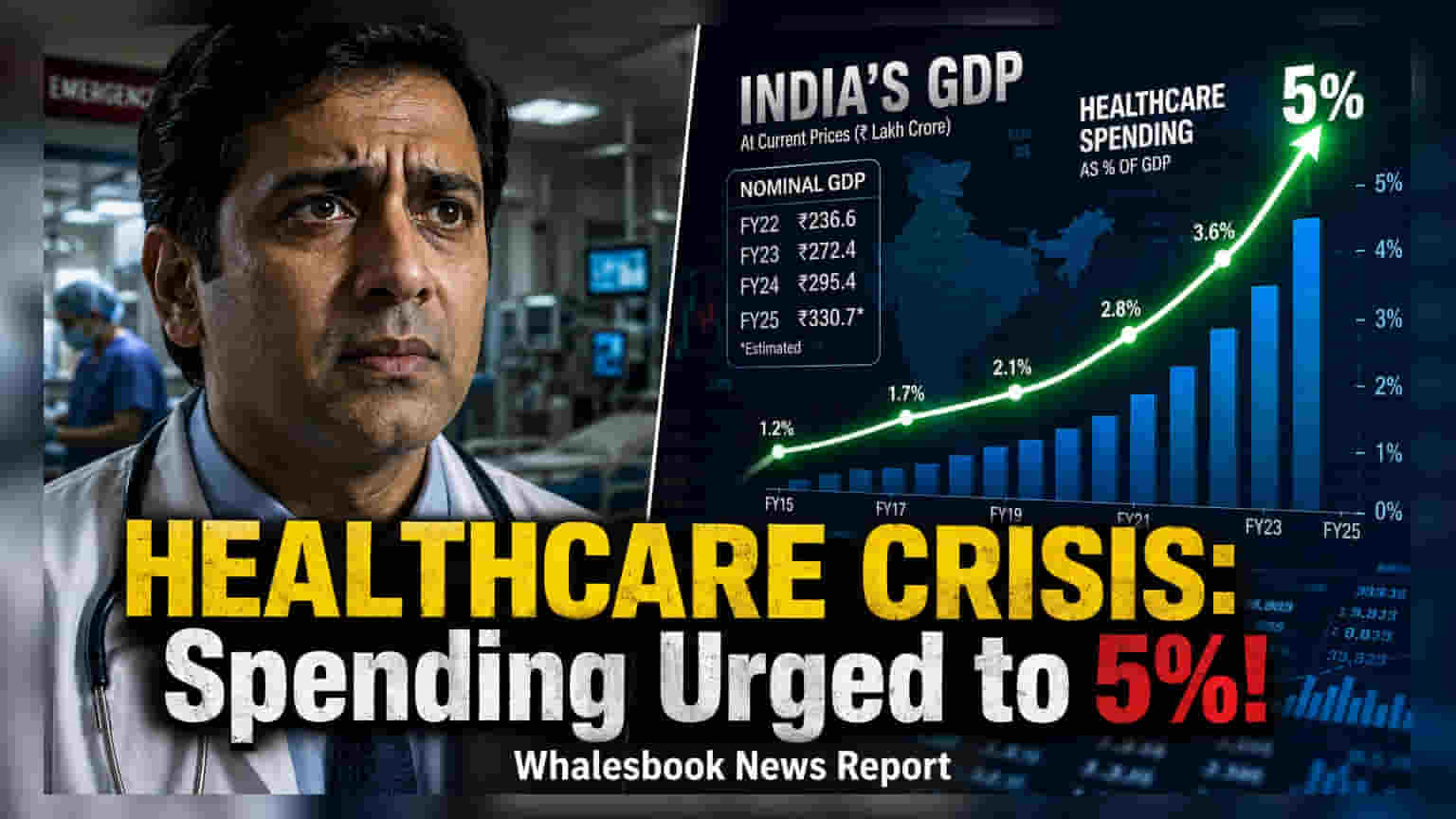
A parliamentary committee has recommended raising India's public health spending to 5% of GDP within five years to reduce household medical costs. The proposal highlights a significant gap between current spending levels and the target, potentially signaling future shifts in pharmaceutical pricing and healthcare infrastructure funding.
A parliamentary standing committee has recommended a major increase in India's government health spending, urging the government to raise the allocation to 5 percent of the country's Gross Domestic Product (GDP) over the next five years. This proposal comes as the nation has failed to meet its earlier National Health Policy 2017 target of 2.5 percent of GDP by 2025. Recent data shows public health expenditure stood at approximately 1.43 percent of GDP in 2022-23, reflecting a slow pace of growth despite the critical need for expanded public health infrastructure.
The committee’s recommendation is driven by the severe financial strain that out-of-pocket medical expenses place on Indian households. A substantial portion of this burden is linked to medicine costs, which account for nearly 30 percent of current health expenditure. The committee flagged high retail margins on essential medications, particularly for cancer treatment, where costs are largely borne by individuals. This focus on affordability suggests that policymakers are concerned about the current pricing structure, especially noting that roughly 82 percent of the domestic pharmaceutical market remains outside direct government price controls.
For investors and market observers, this proposal introduces a mix of potential opportunities and regulatory pressures. Increased government spending could translate into higher demand for healthcare services, benefiting hospital chains and diagnostic providers through expanded public schemes and infrastructure projects. Conversely, the push to control out-of-pocket costs creates a direct link to the pharmaceutical sector. If the government moves to regulate retail prices more aggressively to lower costs, profit margins for some pharmaceutical companies could face pressure.
The path to reaching 5 percent of GDP remains ambitious, and the primary monitorable for investors will be the actual budget allocation in upcoming fiscal cycles. Achieving this target will require navigating complex fiscal constraints and balancing public health needs with existing budget priorities. Market participants should monitor potential policy changes regarding the National List of Essential Medicines and any further expansion of price caps on specialized drugs, as these developments would directly affect the revenue models of pharmaceutical firms. The committee's report serves as a strong signal that public health accessibility will remain a key focus for policy reform in the coming years.