 Whalesbook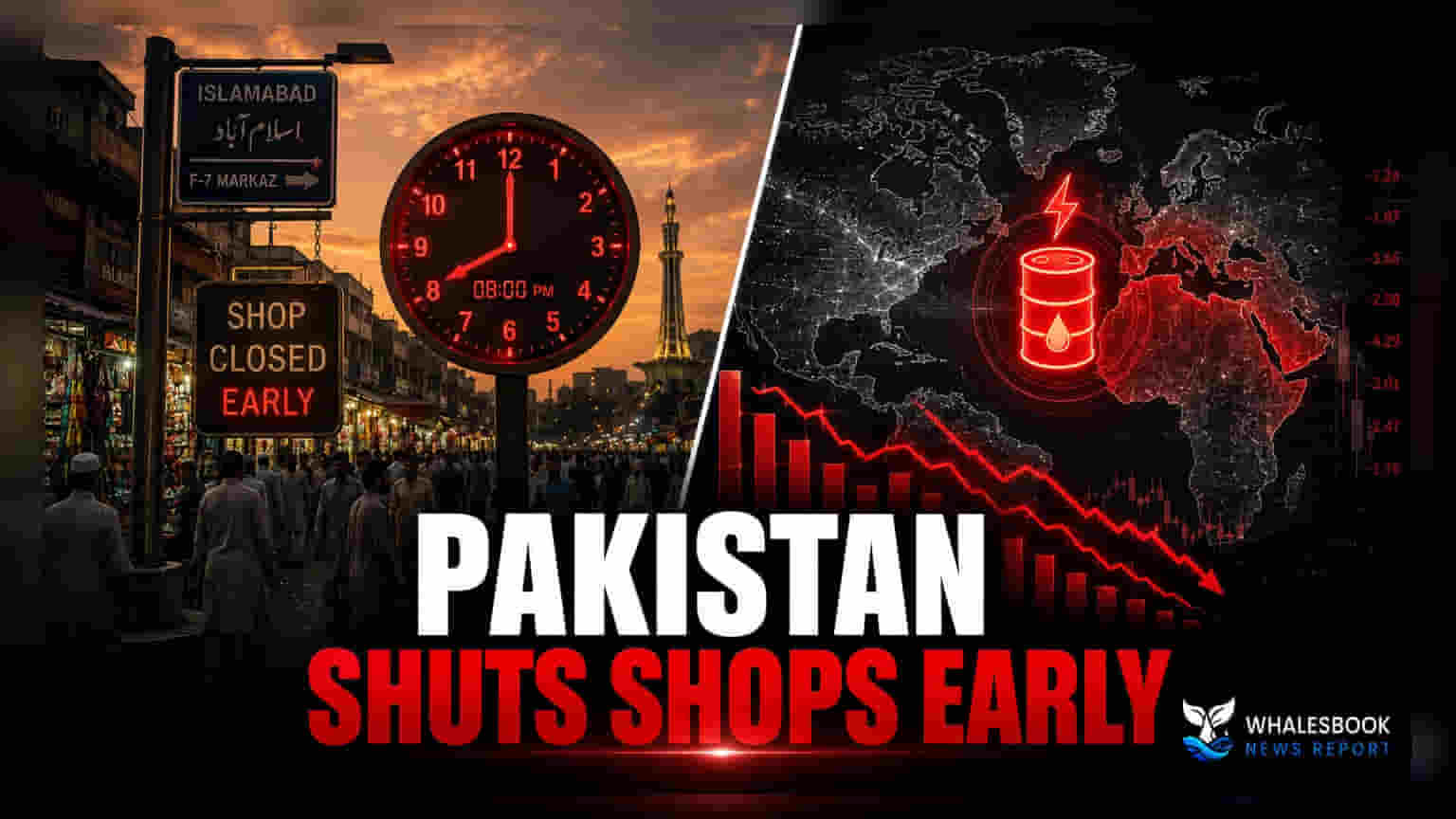


The Escalating Energy Squeeze
The decision to revert to restrictive operating hours, effective June 1, 2026, reflects the extreme fiscal pressure currently exerted on Pakistan’s import-dependent energy architecture. With the national electricity shortfall reportedly reaching as high as 11,000 MW during periods of supply strain, the government is utilizing administrative mandates to curb commercial consumption. While this is framed as a conservation effort, the underlying reality is a chronic inability to maintain affordable fuel supplies amid regional geopolitical instability. Recent surges in petroleum costs have not only strained household budgets but have also forced the state into a perpetual cycle of load-shedding and emergency austerity to manage a balance-of-payments crisis that remains tied to global energy price volatility.
The Economic Trade-Off
Business organizations, led by the Chainstore Association of Pakistan, have mounted significant opposition to these measures, highlighting the disparity between the intended energy savings and the actual economic impact. Previous iterations of this policy, implemented earlier in the spring, resulted in an estimated Rs 200 billion loss in formal economic activity. Retailers report that mandatory shutdowns during peak evening shopping hours—when consumer footfall is highest—disproportionately penalize documented, tax-compliant businesses. Data suggests that these restrictions have not successfully lowered overall consumption; instead, they have incentivized a shift toward the informal sector, where energy use continues unchecked. Consequently, the government faces a dual loss: a decline in General Sales Tax collections and a reduction in the reach of point-of-sale-integrated commerce, further complicating efforts to broaden the national tax base.
Structural Vulnerabilities
The persistence of this crisis underscores deep-seated structural flaws within the power sector. Beyond the current geopolitical friction, the national grid continues to suffer from high aggregate technical and commercial losses and a ballooning circular debt crisis that exceeds Rs 2.6 trillion. Despite a massive buildup in installed generation capacity over the last decade, distribution bottlenecks and the inability to afford or dispatch fuel for under-performing plants have left the nation in a state of permanent energy insecurity. This has led to a grassroots, household-financed transition to solar energy, which now accounts for over 25% of the country’s power generation. While this shift has provided a degree of strategic autonomy by reducing the reliance on expensive imported LNG, it has simultaneously created a new challenge for the state’s revenue-collection model, as traditional utilities lose their most reliable, high-paying customers to decentralized solar systems.
Outlook and Risks
The future of Pakistan’s energy management hinges on whether the government can navigate the current geopolitical instability without further eroding the formal economy. With loan repayments due and foreign exchange reserves remaining thin, policymakers have little room for maneuver. Analysts suggest that unless the energy system shifts from capacity-focused expansion to grid modernization and efficient tariff restructuring, stop-gap measures such as mandatory shop closures will likely remain a regular, albeit unpopular, feature of the economic landscape.