

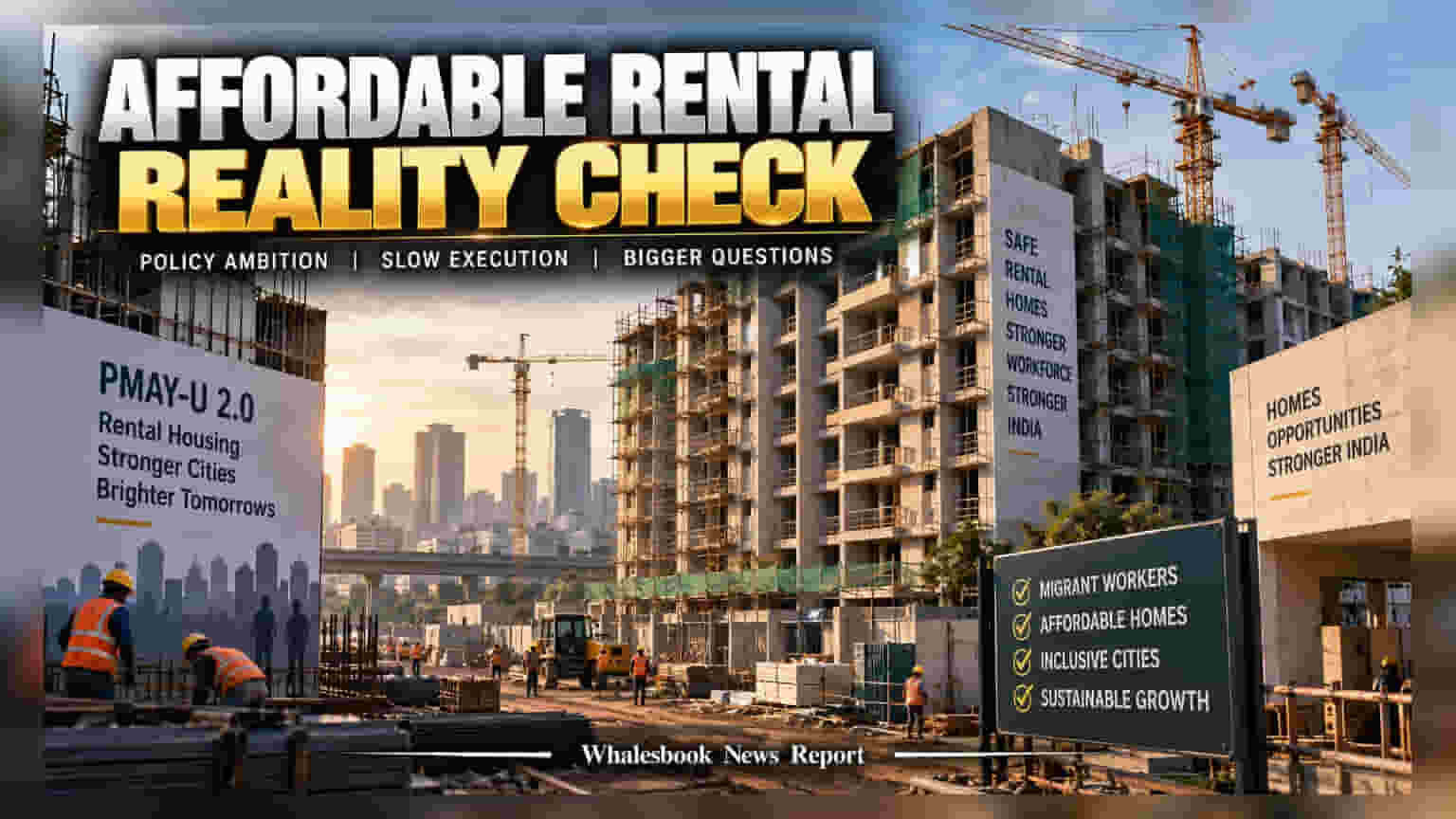
The Affordable Rental Housing vertical under PMAY-U 2.0 has sanctioned 13,046 units, but bureaucratic delays at the local level continue to hinder delivery. While the government has set aside ₹3,000 crore for this specific 2.0 segment, the gap between sanctioning and actual housing availability remains a significant challenge for the sector.
The Affordable Rental Housing (ARH) vertical of the Pradhan Mantri Awas Yojana-Urban (PMAY-U) 2.0 is currently struggling to translate policy ambitions into physical assets. As of August 2026, the government has sanctioned 13,046 rental units designed to support migrant workers and low-income groups. While this represents a concrete step forward in the government’s mission to aid urban populations, the actual pace of construction and unit handover remains sluggish compared to the initial project targets.
Financial context is essential to understand why this matters. In the 2026-27 budget, the government allocated ₹3,000 crore specifically for PMAY-U 2.0, sitting within a broader PMAY-Urban outlay of ₹18,625 crore. Despite these significant fund allocations, the scheme operates as a demand-driven mechanism. This means that local municipal corporations and state development authorities must first conduct site-specific need assessments before submitting proposals. This decentralized approval process often creates long, unpredictable timelines between the central sanctioning of a project and the eventual groundbreaking.
For investors observing the real estate and infrastructure space, the bottleneck is less about funding and more about execution at the local government level. The program relies heavily on public-private partnerships (PPP) to manage essential infrastructure like sanitation and road networks. However, private developers often face margin pressure in the affordable housing segment due to persistently high construction costs, such as steel and cement prices. Without strong financial incentives or streamlined land-use approvals, private firms may remain cautious about taking on large-scale rental projects.
Another significant risk for the segment is the geographic mismatch. The rental units are intended for migrant hubs like Mumbai and Bengaluru, where job opportunities are densest. However, if the approved projects are located on the periphery of these cities without adequate connectivity, occupancy rates may remain low, even after construction is complete. This disconnect between where the housing is built and where the workforce needs to live is a primary factor that can affect the long-term success and commercial viability of these rental complexes.
Going forward, the most important monitorable for those tracking this space is the actual rate of project commissioning rather than just the number of sanctioned units. Investors should watch for updates on municipal-level approvals, land allocation efficiency, and whether any new fiscal incentives are introduced to encourage developers to participate in the rental housing vertical. The speed at which municipal bodies move from planning to execution will be the ultimate indicator of whether the PMAY-U 2.0 rental scheme can effectively bridge the urban housing gap.