

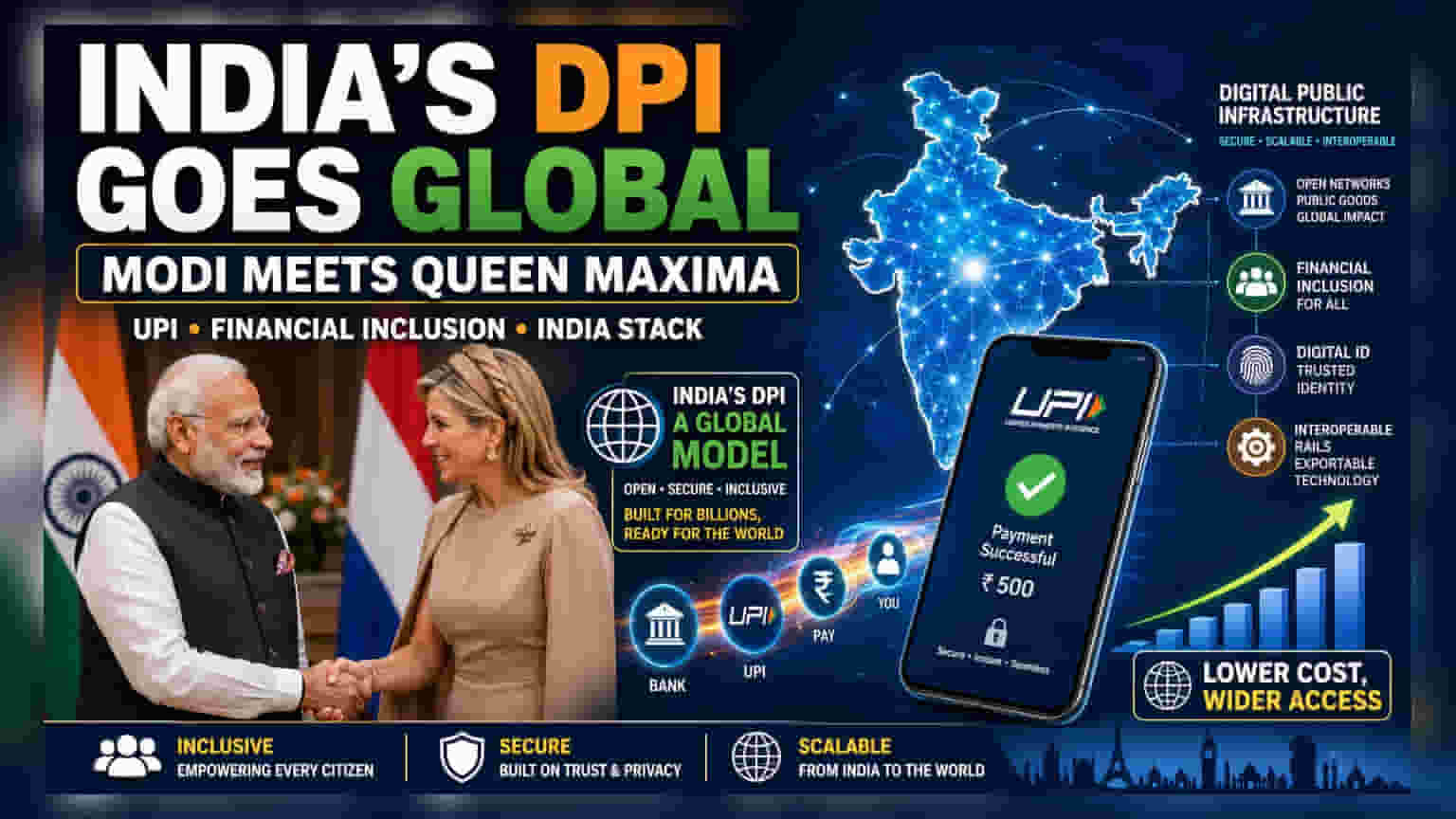
Prime Minister Narendra Modi and Queen Maxima of the Netherlands met to discuss India's Digital Public Infrastructure (DPI). The dialogue highlights India's strategy to export its digital financial models globally, a move that presents long-term potential for domestic fintech and IT services firms that build and scale these digital rails.
What Happened
Prime Minister Narendra Modi met with Queen Maxima of the Netherlands in New Delhi on Thursday. Queen Maxima is visiting India in her capacity as the United Nations Secretary-General’s Special Advocate for Financial Health. The discussion focused on India's Digital Public Infrastructure (DPI) and its role in improving financial inclusion for citizens.
During the meeting, the Prime Minister highlighted how India’s digital transformation—using platforms like the Unified Payments Interface (UPI) and digital identity systems—has lowered the cost of financial services and improved the 'ease of living.' India reaffirmed its commitment to sharing these digital models with other nations, positioning its technology ecosystem as a potential global standard.
Why This Matters For The Economy
For the Indian economy, the government's push to showcase and export its DPI model is a significant strategic move. India's Digital Public Infrastructure, often referred to as the 'India Stack,' includes interoperable systems like Aadhaar, UPI, and Account Aggregator frameworks.
By establishing these models as successful, scalable, and affordable blueprints, the government is essentially creating a 'Made in India' global standard. For the private sector, this creates an indirect growth narrative. As other countries adopt these digital frameworks, Indian technology and fintech service providers, who have already mastered building on these rails, may find new export markets for their software, consulting, and system integration services.
The Business Case For India’s Digital Infrastructure
India’s DPI is a public-private partnership success story. By building open, secure, and low-cost digital rails, the government has enabled a massive expansion in the fintech sector.
Private innovators—ranging from payment apps to credit marketplaces—have leveraged these public platforms to lower customer acquisition costs and increase reach. The meeting with the UN Special Advocate underscores that this ecosystem is not just for domestic use but is viewed by international bodies as a model for global sustainable development. For listed IT and financial services companies, this international recognition adds weight to the sustainability of the domestic digital growth story, as it encourages other markets to digitize using similar architectures.
What Investors Should Track
While this meeting is primarily diplomatic and policy-focused, investors may monitor how these international engagements translate into concrete business opportunities:
Government-to-Government Deals: Watch for any formal agreements where India helps other countries implement its digital infrastructure stack, as these often involve Indian tech consultants or software vendors.
Fintech Expansion: Track how Indian fintech firms operating in the UPI and digital lending space begin to navigate or expand into global markets that are adopting the Indian DPI model.
Regulatory Alignment: Changes in domestic policy regarding data sharing, digital payments, and financial regulation remain the most important factor, as these dictate how effectively private companies can operate and monetize their services on top of the DPI rails.
Scalability: The long-term impact on earnings for companies involved in digital transformation services will depend on how quickly and successfully these global partnerships move from pilot programs to full-scale implementation.