

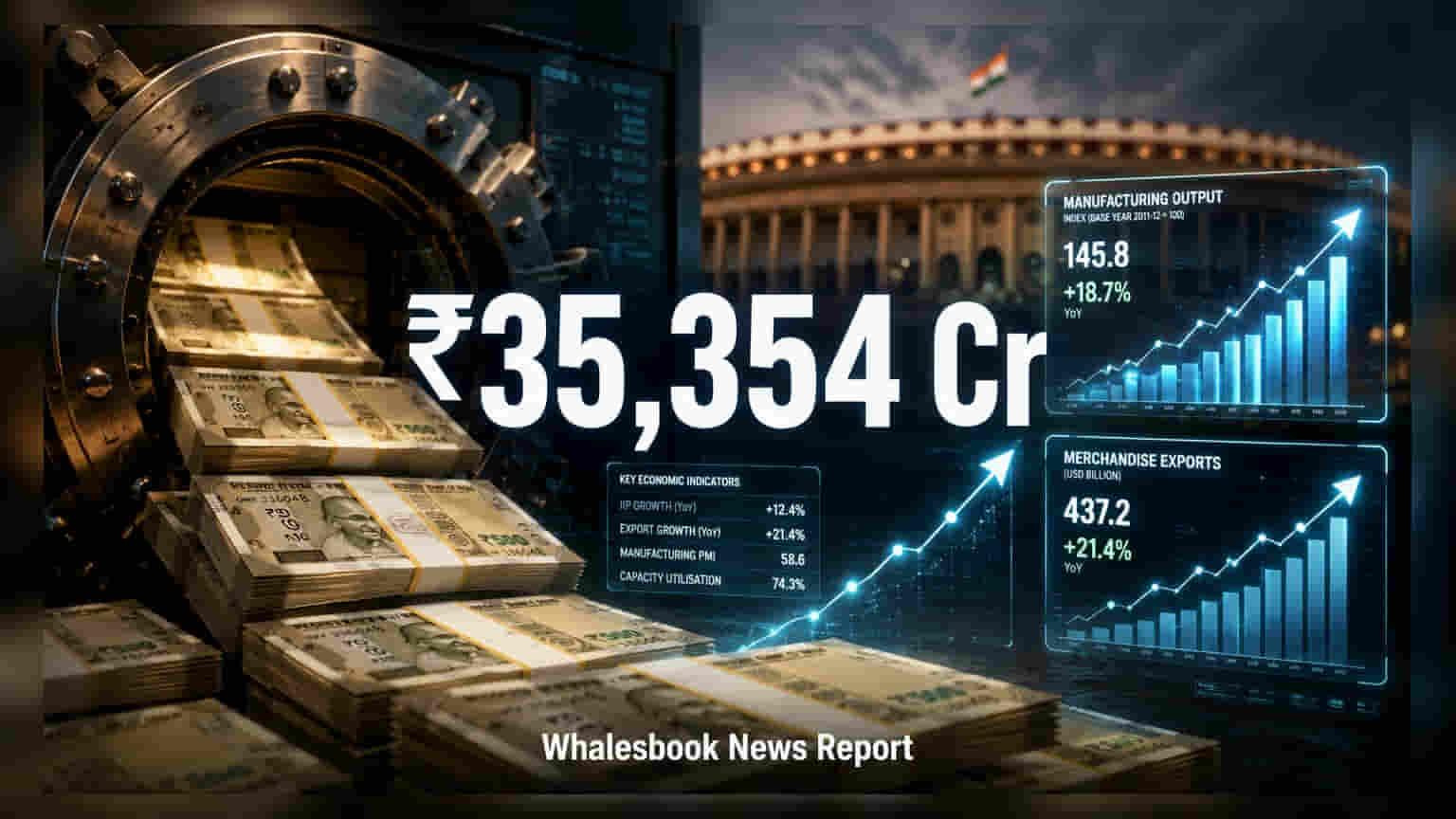
The Indian government has distributed ₹35,354 crore in incentives under Production Linked Incentive (PLI) schemes through March 2026. These initiatives across 14 sectors aim to reduce import dependence and drive manufacturing. Investors should track how these incentives impact the long-term profit margins and cash flow of participating companies.
Detailed Coverage
As of March 31, 2026, the Indian government has disbursed ₹35,354 crore to various manufacturers under its Production Linked Incentive (PLI) schemes. First introduced in 2020, these incentives are part of a broader government strategy to support domestic manufacturing across 14 distinct sectors, including electronics, automobiles, and pharmaceuticals. With a total approved budget of ₹1.91 lakh crore, the government aims to increase domestic production, reduce reliance on imported components, and boost exports.
According to data shared by Minister of State for Commerce and Industry, Jitin Prasada, in the Rajya Sabha, 892 applications have been approved under these schemes. These projects have collectively driven over ₹2.40 lakh crore in actual capital spending. The manufacturing output generated under these initiatives has exceeded ₹22.66 lakh crore, with exports from these units contributing more than ₹15.2 lakh crore to the economy.
Impact on Pharmaceutical Manufacturing
The pharmaceutical industry has emerged as a key beneficiary of the scheme. The sector has reported cumulative sales of over ₹3.64 lakh crore. A critical outcome for the sector is the domestic production of 1,931 distinct pharmaceutical products, including 191 bulk drugs that were previously not manufactured in India. For investors, this shift toward domestic production of raw materials or active ingredients can provide a business advantage by securing supply chains against global disruptions and potentially improving margins by reducing import costs.
Investor Considerations for PLI-Linked Companies
While the headline numbers indicate growth in production and employment—with the schemes supporting over 14.15 lakh direct and indirect jobs—the financial impact on individual companies varies significantly. Investors should note that PLI incentives are typically performance-based, meaning they are only received once a company meets specific milestones regarding investment, production, and sales targets.
One potential risk for companies is the risk of delay or cost increase in setting up the manufacturing capacity required to qualify for these payouts. Furthermore, as these schemes are temporary, the long-term sustainability of profit margins will depend on whether companies can achieve competitive efficiency and maintain market share once the incentive period concludes. Monitoring the pace of capital spending and the actual receipt of these cash incentives in quarterly results will be important for understanding the real impact on a company's balance sheet and debt position.
Going forward, the market will likely track how many of the 892 approved projects reach full capacity utilization and how effectively these firms navigate pricing pressure in their respective sectors. Future government updates on additional tranches of disbursement and any changes to sector-specific eligibility criteria will be the next important milestones for shareholders to watch.