

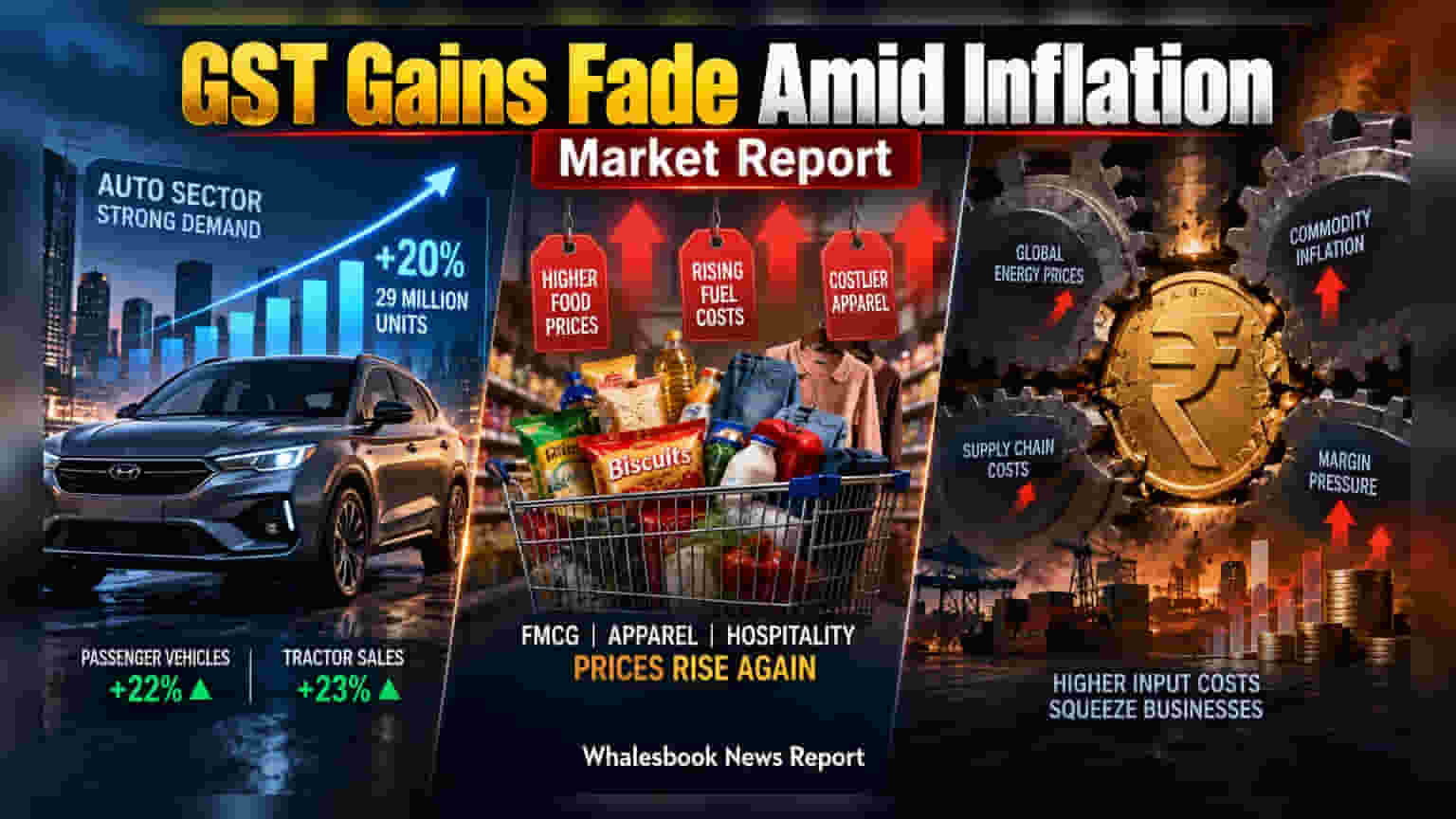
One year since India’s GST rationalization, rising commodity and logistics costs have largely offset consumer savings. While the auto sector continues to see strong demand, FMCG and apparel players are raising prices, complicating the impact of initial tax cuts.
One year ago, a major GST rationalization was expected to lower costs and boost demand across the Indian economy. Today, the reality is more complex as global energy and commodity inflation have blunted these intended benefits. For many sectors, the initial price relief has been replaced by the need to pass on rising operational costs to the consumer.
The automotive sector remains a standout performer despite these cost pressures. Recent industry data shows retail sales reached 29 million units in the 11 months leading to August 2026, marking a 20% increase compared to the previous period. Passenger vehicle registrations grew by 22%, while tractor sales climbed 23%. While underlying demand remains resilient, buyers are beginning to see prices creep back up. For instance, the Mahindra Scorpio-N Z2, which saw an initial price dip to ₹13.2 lakh following the tax cuts, has since returned to ₹13.6 lakh as the manufacturer adjusts for fluctuating input costs.
FMCG companies face a more difficult balance. Essential items initially saw GST rates drop from 18% to 5%, which triggered a 10% price cut. However, this was short-lived. Manufacturers have since implemented price hikes of 6-7% to counter elevated energy and logistics expenses, partly driven by the ongoing conflict in West Asia. Parle Products has noted that after these adjustments, consumers are left with only a modest 2-3% net benefit. For investors, the key monitorable is whether these companies can continue to pass on costs without hurting sales volumes during the upcoming festive season.
The impact has been less favorable in other retail categories. Apparel items priced above ₹2,500 faced a GST increase from 12% to 18%, which has limited growth potential for many retailers. The Clothing Manufacturers Association of India anticipates that rising costs will force further price increases of 5-7% during the festive period. Meanwhile, the hospitality sector is dealing with structural challenges; mid-market hotels that transitioned to a 5% GST rate without the benefit of input-tax credit are seeing their profit margins compressed. As essential operational inputs remain taxed at higher brackets, the intended benefits of the reform are being squeezed by these unresolved sectoral inefficiencies.
Moving forward, the ability of companies to maintain margins while navigating inflation will be critical. Investors should track whether demand remains strong enough to absorb further price hikes, particularly in the FMCG and apparel segments, or if companies will be forced to sacrifice profitability to maintain market share.