

As the income tax return filing season gains momentum, taxpayers must decide between the old and new tax regimes. While salaried individuals can switch between these systems annually, those with business or professional income face tighter restrictions. Understanding these rules is essential for managing personal tax outflows and long-term financial planning.
What The Switching Rules Are
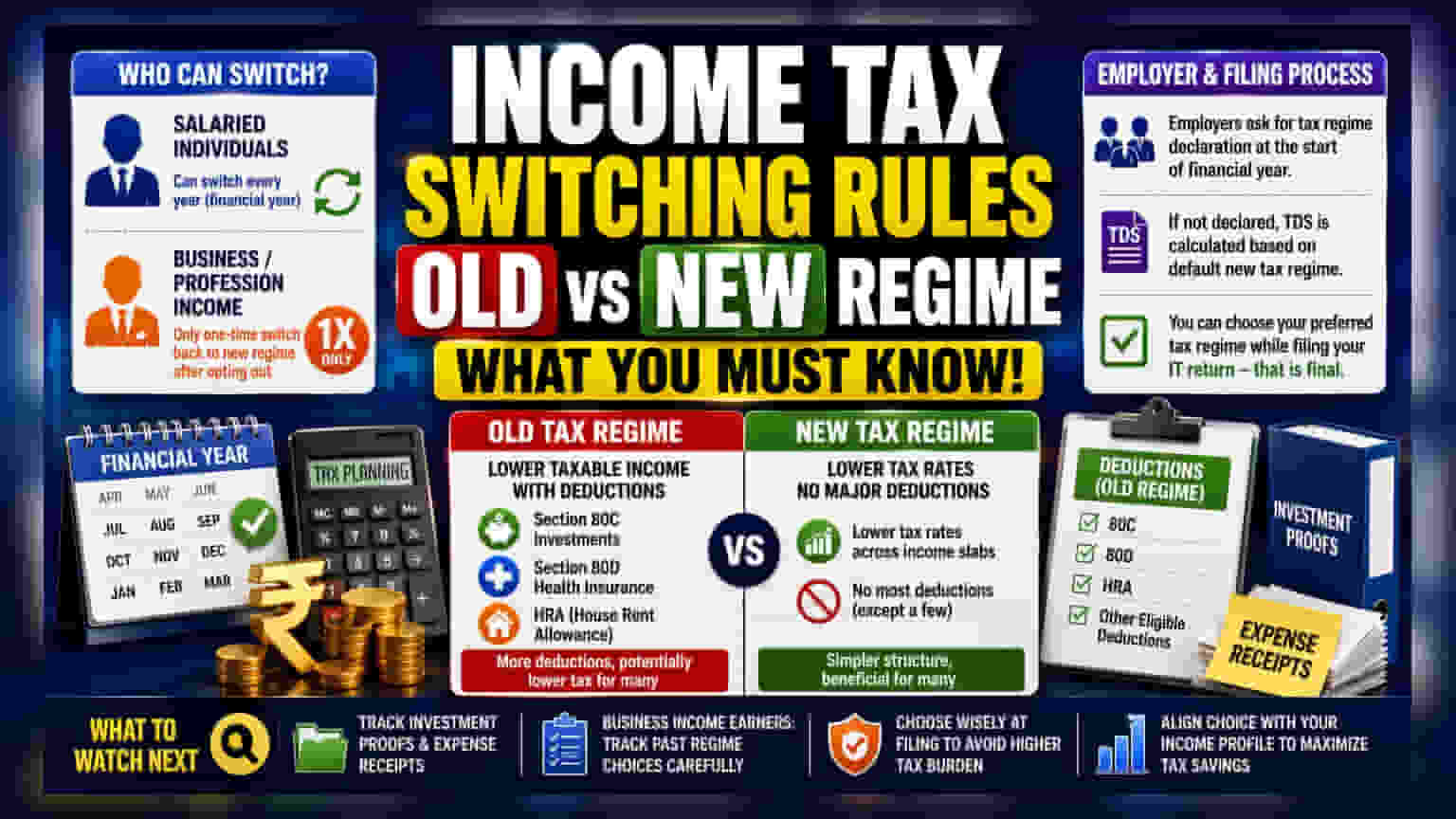
With the income tax filing season in full swing, many taxpayers are deciding whether to opt for the old tax regime or the new one. The choice is not just about which system offers lower tax; it is also about understanding the flexibility of switching between them. For salaried individuals, the process is relatively flexible. Under current rules, salaried employees can change their choice of tax regime every financial year. This allows them to assess their income and potential deductions annually before making a decision.
In contrast, taxpayers who earn income from a business or profession face stricter regulations. Once a business owner or professional opts out of the new tax regime, they are restricted in how they can return to it. This category of taxpayer is generally allowed only a one-time switch back to the new regime after opting out. This limitation makes it crucial for business-income earners to carefully plan their tax strategy before filing, as the decision carries longer-term implications than it does for salaried employees.
Why This Choice Impacts Your Finances
The fundamental difference between the two systems lies in how they treat expenses and investments. The old tax regime allows individuals to claim various deductions—such as Section 80C investments, 80D health insurance premiums, and House Rent Allowance (HRA). These deductions often lower the total taxable income, which can be beneficial for individuals with high expenses in these specific categories.
On the other hand, the new tax regime, which was made the default option by the Finance Act of 2023, generally offers lower tax rates but does not allow for most of these specific deductions. For many, the decision between the two hinges on whether the potential tax savings from deductions under the old regime are greater than the lower tax rates offered by the new system. Choosing incorrectly could result in a higher tax burden, directly impacting the amount of money an individual has available for savings and investments.
The Employer And Filing Process
For salaried employees, the interaction with employers is the first step in this process. Employers typically ask for a tax regime declaration at the start of the financial year to calculate the correct Tax Deducted at Source (TDS). If an employee does not provide this declaration, the employer is required to calculate TDS based on the default new tax regime.
However, it is important to note that this initial declaration is not permanent. Taxpayers have the final opportunity to choose their preferred tax regime at the time of filing their actual income tax return, regardless of what was communicated to the employer during the year. This final decision is what counts for the assessment of tax liability for that year.
What To Watch Next
Investors and taxpayers should keep track of their investment proofs and expense receipts throughout the year if they intend to opt for the old regime, as these are required to claim deductions. Those with business income should maintain a clear record of their past regime choices to ensure they do not accidentally breach the limit on switching between systems. The key monitorable for all taxpayers is ensuring the choice made at the time of filing aligns with their specific income profile to avoid unnecessary tax outflows.