 Whalesbook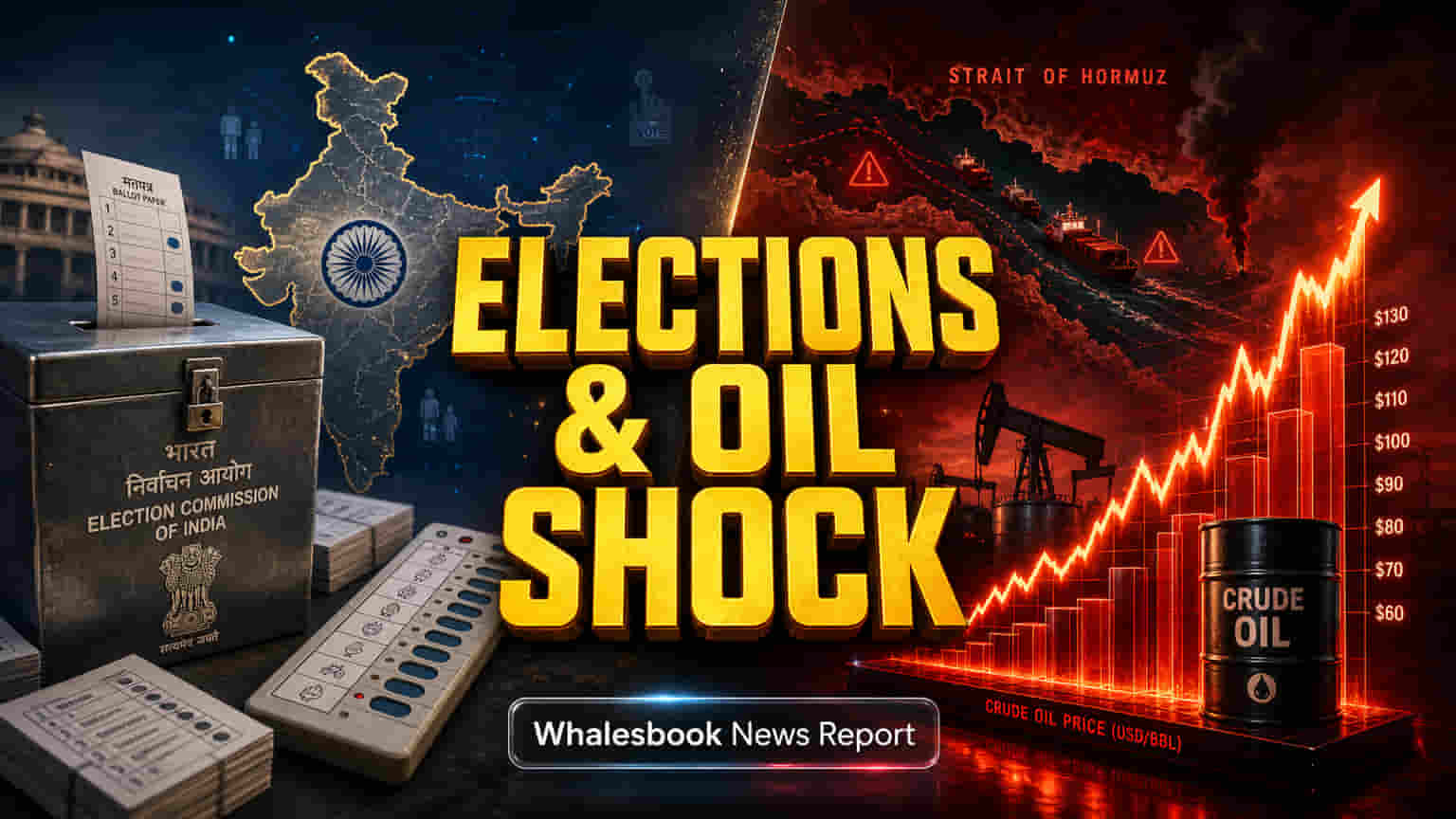


Key Forces Driving Market Volatility
India's stock market is set for a volatile week, caught between the outcome of state election results and ongoing geopolitical pressures driving up crude oil prices. Analysts are closely watching how potential shifts in domestic governance and global instability will affect investor sentiment as key state election counts begin Monday. High crude oil prices, driven by tensions in the Strait of Hormuz, are the main external concern, directly impacting inflation, the rupee, and company profits. This situation makes interpreting the latest Q4 earnings reports challenging.
Market Pressure: Oil Prices and Election Uncertainty
Recent trading sessions have shown this caution. The benchmark Nifty 50 and BSE Sensex ended April with small declines, hurt by rising crude oil prices and negative global trends. Brent crude has fluctuated, recently trading between $108 and $126 per barrel. This level heavily pressures India, which imports 85% of its oil. The price pressure fuels inflation worries and weakens the Indian rupee, which has hit new record lows around 94.92-95.34 against the US dollar. Adding to this, foreign portfolio investors (FPIs) continued selling in April. Despite these challenges, the Nifty 50 index still gained 5.8% in April, showing earlier strength now being tested. The Nifty's current price-to-earnings (P/E) ratio is around 20.9-21.02, near its long-term average and offering little cushion against profit declines.
Economic Strengths Amidst Risks
While geopolitical risks loom large, underlying economic indicators paint a more varied picture. The HSBC India Manufacturing PMI for April was 55.9, and the Services PMI reached 57.9, both signaling continued growth in their sectors. However, this expansion comes with higher input costs, especially for fuel and raw materials, though inflation has eased slightly from its March peak. India's foreign exchange reserves remain strong at approximately $703 billion, recovering after an earlier dip. Historically, Indian markets have seen short-term volatility around election results, but longer-term impact depends more on policy continuity and economic stability. Studies suggest that selling stocks during oil price spikes has often been a poor strategy, with markets often seeing positive returns 12 months later.
Key Risks and Vulnerabilities
The current environment presents several significant risks. The main concern is persistent upward pressure on crude oil prices, which fuels inflation and weakens the rupee. This strains household budgets and import costs, hurting corporate margins, particularly for energy-intensive sectors and those using imported materials. Ongoing geopolitical tensions in West Asia add an unpredictable factor; any escalation or disruption could trigger price spikes and supply issues. Continued foreign investor outflows, driven by global economic uncertainties and India's energy price exposure, further pressure domestic liquidity and currency stability. Moreover, sustained high crude prices and potential government spending for elections could strain the nation's fiscal deficit. The market's cyclical nature means growth sectors are still vulnerable to a broader economic slowdown if these pressures intensify.
Looking Ahead: Market Outlook
Looking forward, market sentiment will likely remain news-driven and highly sensitive to US-Iran developments and oil price movements. Analysts believe constructive diplomatic progress or a sustained drop in oil prices could spark short-covering rallies. Conversely, any escalation could increase downside risk. While some analysts recommend specific stocks with upside potential, the overall market outlook is cautious. Some research anticipates a potential market rally later in 2026, provided economic indicators improve and earnings grow, suggesting current weakness might set the stage for a rebound. However, near-term volatility is expected as markets absorb election results and the changing global situation.