

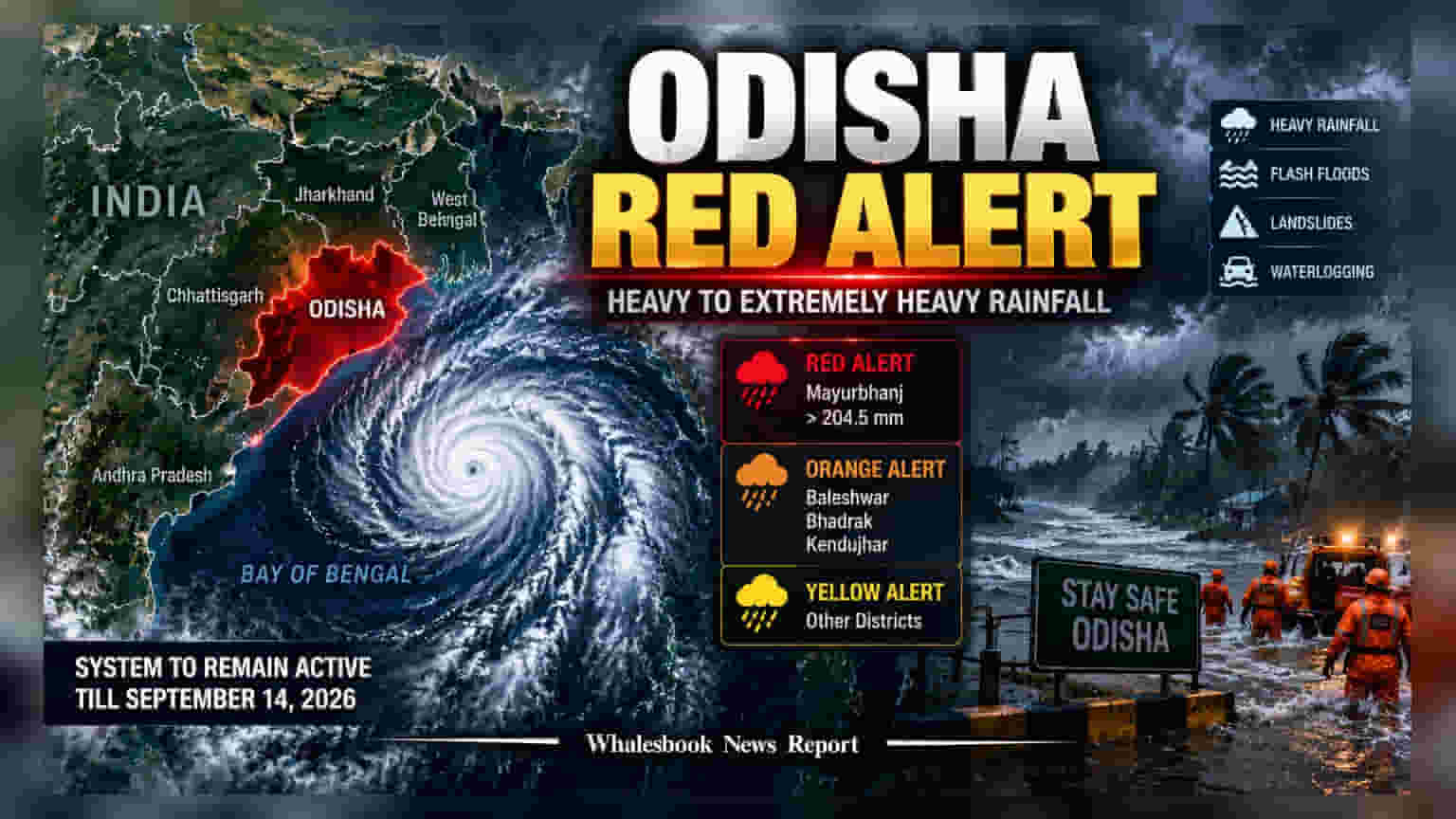
The India Meteorological Department has issued a Red Alert for Odisha’s Mayurbhanj district as a Bay of Bengal low-pressure system intensifies. Extreme weather conditions are expected to persist until September 14, 2026, posing risks to regional infrastructure, logistics, and agricultural production.
The India Meteorological Department (IMD) has placed Odisha on high alert as a deep low-pressure system over the Bay of Bengal moves inland. A Red Alert has been specifically issued for the Mayurbhanj district, signaling expectations of heavy to extremely heavy rainfall that could exceed 204.5 mm in certain areas. This weather system is expected to remain active through September 14, 2026, creating challenging conditions for the state.
The weather disturbance is not limited to a single area. Orange warnings are currently in place for districts including Baleshwar, Bhadrak, and Kendujhar, while other regions remain under yellow alerts. These conditions bring a heightened risk of flash floods, landslides, and significant waterlogging. For regional economic activity, such weather often leads to immediate disruptions in transportation and logistics, as movement becomes difficult on waterlogged roads and low-lying infrastructure.
The timing of this heavy rainfall is crucial for the agricultural sector. Excessive downpours pose a risk of crop damage, particularly for standing harvests, and can create drainage challenges in agricultural fields. Farmers and local businesses are being advised to take precautions, such as securing livestock and protecting harvested produce, as the extreme weather could temporarily halt outdoor work and impact rural supply chains in the affected districts.
While this is primarily a regional weather event, its duration through mid-September means that the impact on local infrastructure projects, mining operations, or agricultural output in eastern India is a factor worth noting. Investors with interests in companies that have significant operations, logistics networks, or supply chain dependencies in northern and coastal Odisha may monitor official updates regarding potential site closures, infrastructure damage, or transport delays as the system moves across the region.