

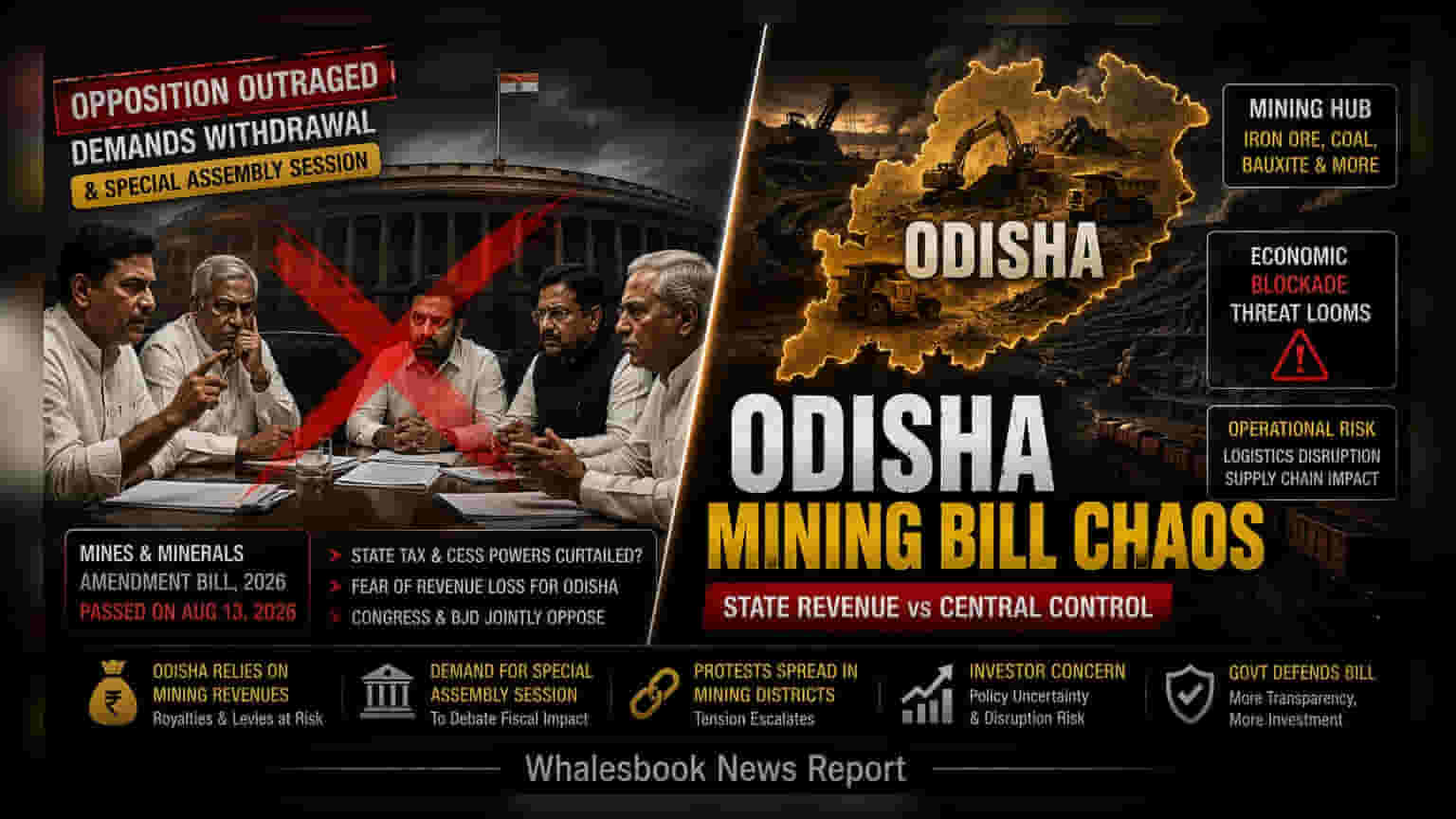
The Odisha Congress has threatened an economic blockade in mining districts, opposing the Mines and Minerals (Development and Regulation) Amendment Bill, 2026. The opposition claims the new law limits state fiscal powers, while the central government denies any revenue loss. Investors are monitoring the potential for supply chain and operational disruptions in the state's mineral-rich regions as the political standoff continues.
Political tension in Odisha has escalated following the passage of the Mines and Minerals (Development and Regulation) Amendment Bill, 2026, by the Indian Parliament on August 13, 2026. On August 20, the Odisha Pradesh Congress Committee announced plans for an economic blockade in the state’s key mining districts if the new central legislation is not withdrawn.
The core of the dispute involves the state's fiscal autonomy. Opposition parties, including the Congress and the Biju Janata Dal (BJD), argue that the new law restricts the state government's ability to levy local taxes and cess on mineral-bearing lands. They fear this could erode the state’s revenue base, which is heavily reliant on mining royalties and associated levies. The opposition is now jointly demanding an immediate special session of the Odisha Legislative Assembly to debate the long-term implications of this legislation on the state's finances.
From a business perspective, the primary concern for investors and industry participants is the stability of operations in mining-heavy belts. Odisha is a major contributor to India's mineral output, including iron ore and coal. While the protest is political, an economic blockade in these districts poses a direct operational risk. Such disruptions can lead to logistical bottlenecks, delayed transport of raw materials, and uncertainty for businesses operating in the region. Until there is clarity on the protests or a resolution between the state and central authorities, the risk of intermittent local disruption remains a factor for mining-dependent supply chains.
The central government has defended the amendment, dismissing claims of financial harm to the states. Union government representatives have stated that the new framework is designed to bring transparency to the mining sector, attract more investment, and foster a competitive market. They maintain that the revenue share, including auction premiums and royalties, will continue to accrue to the state government as before, refuting concerns that the new law will cause a revenue shortfall.
The conflict highlights the ongoing complexity of federal-state fiscal relations in the mining sector, an area where tax dues and revenue-sharing mechanisms have historically been subject to intense legal and political scrutiny. With estimates of pending mineral-related tax dues occasionally cited in the hundreds of billions of rupees in past discussions, any major policy shift naturally attracts significant attention.
The next important developments for observers will be whether the state government calls for the demanded assembly session and how the local administration manages potential protest activities in mining areas. Investors will likely track any official statements from the state or central government that provide clarity on tax-collection mechanisms or offer assurances regarding the continuity of mining logistics and operations.