

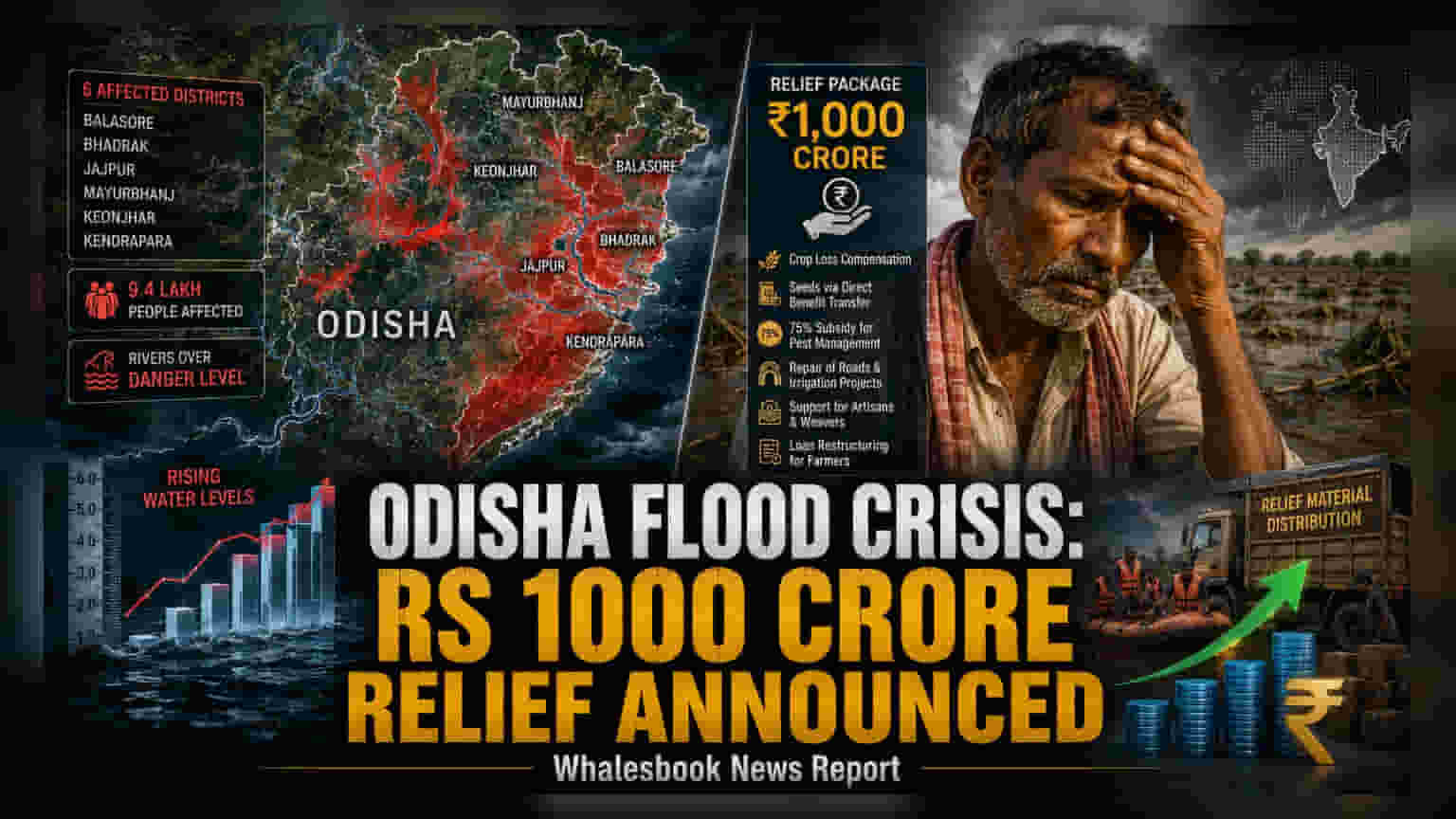
Odisha Chief Minister Mohan Charan Majhi has unveiled a ₹1,000 crore relief package to support six northern districts affected by severe flooding. The funds are earmarked for agricultural compensation, infrastructure restoration, and livelihood support for over nine lakh impacted individuals. The state government noted that this allocation is preliminary and may increase pending a detailed damage assessment.
The Odisha state government has announced a ₹1,000 crore relief package to assist six northern districts grappling with severe floods. Chief Minister Mohan Charan Majhi confirmed the allocation on August 18, 2026, aimed at providing immediate financial aid and restoring normalcy in Balasore, Bhadrak, Jajpur, Mayurbhanj, Keonjhar, and Kendrapara. The flooding, triggered by heavy rainfall and rising river levels, has affected approximately 9.4 lakh people, causing significant disruption to agricultural activities and regional infrastructure.
Agriculture and Livelihood Support
A primary focus of this relief package is the revival of the agricultural sector, which remains the backbone of the local economy in these regions. To support farmers facing crop losses, the state has outlined compensation structures based on land type. Farmers in non-irrigated areas are set to receive ₹8,500 per hectare, while those with irrigated land will get ₹17,000 per hectare. For perennial crops, the compensation is fixed at ₹22,500 per hectare. Additionally, the government plans to facilitate the purchase of seeds through direct benefit transfers and provide a 75% subsidy for post-flood pest management. For those with outstanding Kharif crop loans, the administration has authorized the conversion of short-term debt into medium-term loans to ease the financial burden on the farming community.
Infrastructure and Economic Impact
Beyond agriculture, the package addresses the broader economic damage caused by the floods. Funds have been allocated for the immediate repair of damaged irrigation projects and road infrastructure, which is crucial for maintaining supply chains in these districts. The government has also extended specific support to the artisan and weaving communities, offering financial assistance for damaged tools, equipment, and raw materials.
From an economic standpoint, while this ₹1,000 crore expenditure represents an immediate fiscal outlay for the state, officials have indicated that this is a preliminary estimate. A final damage assessment is currently underway, and the total relief amount could be revised upward depending on the extent of the destruction found in rural and urban pockets. The state continues to monitor the situation closely, as the India Meteorological Department has issued alerts for further heavy rainfall in 11 districts, raising concerns about the potential for additional flash-flood risks in vulnerable areas.
Rescue and relief operations remain ongoing, with dozens of teams deployed across the affected blocks to ensure essential supplies like food and medical aid reach those in need. Moving forward, the key monitorable for the regional economy will be the pace of infrastructure restoration and the success of crop recovery programs, both of which will determine the long-term impact of this flood event on the state's economic output.