

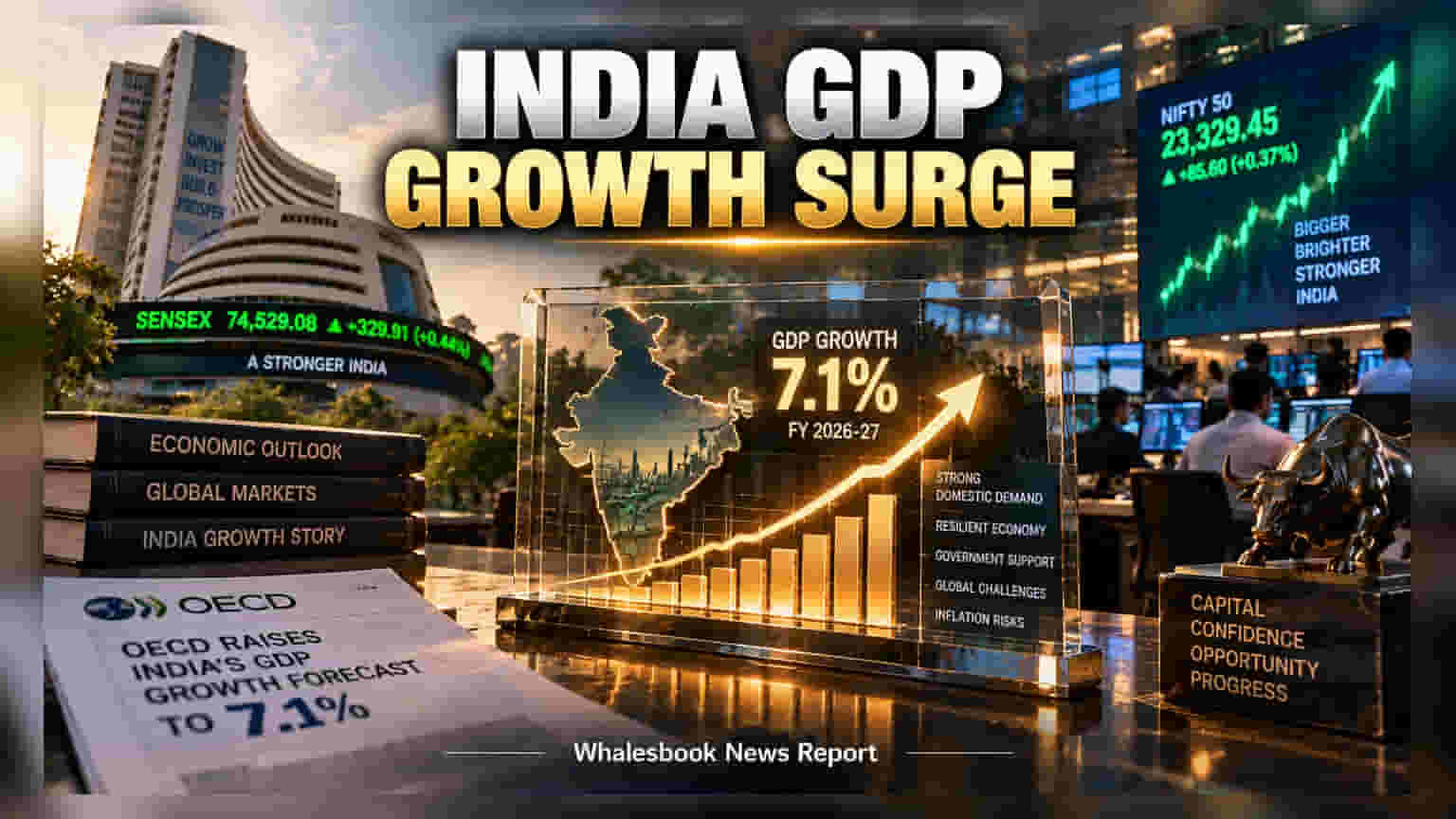
The OECD has raised India's fiscal year 2027 GDP growth projection to 7.1%, citing strong domestic demand and supportive government policies. While this puts India ahead of many other major economies, potential inflationary pressures and global geopolitical risks remain key factors. Investors should track how these macro trends might influence future interest rate decisions and corporate spending.
The Organisation for Economic Co-operation and Development (OECD) has increased its growth projection for the Indian economy for the 2026-27 fiscal year. The Paris-based international body now forecasts India's economy to grow by 7.1 percent, a notable upward revision from its previous estimates. This adjustment reflects a confident view of the country's economic resilience and positions India as one of the fastest-growing major economies globally.
This projection is slightly more optimistic than those from other prominent global agencies, such as the Asian Development Bank, S&P, and Moody’s, which have generally estimated India’s growth to hover around the 7 percent mark. The OECD credits this positive outlook to steady domestic demand and strategic government policies that have helped shield both businesses and households from the volatility of global energy markets. By offering price support, the government has worked to keep private consumption stable, insulating the economy from wider supply-side disruptions.
Despite the positive forecast, the report includes cautionary notes regarding the economic environment. The OECD highlights the risk of persistent inflationary trends which may force the Reserve Bank of India to consider temporary increases in policy interest rates. For investors, this is a crucial angle, as higher interest rates can increase borrowing costs for companies, potentially squeezing profit margins and impacting money spent on business expansion.
External factors also remain a significant variable. The OECD notes that the global economic landscape is heavily dependent on stability in the Middle East. Geopolitical tensions in the region can lead to sudden spikes in commodity prices and disrupt global supply chains. These conditions create uncertainty that policymakers must manage carefully to balance the goals of supporting growth while keeping price levels stable.
For investors, the primary monitoring point moving forward is how domestic demand holds up against the combined pressure of inflation and borrowing costs. While the economic momentum is currently viewed as strong, the actual performance of corporate earnings and consumer spending will depend on how these risks evolve. Key updates to follow include central bank policy meetings, movements in global commodity prices, and quarterly data on domestic consumption.