

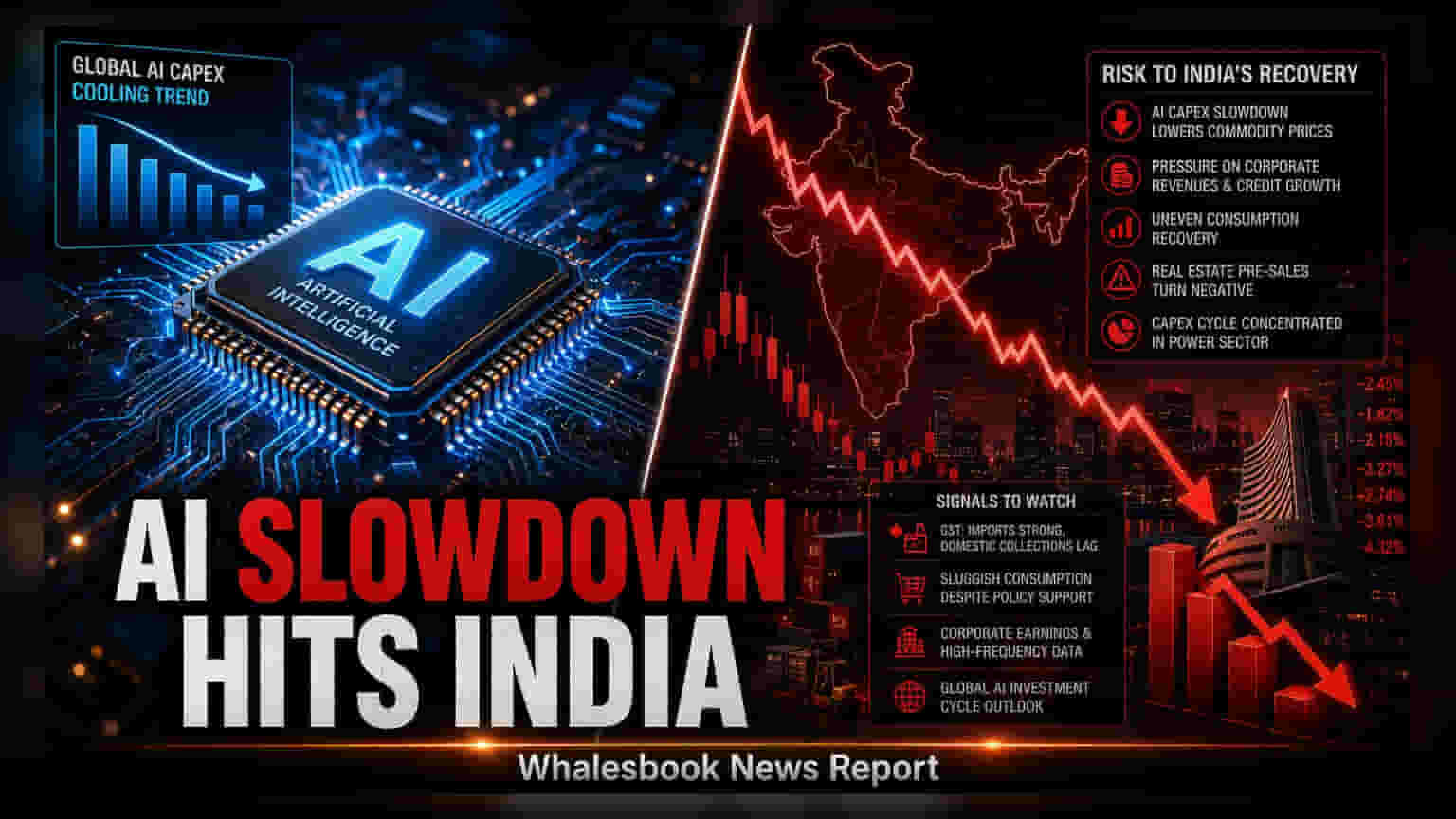
Nuvama Research signals that a potential drop in global artificial intelligence spending could hurt India's economic cycle. While the country has seen strong nominal growth, this momentum is vulnerable to external shocks, with signs of underlying weakness in domestic demand and consumption.
Nuvama Research has issued a note stating that a cooling in global artificial intelligence (AI) capital expenditure could challenge India's recent economic recovery. The brokerage highlights that while India has posted strong headline figures, including approximately 20% year-on-year growth in corporate revenue and about 15% aggregate credit expansion, this progress remains highly dependent on external factors.
The global AI investment cycle has provided indirect support to the Indian economy by keeping commodity prices elevated and fueling manufacturing inflation. However, the brokerage warns that this support is temporary and sensitive to global trends. If AI-related spending slows down, it could pull down commodity prices, which would, in turn, put pressure on corporate revenues and credit growth in India. This reliance on external support underscores the need for investors to distinguish between headline growth and the strength of underlying domestic demand.
Evidence of this uneven recovery is visible in recent tax data. Nuvama points to a divergence in Goods and Services Tax (GST) collections: while collections from imports remain strong, growth in domestic collections has lagged. This gap suggests that domestic consumption is not as robust as the headline numbers might imply. The economy is witnessing an uneven recovery where high-end goods, which often have higher import content, are performing better than lower-end products.
Broader consumption indicators reinforce this view of a cautious domestic environment. Despite various government initiatives, such as GST changes, income tax relief, and monetary easing by the Reserve Bank of India, consumption has not shown significant acceleration. A notable shift has occurred in the real estate sector, where listed companies have seen pre-sales growth turn negative on a trend basis, marking a departure from the post-pandemic recovery period.
Furthermore, the current capital expenditure cycle in India is quite concentrated. Most of the investment momentum is focused on the power sector, while broader corporate investment remains soft. This creates a situation where the economic recovery is policy-driven and sector-specific rather than broad-based.
Investors monitoring these trends may look toward upcoming corporate earnings and high-frequency economic indicators to gauge the strength of domestic demand. The primary risk to watch is whether the domestic economy can sustain its momentum if global tailwinds, such as elevated commodity prices and AI-driven investment, begin to fade. If demand remains sluggish, any external cooling could heighten the pressure on corporate profit margins and revenue growth.