

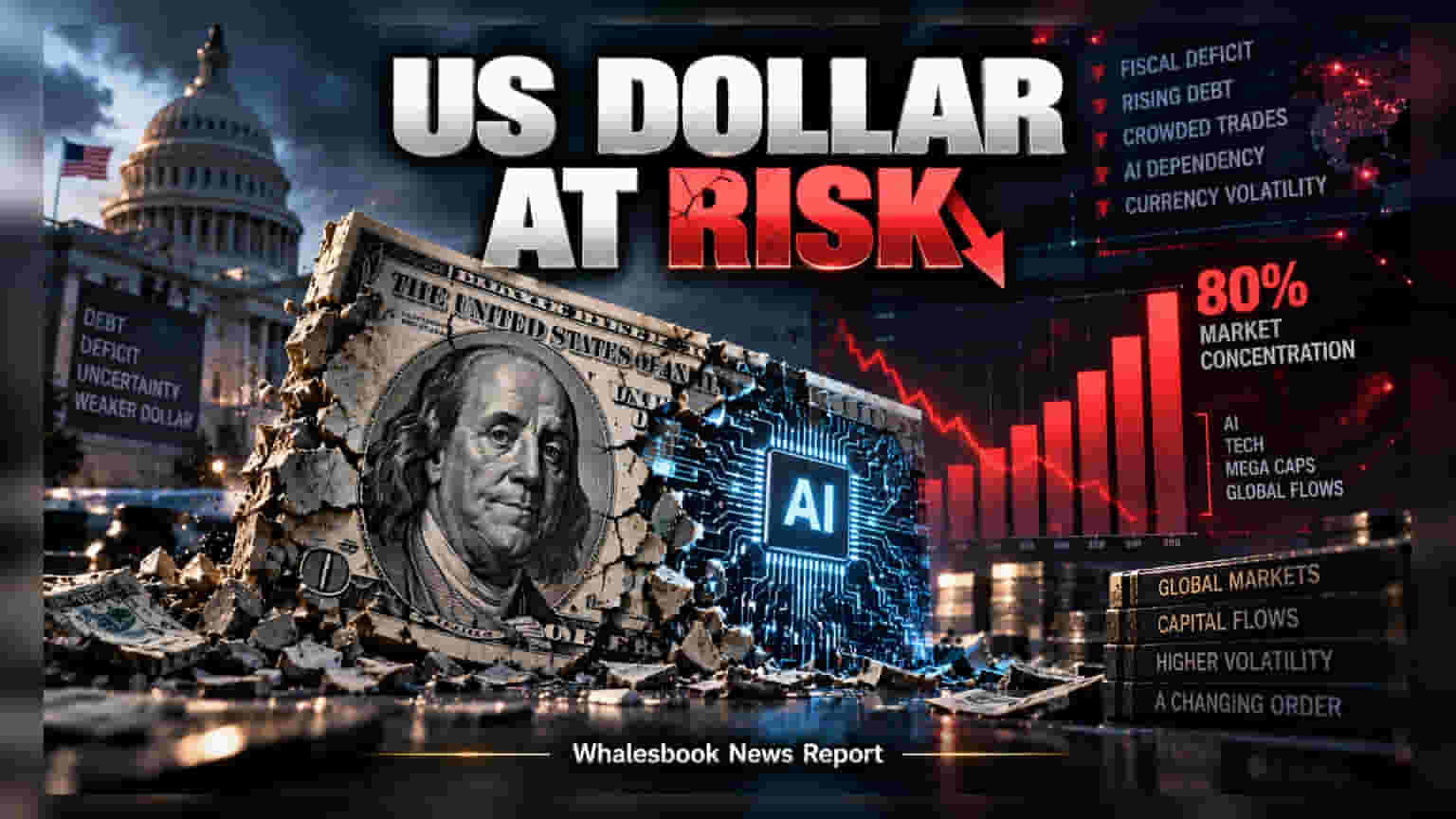
Market analysts are raising questions about the future strength of the US Dollar, citing high fiscal deficits and stretched investor sentiment. Experts suggest that if bullishness in the tech sector cools, the currency could face increased volatility.
Financial market analysts, including those at Nomura, have recently highlighted potential downside risks for the US Dollar. While the currency has long been viewed as a safe haven, recent research suggests that a combination of fiscal pressures and crowded market positioning may leave it vulnerable to future fluctuations.
The Impact of Fiscal Deficits
A primary concern raised by market observers is the state of US fiscal policy. The country is navigating a period of significant federal debt, and analysts have noted that consistent fiscal deficits are beginning to weigh on long-term investor sentiment. When a country runs large deficits for an extended period, it can lead to questions regarding fiscal credibility and the sustainability of current government spending. This backdrop has prompted some experts to adjust their outlook, suggesting that the traditional 'US exceptionalism'—the idea that the US economy will consistently outperform others—may face challenges.
Crowded Positioning and AI Sensitivity
Another factor identified by analysts is the nature of global capital flows. Much of the capital inflow into the US over recent periods has been driven by heavy investment in the technology and artificial intelligence sectors. Nomura’s research has pointed out that investor positioning in these assets is quite 'crowded,' meaning a large number of market participants are betting on the same outcome.
If the excitement surrounding AI-driven tech stocks were to cool, or if economic data begins to show a slowdown, there is a risk that this capital could shift. Such a reversal would likely cause volatility not just in equity markets, but in currency markets as well. Historically, when investors move away from these concentrated positions, the demand for the US Dollar can fluctuate, potentially leading to a period of depreciation.
Why This Matters for Investors
The status of the US Dollar is a critical driver for global markets, including emerging markets like India. A weaker dollar often influences global interest rates, commodity prices, and foreign institutional investor (FII) flows into developing economies. When the dollar is strong, emerging markets often see capital outflows; if the dollar faces downward pressure, the dynamics of these capital flows can change significantly.
Investors are now monitoring several key areas to gauge the dollar's direction. These include decisions by the Federal Reserve regarding interest rate policy, updates on US Treasury debt management, and incoming macroeconomic data. The key monitorable for the coming months will be whether the US economy can maintain its growth momentum while managing its fiscal obligations. Any shift in these metrics will likely provide clearer signals on the stability of the dollar in the global financial system.