

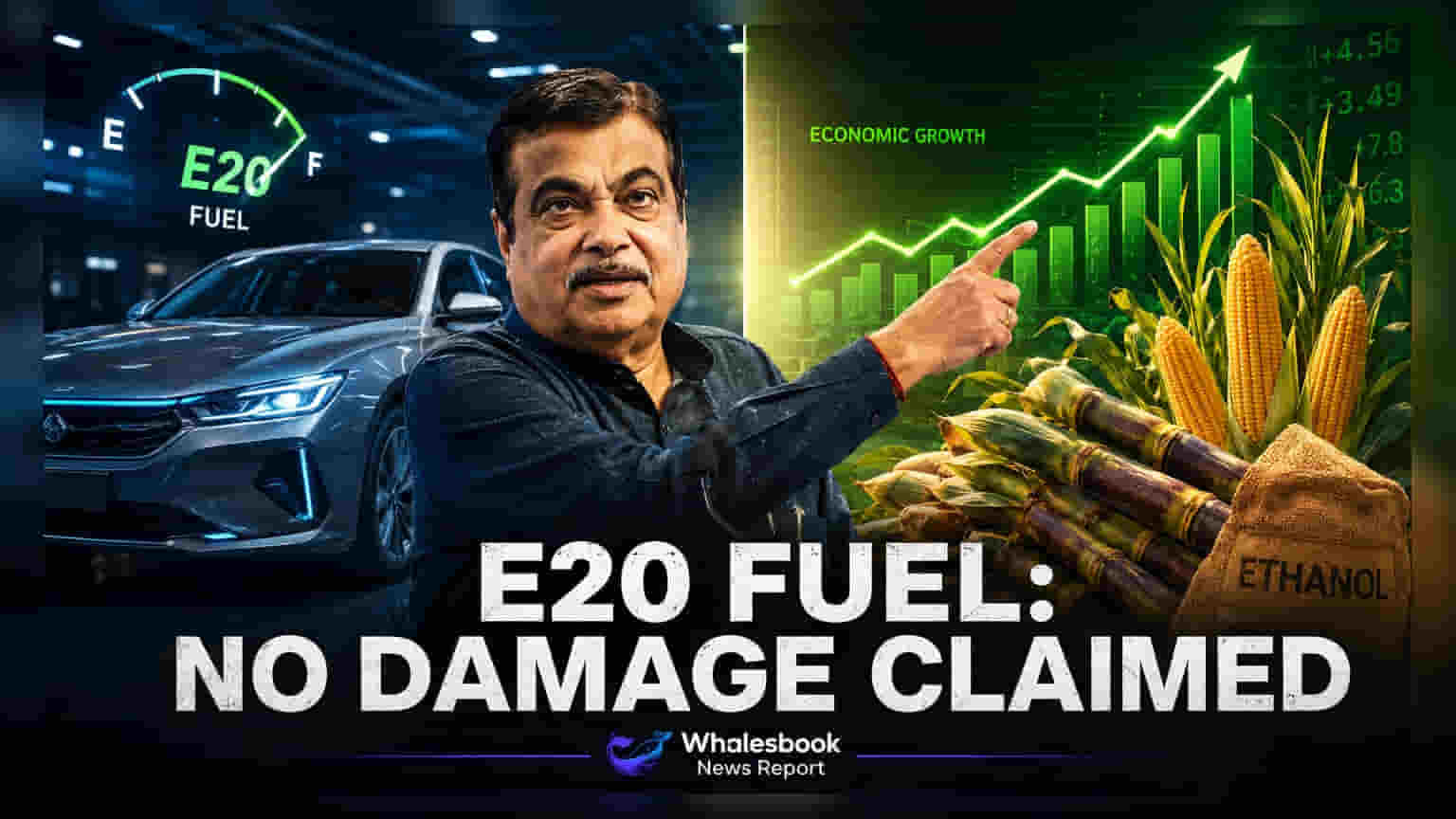
Union Minister Nitin Gadkari has challenged critics to prove that E20 ethanol-blended petrol damages vehicle engines. The government continues to push for higher blending to reduce the nation's ₹22 lakh crore oil import bill and boost farm incomes.
Union Minister for Road Transport and Highways, Nitin Gadkari, has issued a public challenge to critics of India’s ethanol-blending program, asking them to identify any vehicle that has suffered damage specifically due to E20 fuel. His comments come as the government pushes ahead with its policy to blend 20% ethanol with petrol to lower carbon emissions and reduce reliance on expensive crude oil imports.
Government Strategy and Import Costs
India has made significant strides in its biofuel policy, aiming to cut its massive annual fuel import expenditure, which currently stands at approximately ₹22 lakh crore. By using biofuel produced from crops like sugarcane, corn, and rice, the government intends to provide a dual benefit: improving the country’s balance of trade and creating new income streams for the domestic agricultural sector. Gadkari pointed to the rising price of corn, which has increased from ₹1,200 per quintal to ₹2,800 per quintal, as evidence of the positive economic impact on farmers in states like Uttar Pradesh and Bihar.
Addressing Technical Concerns and Future Blending
Despite the policy momentum, the shift to ethanol-blended fuel has sparked debates regarding its long-term effects on engine performance, fuel efficiency, and the compatibility of older vehicles. Critics have often cited potential maintenance issues for non-compliant engines as a primary risk. While discussions about potentially increasing the blend to E25 have circulated in the market, government officials have clarified that no official decision has been made. Future shifts in blending targets will rely on scientific testing and feedback from industry stakeholders to ensure vehicle performance is not compromised.
Clarification on Policy Intent
During his address, the Minister also responded to personal questions regarding his family’s interests in the sugar industry. He stated that his family-owned businesses are not dependent on ethanol production and rejected allegations that these interests influence national policy decisions. For investors and the automotive industry, the focus remains on the ongoing adaptation of vehicle technology to support higher biofuel usage. The key monitorable for the sector will be the stability of feedstock supply and whether future government mandates align with the manufacturing timelines of major automotive original equipment manufacturers to ensure engine longevity.