

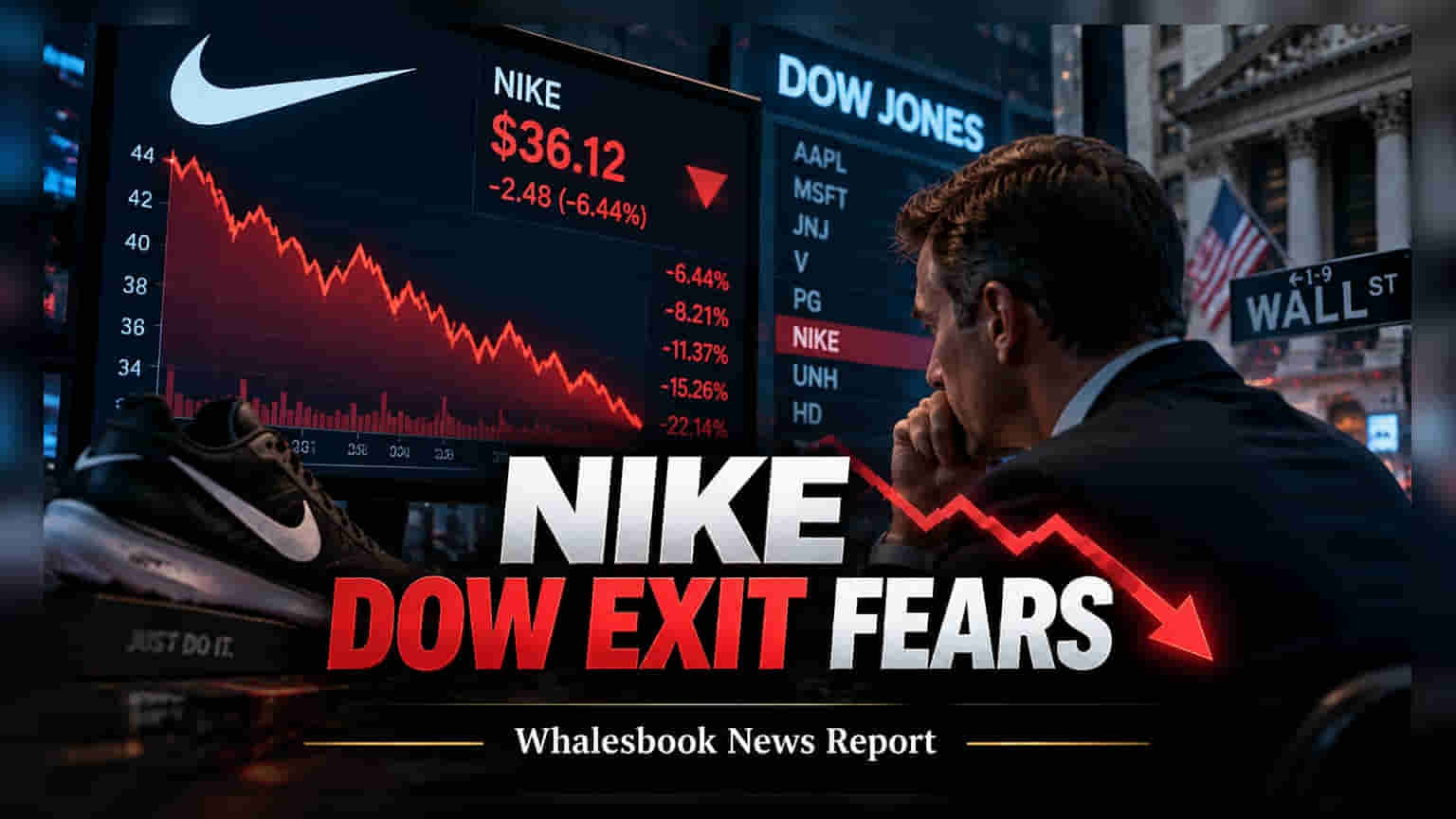
Nike's position in the Dow Jones Industrial Average is under pressure after its upcoming exit from the S&P 100 on September 21. With its low share price making it the smallest component of the Dow, investors are watching for further index changes. This shift reflects the company's ongoing struggle to combat declining market influence and competitive challenges.
Nike is facing a new challenge as its position in the Dow Jones Industrial Average, one of the most recognized stock market indices globally, looks increasingly shaky. This follows the company's confirmed removal from the S&P 100, which will take effect on September 21, 2026. For investors, the concern is that index removals often trigger mandatory selling from passive funds that track these benchmarks, which could create additional pressure on the stock.
Unlike many other major indices that rank companies by total market value, the Dow Jones Industrial Average is a price-weighted index. This means a company’s share price, rather than its total market size, determines its influence on the index’s movement. With Nike’s share price recently hovering around $36, it represents just 0.4 per cent of the index’s weight, making it the smallest component among the 30 companies listed. Historically, being the lowest-weighted stock in the Dow has been a frequent precursor to removal, as seen when Verizon Communications was dropped from the benchmark.
The sportswear giant has been working to turn its business around since CEO Elliott Hill returned to leadership earlier in 2024. However, the company has struggled with perceived innovation failures and stiffer competition from newer, more agile brands in the athletic apparel space. While the index committee—which includes representatives from S&P Dow Jones Indices and The Wall Street Journal—does not publicly share its deliberations, the contrast between Nike and other members is stark. For example, high-priced components like Goldman Sachs trade at significantly higher levels, often above $900 per share. The Dow committee typically looks to maintain a balance of influence across its components, and this wide price gap highlights the disparity.
Investors tracking the stock should monitor further updates from the S&P Dow Jones Indices. The primary monitorable is whether the potential exclusion from the Dow leads to further selling by index-tracking funds, which would need to rebalance their portfolios if the company is removed. Shareholders will also need to watch for signs of successful product innovation or market share recovery, as the current business performance has been the core driver behind the company’s recent decline in the index.