 Whalesbook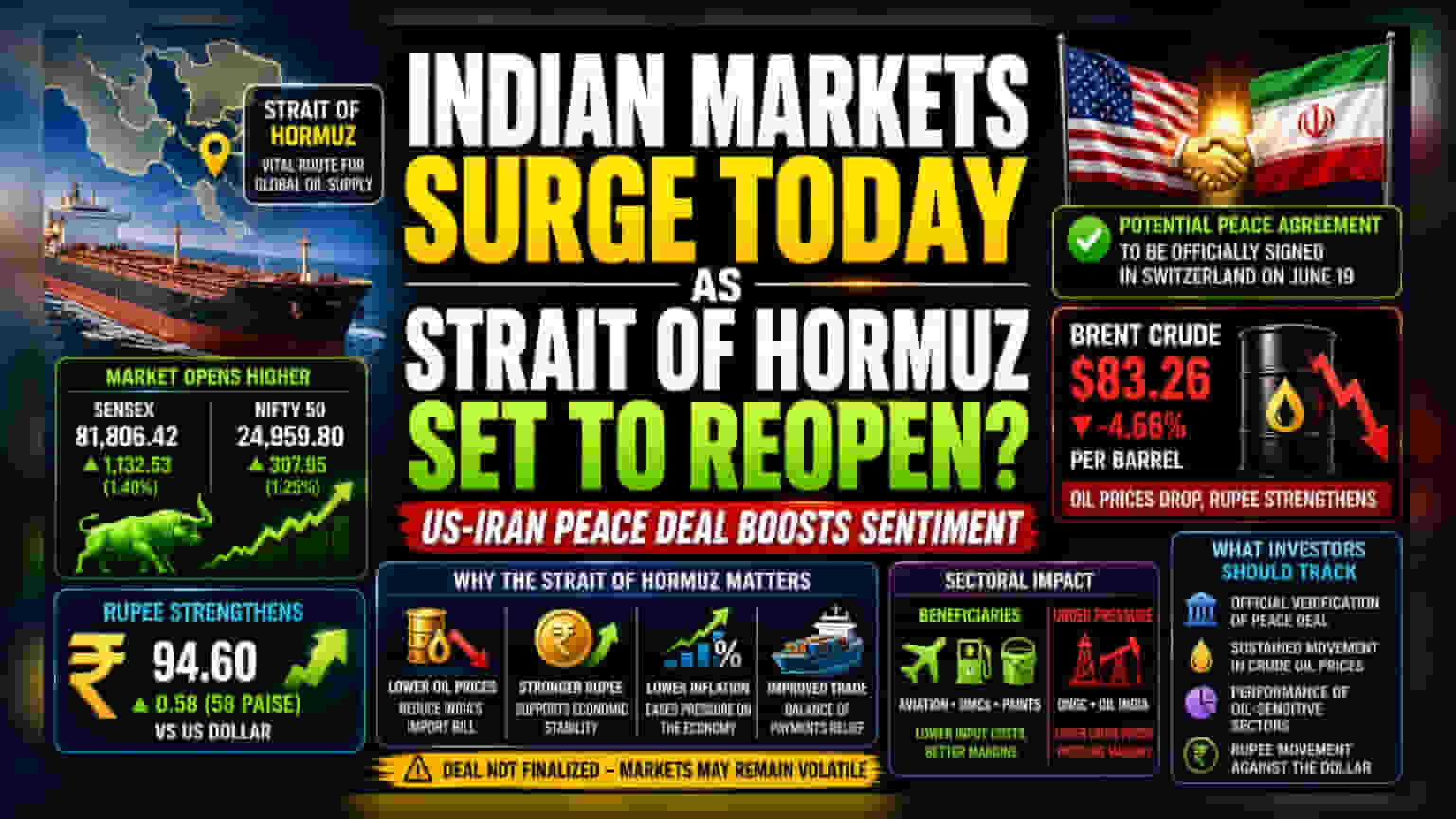


Indian markets surged on reports of a potential US-Iran peace deal and the reopening of the Strait of Hormuz. Investors are reacting to falling global crude oil prices, which could help ease inflation and reduce India's import bill. While optimism is driving prices higher, market participants are keeping an eye on formal deal confirmation and potential volatility in oil-sensitive sectors.
What Happened
Indian equity markets opened the week with significant gains on Monday, June 15, 2026, following news reports of a potential peace agreement between the United States and Iran. The primary driver of this market sentiment is the prospect of the Strait of Hormuz reopening. This waterway is a vital route for global oil shipments, and news of its potential stabilization has triggered a positive response in equity indices like the Nifty and Sensex.
Why The Strait Of Hormuz Matters
The Strait of Hormuz is one of the most critical chokepoints for global energy trade, with a large percentage of the world's oil passing through it daily. For India, which relies heavily on crude oil imports to meet its energy needs, any disruption in this region typically leads to higher energy costs, which in turn fuels inflation and increases the country's import bill.
When reports of peace and stability in this region emerge, global crude oil prices often drop. A sustained decline in oil prices is generally viewed as favorable for the Indian economy. It helps control the trade deficit, strengthens the rupee, and creates breathing room for domestic inflation management. Investors often interpret this as a positive trigger for the broader economy.
How Investors May Read This
While the market sentiment is currently bullish, investors should distinguish between headline-driven rallies and long-term economic shifts. The current market reaction is based on news of a potential deal, not a finalized, signed, and implemented agreement. Markets are sensitive to geopolitical developments, and news-based rallies can be volatile. If the deal faces delays or if geopolitical tensions unexpectedly re-emerge, the market reaction could reverse.
Technical analysts have identified key resistance levels for the Nifty around 23,800 to 24,200. Reaching these levels will depend on whether the current optimism can sustain through the trading session and whether institutional investors continue to back this upward move. Investors should avoid assuming that the rally will continue indefinitely without looking for formal confirmation of the deal.
Sectoral Impact
Lower crude oil prices create a shift in the profit outlook for various industries. Oil Marketing Companies (OMCs) like Indian Oil, BPCL, and HPCL, as well as sectors that are heavy users of fuel—such as aviation and paints—often benefit when crude oil prices decline, as their input costs decrease. Conversely, upstream oil producers, such as ONGC and Oil India, generally see their margins pressured when crude prices fall, as their realisations are directly tied to the price of oil.
What Could Go Wrong
Geopolitical agreements are complex and often prone to unexpected hurdles. Relying purely on the assumption that the Strait of Hormuz will reopen smoothly may lead to oversight of underlying risks. If crude oil prices were to spike again due to failure in negotiations, the inflationary pressure on the Indian economy would return quickly. Furthermore, if the current market rally is driven primarily by sentiment rather than actual corporate earnings growth, it may leave the market vulnerable to sharp corrections if the news is not followed by concrete actions.
What Investors Should Track
Investors should focus on several monitorables in the coming days. First, look for official verification of the peace deal from government sources. Second, observe the actual movement in global crude oil prices; a sustained drop is more meaningful than a temporary dip. Third, monitor the performance of oil-sensitive sectors to see if the market is pricing in structural changes or just temporary relief. Finally, keep an eye on how the rupee performs against the dollar, as this remains a key indicator of economic stability in response to energy price changes.