

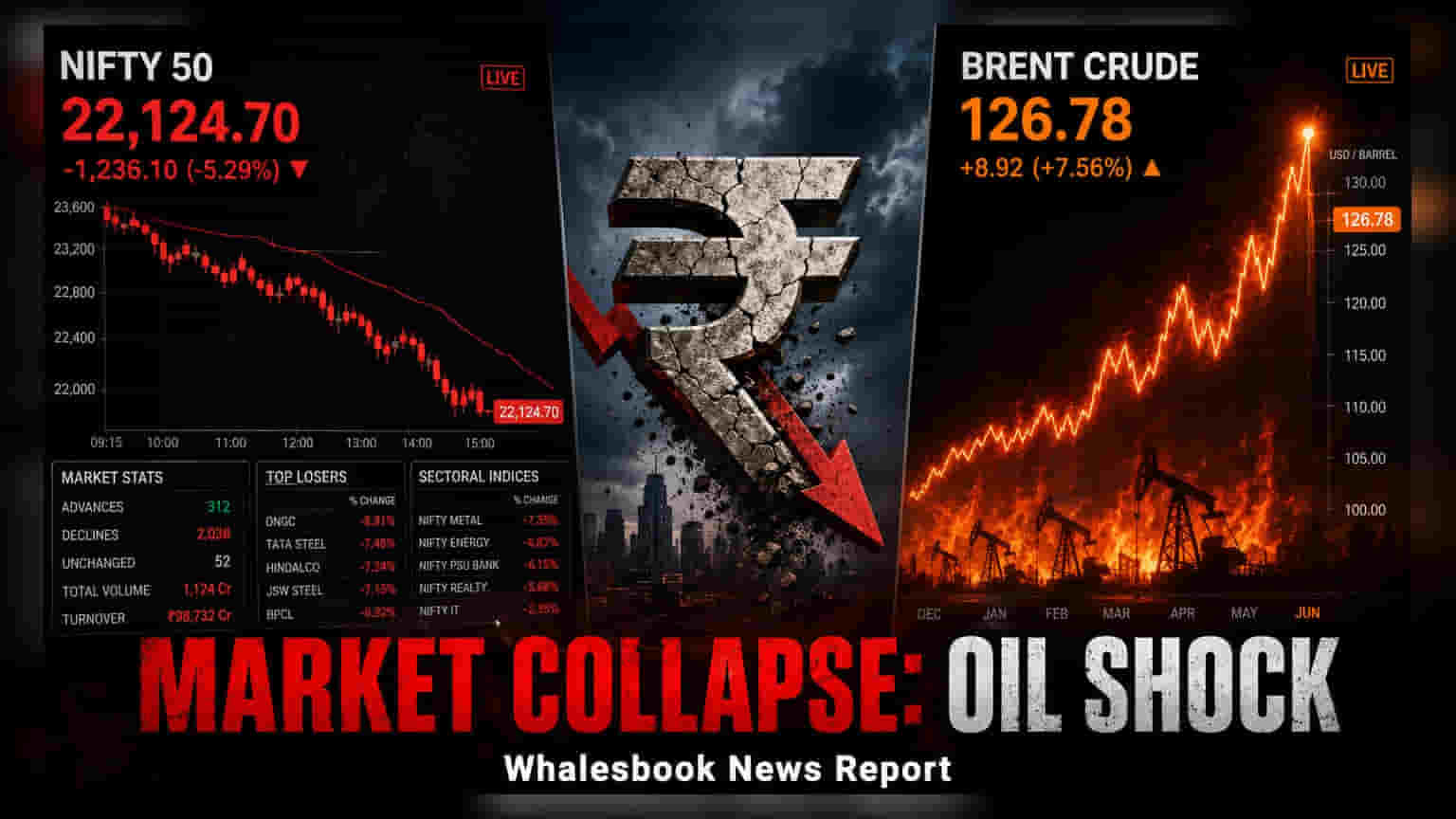
Indian stock markets fell on August 11, 2026, as Brent crude oil prices approached $88 a barrel. The rising energy costs and a weaker rupee led to selling pressure, particularly in banking stocks. However, the IT sector remained resilient, outperforming the broader indices. Investors are now balancing these inflationary concerns against the sector's performance amidst ongoing geopolitical tensions in the Strait of Hormuz.
Indian equity benchmarks, the Nifty 50 and Sensex, traded lower on Tuesday, August 11, 2026, as rising global energy costs weighed on investor sentiment. The major indices recorded losses by midday, pressured significantly by Brent crude oil prices inching closer to the $88 per barrel mark. This upward trend in energy prices, combined with persistent geopolitical uncertainty surrounding the Strait of Hormuz, has kept market participants cautious.
The Oil and Rupee Impact
For the Indian economy, higher crude oil prices are a significant factor because they increase the cost of importing fuel. When the price of oil rises, it can lead to higher inflation and potentially squeeze profit margins for companies in sectors that depend heavily on fuel or logistics. Compounding this challenge is the movement of the Indian rupee, which recently weakened to around 95.38 against the U.S. dollar. A weaker rupee makes imports more expensive, further adding to cost pressures for businesses.
Sector Divergence
While the broader market faced selling pressure, there was a clear split in how different sectors reacted. The IT sector emerged as a bright spot, showing resilience and outperforming the indices. In contrast, the banking and financial services sector saw significant selling, which acted as a major drag on the overall performance of the Nifty 50 and Sensex. This rotation suggests that investors are shifting focus toward sectors perceived as less sensitive to immediate cost shocks while reducing exposure to financials.
Safe Haven Assets
As equity markets struggled with volatility, capital appeared to flow toward safer assets. Precious metals, including gold and silver, witnessed a rally on both international and domestic exchanges. Historically, investors tend to move into commodities like gold during periods of geopolitical uncertainty and currency volatility, treating them as a hedge against the fluctuations seen in stocks.
Future Monitorables
Looking ahead, investors are tracking several key factors to gauge the market's direction. The immediate focus remains on whether crude oil prices stabilize or continue their upward trajectory, as this will influence inflation expectations and corporate profit outlooks. Additionally, upcoming quarterly earnings for major companies will provide clues on how businesses are managing rising input costs and currency depreciation. Market participants will also watch for any de-escalation of geopolitical tensions near the Strait of Hormuz, as this remains a critical supply chain risk for global energy markets.