

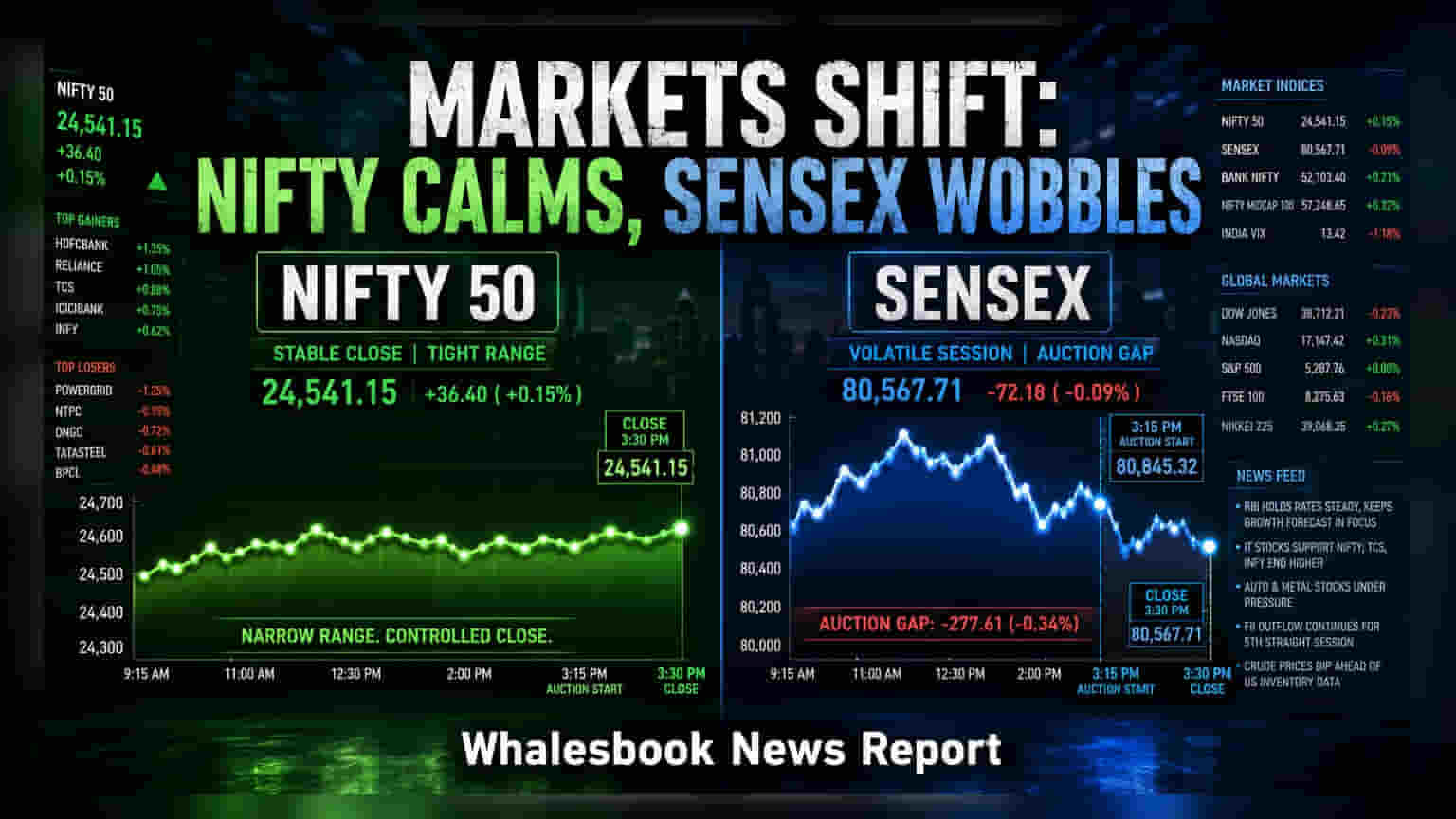
Two weeks into the new Closing Auction System, the Nifty 50's closing price gap has narrowed to 0.05% as of August 14. While the Sensex exhibits a slightly wider gap of 0.10%, regulators describe these early trends as initial adjustment pains. The new system replaces the older average-price method to standardize closing prices for stocks with futures and options contracts.
The stock market is witnessing a shift in how closing prices are calculated, with the Nifty 50 showing signs of stabilization under the new Closing Auction System (CAS). Introduced on August 3, the system aims to make the closing price of stocks with futures and options contracts more accurate by moving away from the previous volume-weighted average price method.
On Friday, August 14, the difference between the Nifty 50’s trading level at 3:15 p.m. and its final closing price narrowed to 0.05%. This is a significant improvement from the 0.82% gap observed on the day the system was launched. The BSE Sensex, however, has followed a slightly different path, recording a 0.10% gap between its 3:15 p.m. trading level and its final close.
Why the Closing Price Matters
For investors and traders, the closing price is not just a final number on the screen; it determines the settlement value for derivative contracts. The older system relied on the average price of trades during the final 30 minutes of the session, which could sometimes be influenced by erratic, low-volume trades. The new CAS creates a dedicated 20-minute window from 3:15 p.m. to 3:35 p.m., where an auction is held to discover the final price. The regulator, SEBI, has maintained that the system will remain in place, noting that early price differences are likely teething issues that should resolve as market participants grow more comfortable with the new mechanism.
Challenges and Market Context
While the Nifty appears to be adjusting, the transition has not been without concerns. Market participants have pointed to the risk of reduced transparency during the 20-minute auction window, sometimes referred to as 'blindness' by traders, as they cannot see the full order book as easily as during standard trading hours. This structural change has also been sensitive to the presence of algorithmic firms and high-frequency traders, who rely on predictable liquidity. When these participants adjust their strategies, liquidity can temporarily thin out, contributing to the wider gaps seen in some indices.
Beyond these technical changes, the market is also dealing with broader macro pressures. Weak market breadth on August 14, where more shares declined than advanced, reflects caution among investors due to ongoing geopolitical tensions, including developments involving the US and Iran. These factors, alongside oil price fluctuations, continue to influence overall sentiment, potentially masking the full impact of the CAS on price stability.
Investors may monitor how these gaps behave in the coming weeks. As participants adapt to the auction process, the primary metric to watch will be whether the price differences continue to shrink, indicating that the new system is effectively providing a reliable and stable closing price for the market.