

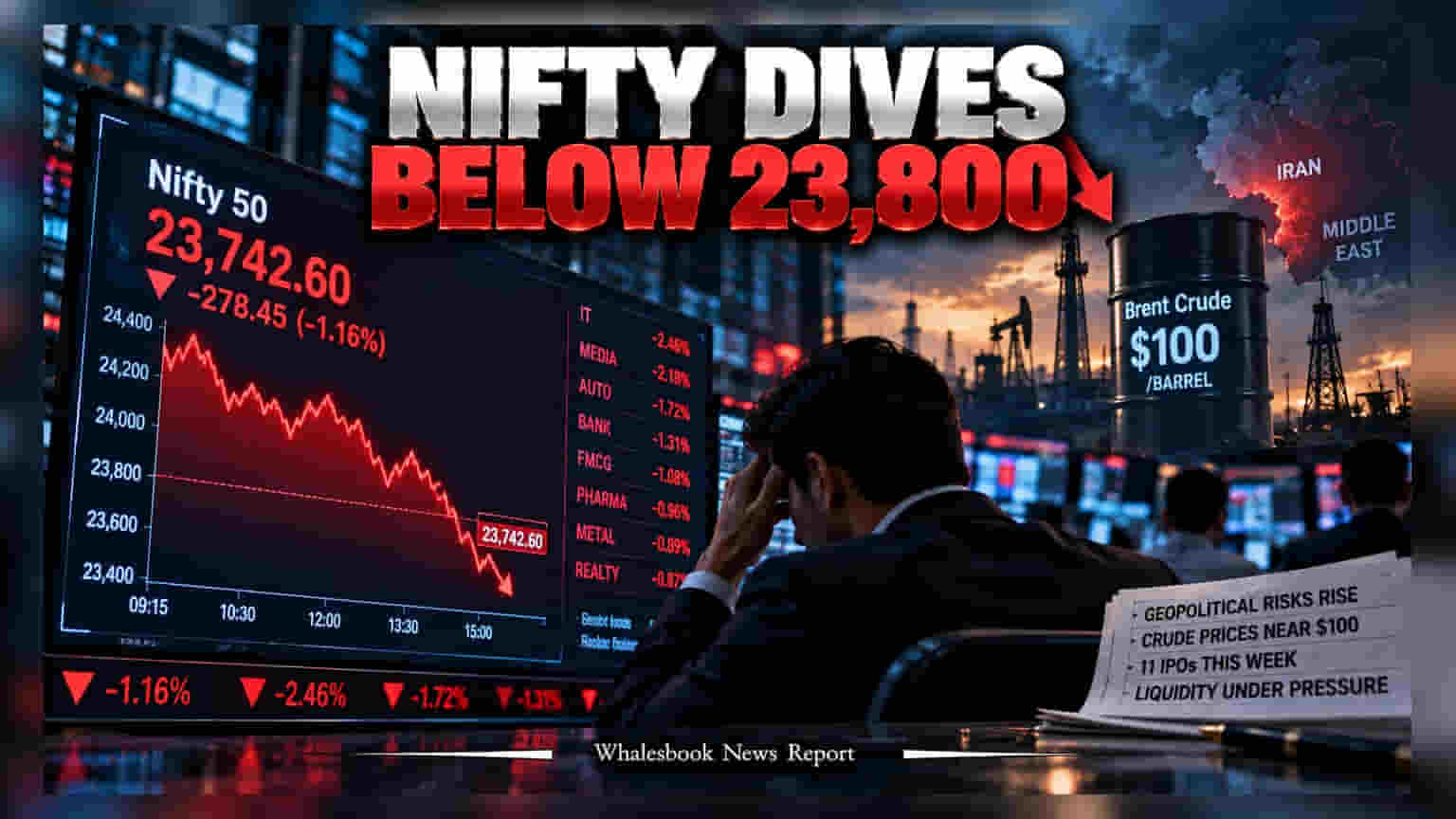
The Nifty 50 index dropped below the 23,800 support level on September 7, 2026. This decline follows a surge in global crude oil prices near $100 per barrel due to US-Iran tensions and a liquidity crunch caused by eleven mainboard IPOs scheduled for this week. Investors are prioritizing primary market subscriptions, pressuring the secondary market.
The Nifty 50 index faced selling pressure on September 7, 2026, dropping below the psychological support level of 23,800. This decline reflects a cautious market environment driven by two primary factors: escalating geopolitical risks in the Middle East and a significant drain on domestic liquidity due to the busy primary market calendar.
The escalation in the US-Iran conflict has pushed Brent crude oil prices toward $100 per barrel. For the Indian market, higher oil prices represent a major risk as the country is a significant importer of crude. A sustained increase in oil costs can fuel inflation, put pressure on the current account deficit, and force the central bank to keep interest rates higher for longer to manage economic stability. Investors are currently weighing how these higher energy costs might impact corporate profit margins across energy-intensive sectors.
Simultaneously, the secondary market is dealing with a temporary liquidity squeeze. With eleven mainboard initial public offerings (IPOs) opening for subscription this week, a significant amount of capital is being diverted from the secondary market to the primary market. Institutional and retail investors are often reallocating funds to participate in these new issues, which reduces the buying volume available for existing stocks listed on the Nifty 50. This shift in capital is particularly impacting segments like IT and Media, which have been noted as laggards in the current sessions.
From a technical perspective, the 23,800 mark served as a critical support zone. With the index now trading below this level, market participants are looking toward the 23,600 range as the next potential support area. On the upside, the index faces immediate resistance between 24,000 and 24,150. Recovering lost ground will likely require a cooling of global geopolitical tensions or a stabilization in crude oil prices, which would help restore foreign investor confidence and reduce the risk of further capital outflows from emerging markets.
Investors will likely track the subscription numbers for the ongoing IPOs and further updates on the geopolitical situation to gauge the market's next move. Given the current volatility, the focus remains on whether the index can consolidate near the 23,600 support level or if the combination of macro-economic pressures and liquidity diversion will keep the secondary market under pressure in the coming sessions.