

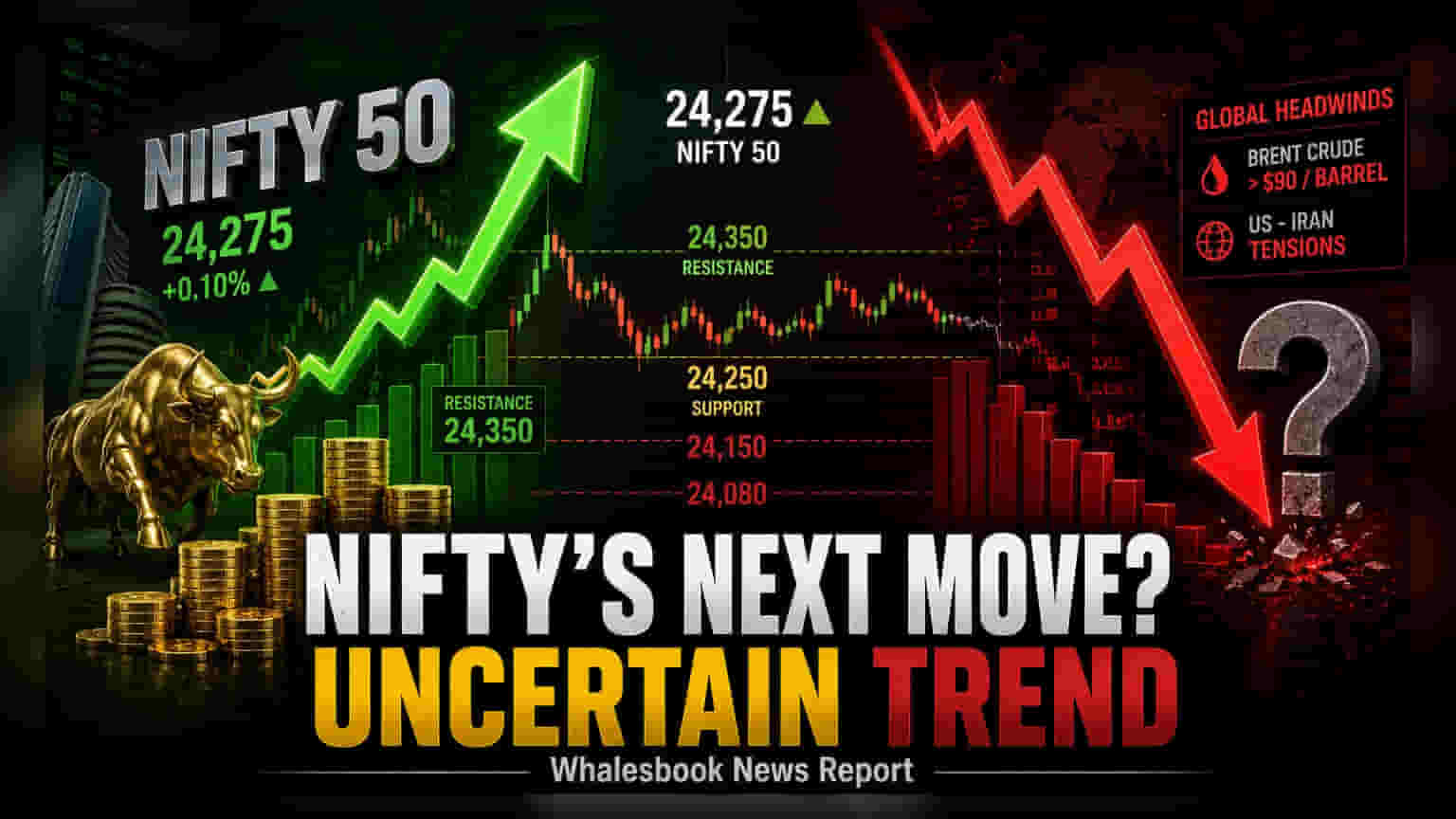
The Nifty 50 index opened with a minor gain on August 24, 2026, trading near 24,275. Persistent macro pressures, including rising crude oil prices and geopolitical tensions, are restricting market momentum. Analysts recommend waiting for a decisive breakout above 24,350 or a drop below 24,250 before initiating new positions.
The Nifty 50 index began the trading session on August 24, 2026, with a gap-up, opening at 24,285 against the previous close of 24,252. Despite the positive start, the index has struggled to maintain momentum, hovering around 24,275 with a modest gain of approximately 0.1 per cent.
The current lack of strong direction is not just a technical phenomenon but is heavily influenced by the broader economic climate. Global market sentiment is currently pressured by Brent crude oil prices holding above $90 per barrel. For India, which relies heavily on energy imports, sustained high oil prices often raise concerns about the import bill, inflation, and the potential impact on corporate profit margins. Additionally, ongoing geopolitical tensions involving the US and Iran have created an atmosphere of caution among investors, leading to selective participation in the market.
Sectoral data for the day shows varied performance, which further illustrates the indecisive nature of the current rally. While the Nifty Metal index provided some support by advancing 0.9 per cent, the Nifty Consumer Durables sector lagged, declining 0.5 per cent. The advance-decline ratio, which stood at 27 advances to 23 declines at the opening, also highlights that the positive sentiment is narrow and not broad-based across all segments.
Monitoring Key Trading Levels
Nifty futures, which opened at 24,342, are currently trading around 24,300. Market experts are watching the 24,250–24,350 range closely. This band acts as a critical bottleneck for the index. A sustained move above the 24,350 resistance level could potentially lead to higher levels near 24,500. Conversely, if the index fails to hold the 24,250 support level, it could trigger a decline towards 24,150, and potentially test the 24,080 mark.
For investors and traders, the current environment emphasizes risk management over aggressive positioning. When the market is reacting to external global events like crude oil price volatility and geopolitical uncertainty, intraday reversals can happen quickly. The lack of a clear trend suggests that waiting for a confirmed breakout—a decisive move outside the current support or resistance range—may be a safer approach than betting on a direction prematurely. Monitoring future developments regarding geopolitical stability and global bond yields will remain essential for understanding the index's next major move.