

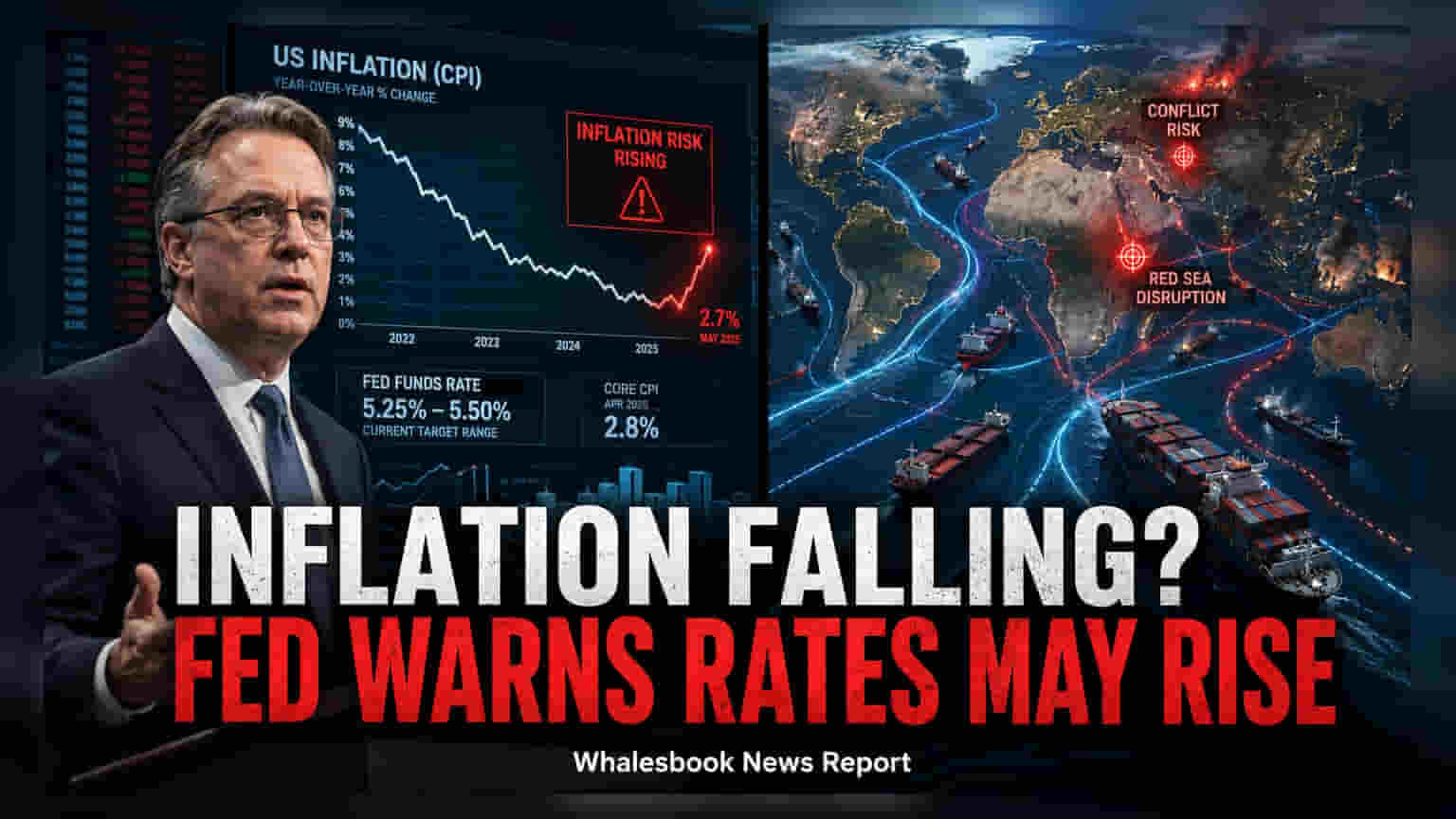
New York Fed President John Williams stated that while he expects inflation to ease, the central bank remains prepared to raise interest rates if necessary to reach its 2% target. With inflation still above target, this stance highlights the ongoing uncertainty surrounding U.S. monetary policy and its potential influence on global financial markets.
New York Federal Reserve President John Williams recently provided an update on the U.S. central bank's perspective, emphasizing that while there is optimism regarding a decline in inflation, the commitment to the 2% target remains absolute. Williams noted that if price pressures do not show a sustained downward trend, the Federal Reserve is prepared to implement further interest rate hikes.
Inflation Drivers and Economic Outlook
Williams pointed to energy prices and trade tariffs as key factors that have contributed to recent inflation. His base case forecast suggests that as these pressures recede and supply chain issues stabilize, disinflationary forces will become more prominent in the latter half of this year and into next year. Despite this, he remains focused on core inflation data to determine if the economy is on a clear path toward the 2% goal. A point of complexity remains the potential impact of geopolitical developments, such as the conflict in the Middle East, on energy prices and shipping routes, which could alter the inflation trajectory.
Federal Reserve Policy and Internal Dynamics
The Federal Open Market Committee (FOMC) recently maintained the federal funds target rate in the 3.50% to 3.75% range. Williams expressed support for this pause, characterizing the current policy as well-positioned. However, the decision was not unanimous, with three officials dissenting in favor of higher borrowing costs. Among those concerned is Cleveland Fed President Beth Hammack, who has highlighted the risk posed by inflation staying persistently above the target for over five years. This internal disagreement reflects broader uncertainty regarding how much more restrictive policy needs to be to anchor expectations.
Market Implications and Global Context
For Indian investors, the Fed's policy trajectory is a critical monitorable due to its influence on global liquidity and capital flows. Higher U.S. interest rates typically strengthen the dollar and can lead to capital outflows from emerging markets like India, impacting equity valuations and currency stability. Current market indicators show that investors are pricing in a tangible probability of a rate hike by the end of the year, driven by anxiety over sustained inflation and rising long-term bond yields. Additionally, increased business investment in artificial intelligence has been noted as a potential source of demand-side inflationary pressure. As the Fed moves away from explicit forward guidance under Chairman Kevin Warsh, the focus for the market will shift toward incoming economic data releases and official statements to gauge the likelihood of further policy tightening.