

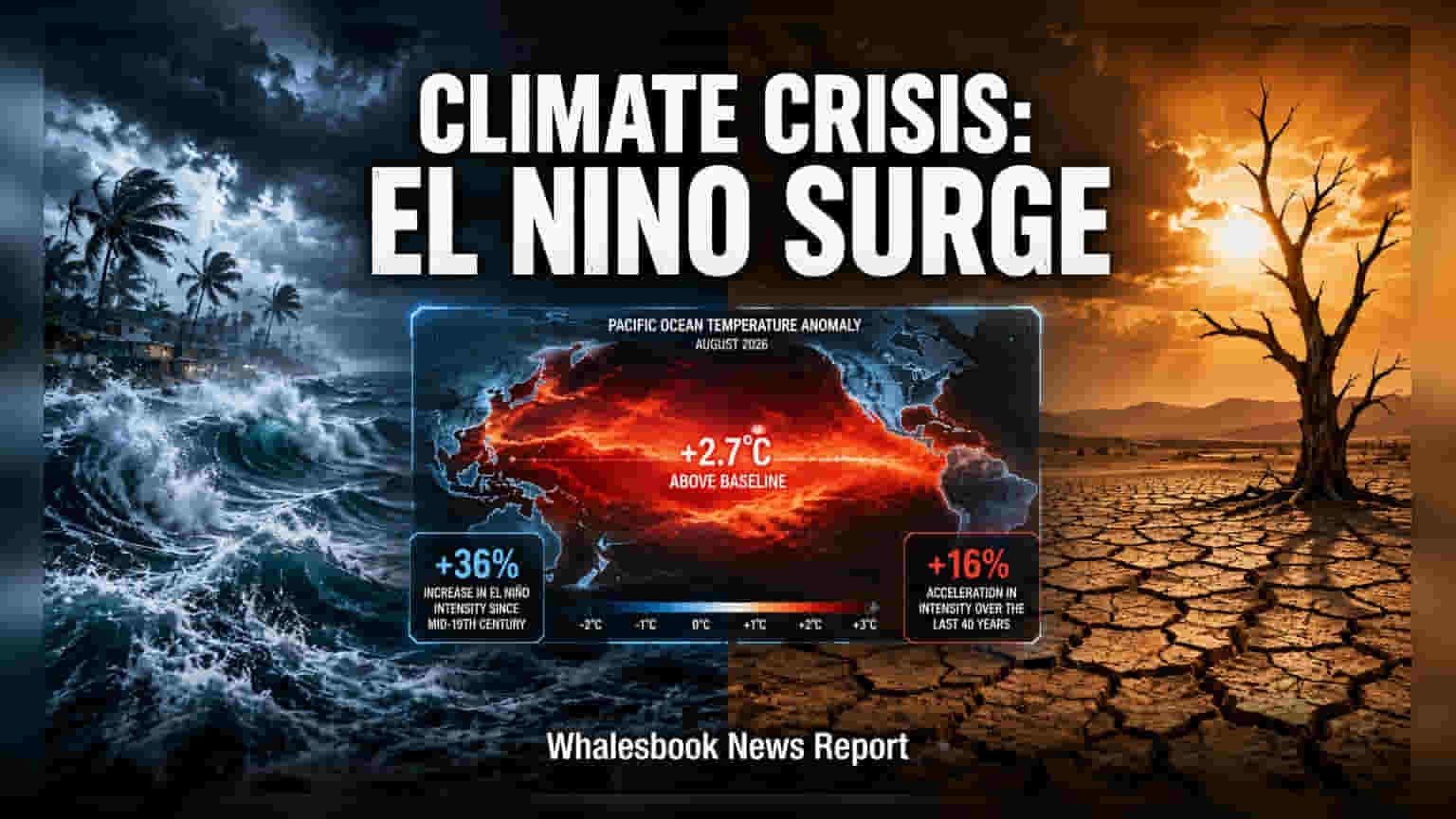
A study in the journal Science reports that climate change has intensified El Niño events by 36% since the mid-1800s, with a 16% spike in the last 40 years. This current, record-strength event poses major risks to global food supplies, supply chains, and inflation, creating significant uncertainty for agriculture and energy markets.
A new research study published on August 27, 2026, in the journal Science warns that human-driven climate change has significantly altered the behavior of El Niño, the periodic warming of the equatorial Pacific Ocean. The data shows that the intensity of these events has surged by 36% since the mid-19th century. Even more concerning is the recent trend, with a 16% acceleration in intensity observed over the last 40 years alone.
The current El Niño cycle is already showing signs of extreme behavior. Tracking data indicates that water temperatures in the central Pacific have reached 2.7°C above the historical baseline. This level exceeds the typical threshold for severe events, leading scientists to forecast that the current cycle could become one of the most powerful on record. For investors, this shift from a natural climatic variation to an intensified, predictable pattern carries direct economic consequences.
Impact on Global Markets and Inflation
El Niño events act as a primary driver for weather disruptions, including severe droughts and flooding, which directly affect global commodity prices. The most immediate risk is to the agricultural sector. Erratic weather patterns can lead to crop failures and reduced yields for essential food commodities like wheat, rice, sugar, and edible oils. For emerging economies, such as India, these climate-driven supply shocks often translate into higher food inflation, which can put pressure on central bank policies and household spending power.
Beyond food production, the logistical and energy sectors face operational hurdles. Extreme weather events often lead to port congestion and shipping delays, which can disrupt global supply chains and increase costs for manufacturers. Simultaneously, rising temperatures drive up energy demand for cooling, while changes in rainfall patterns can impact hydroelectric power generation. This creates a dual pressure point for energy markets, potentially leading to increased price volatility.
Monitoring the Economic Risks
While this study highlights long-term climatic trends, the immediate economic implication is the increase in volatility for climate-sensitive industries. The predictability of weather-dependent business models, particularly in agriculture, logistics, and energy, is diminishing. Investors may monitor food inflation data, monsoon-related updates in agricultural regions, and energy commodity prices in the coming months as the current cycle progresses. As the intensity of these climatic events continues to climb, businesses with exposure to global supply chains and raw material costs may need to account for greater operational uncertainty.