

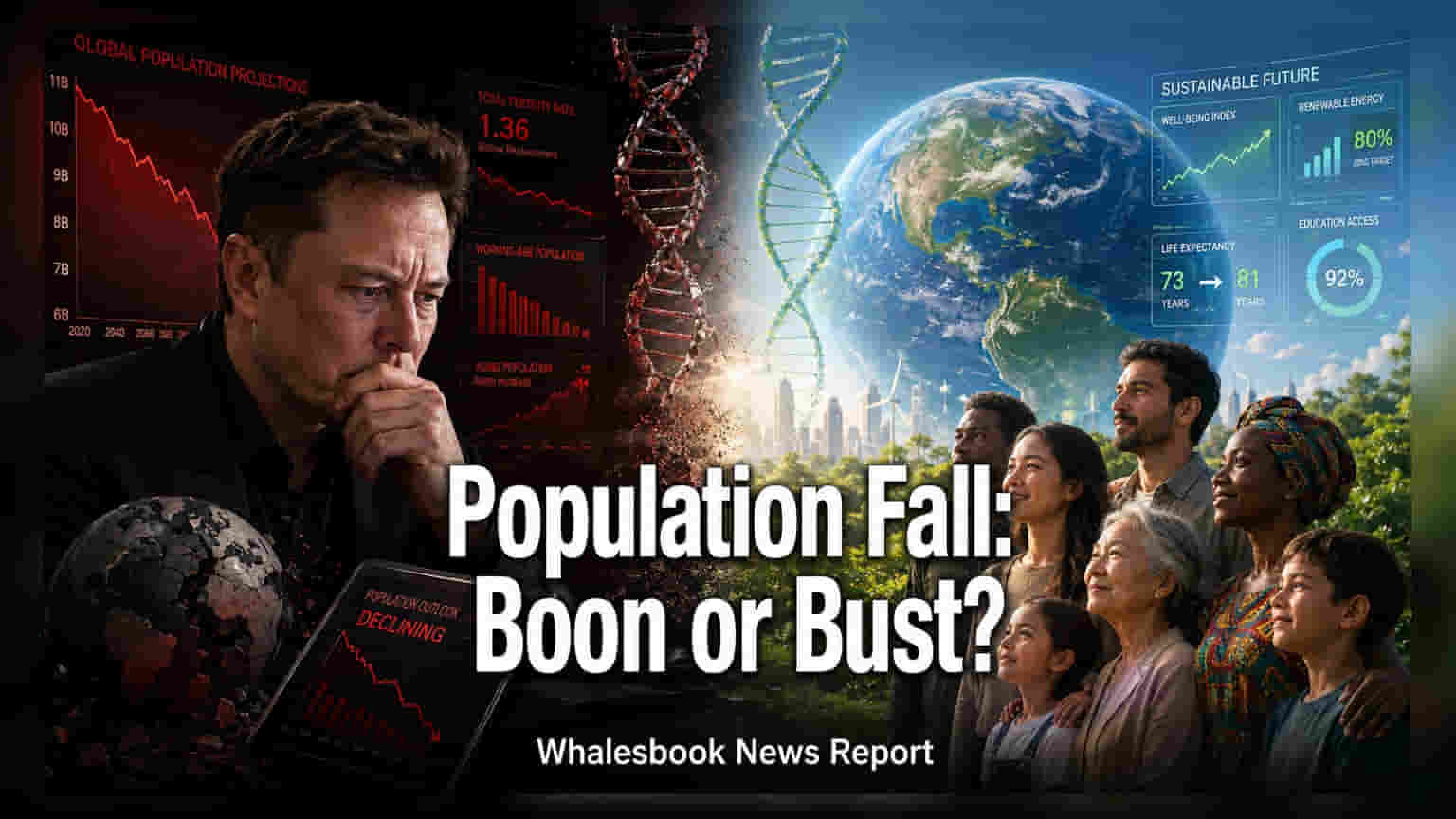
A new research study suggests a gradual global population decline to 4 billion by 2200 could benefit the environment, contrasting with Elon Musk's frequent warnings about low birth rates. While this remains an academic debate, investors often track Musk's public commentary as it can influence market sentiment for his companies, including Tesla and the newly listed SpaceX.
A new academic study has introduced a different perspective on global demographic trends, challenging the long-standing warnings from Elon Musk regarding a looming population collapse. While Musk has frequently stated that declining birth rates represent an existential threat to civilization that outweighs climate change, researchers behind this new study argue that a controlled reduction in global population to approximately 4 billion by 2200 could alleviate planetary pressures and enhance human well-being.
The research points to the potential benefits of this demographic shift, suggesting that smaller family sizes could reduce strain on resources, pollution, and energy consumption. The study advocates for improved access to family planning and education, especially for women in developing nations, as a sustainable way to manage the world's future demographic path. It argues that economic growth does not strictly require an expanding population, noting that global GDP per capita has historically increased even as working-age populations in some regions have shrunk.
Investor Perspective on Public Discourse
For investors, the primary relevance of this debate lies in the public persona of the CEOs of major companies. Elon Musk’s public commentary often captures significant media attention and, at times, can influence market sentiment surrounding his associated companies, such as Tesla and SpaceX. While this specific study is a matter of demographic theory rather than a corporate financial event, market participants often differentiate between a leader's social commentary and the operational fundamentals of their businesses.
Since the public listing of SpaceX in June 2026, the company has faced increased scrutiny regarding its high capital spending on artificial intelligence and infrastructure projects. Investors continue to monitor these developments closely, as high capital intensity can impact cash flow and financial flexibility. Unlike product launches or quarterly earnings reports, which directly impact revenue and profit margins, academic debates on population theory do not have a direct, verified impact on the stock prices of these companies.
Market Sentiment and Governance
Investors in Musk-led companies often evaluate governance structures and the impact of the CEO's public stance on brand value. There is no direct link between this new population study and recent stock movements on global exchanges. However, the volatility occasionally seen in Tesla and SpaceX shares has historically been tied to a combination of public sentiment, the aggressive nature of their long-term growth projects, and broader sector trends rather than purely demographic discourse.
For shareholders, the most important monitorables remain company-specific data points. These include the execution of ongoing expansion projects, the management of debt levels relative to high capital expenditure, and the delivery of consistent quarterly financial results. While macro-level discussions about the future of civilization provide context for a leader's worldview, the investment case for these companies remains grounded in their ability to navigate competitive markets and generate sustainable returns.