 Whalesbook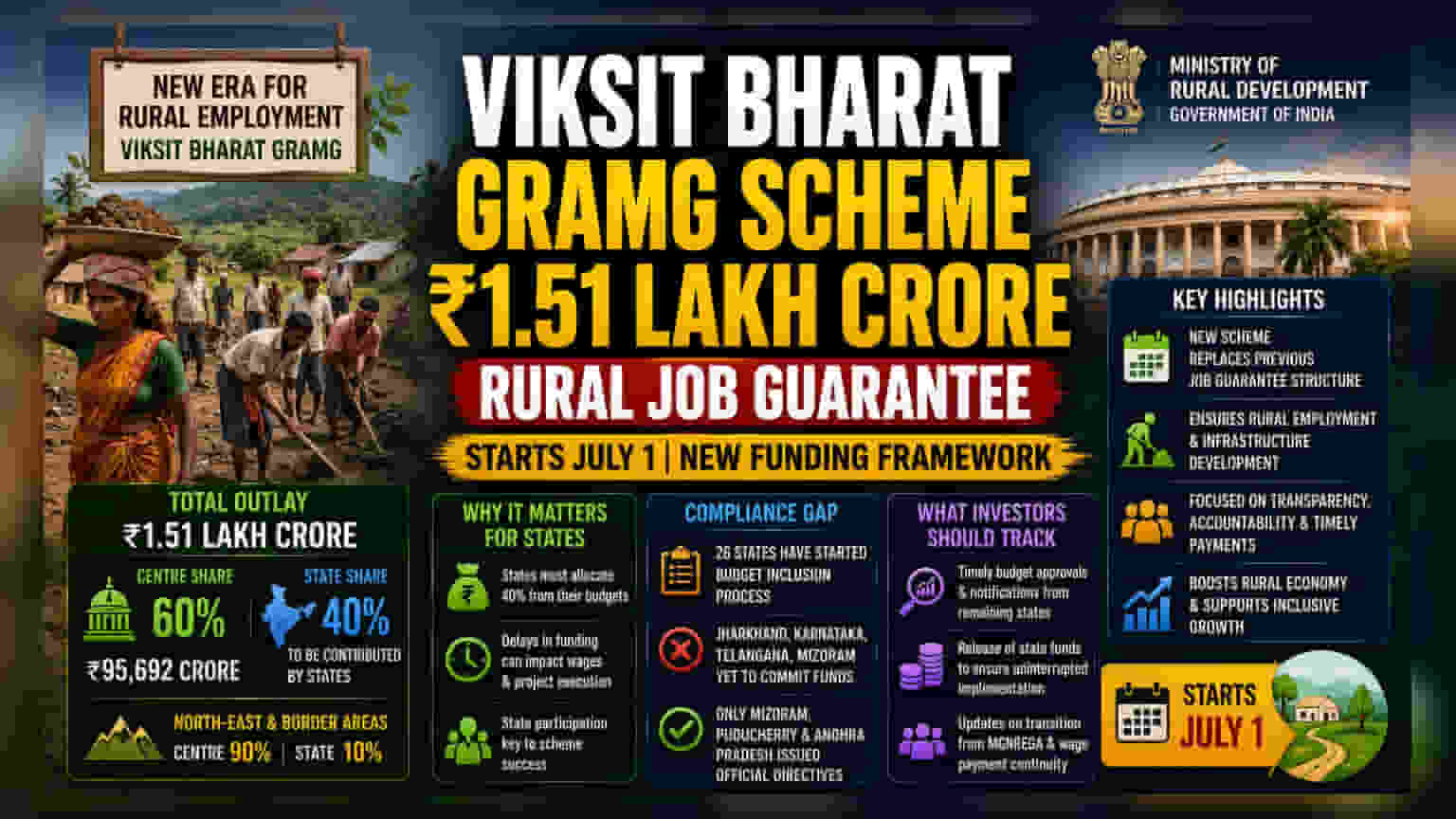


What Happened
The Union Rural Development Ministry has announced the financial framework for the new 'Viksit Bharat GRAMG' rural job guarantee scheme. Set to begin on July 1, this program will replace the previous job guarantee structure. The Centre has allocated an interim share of ₹95,692 crore. When combined with the mandatory state contributions, the total budget for the scheme is expected to reach ₹1.51 lakh crore.
The Funding Shift
A key change in this new scheme is the cost-sharing model. Under the new rules, the Centre will cover 60% of the costs, while individual states are responsible for the remaining 40%. There is an exception for North-East states and border regions, where the Centre will fund 90% of the project, requiring only 10% from the state. This represents a significant shift in how rural employment programs are funded, as it requires states to actively budget for and contribute a larger portion of the expenses compared to previous fully centrally-funded models.
Why It Matters For State Budgets
This funding model directly impacts the fiscal health of state governments. Because states must now allocate 40% of the funds from their own budgets, the success of the scheme depends on their financial participation. If states struggle to provide their share, it could create delays in wage payments or project execution. The ministry is aiming for a smooth transition, but the burden on state finances will be a major factor in how effectively the scheme is implemented across the country.
The Compliance Gap
While the government aims for a seamless start, the data shows some initial gaps in readiness. As of now, 26 states have started the process of including these funds in their budgets. However, Jharkhand, Karnataka, Telangana, and Mizoram have yet to confirm their financial commitments. Additionally, only Mizoram, Puducherry, and Andhra Pradesh have issued the necessary official directives to begin the funding process. This delay in paperwork and budgeting in certain regions is a point to watch as the July 1 deadline approaches.
What Investors Should Track
Investors and observers should monitor three main areas. First, keep an eye on how quickly the remaining states complete their budgetary approvals and issue the required notifications to ensure no disruption in the transition. Second, track the actual release of funds from the states, as this will determine if the scheme can run without interruptions. Finally, watch for any government updates regarding the transition from the previous MGNREGA framework, as any issues with wage payments or employment continuity could become a point of concern for broader rural consumption trends.