

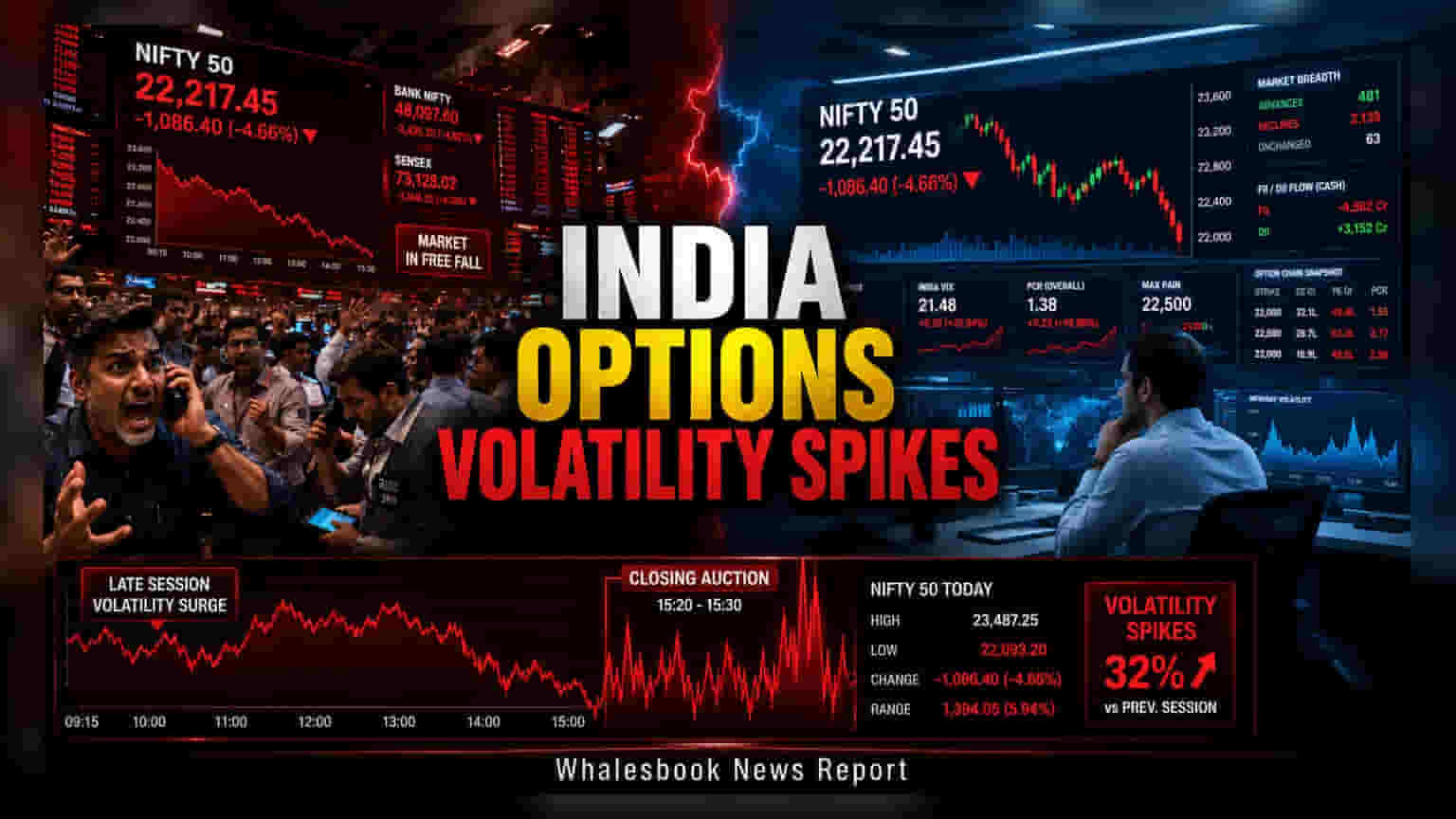
The Indian stock market implemented a new Closing Auction Session for F&O-eligible stocks on August 3, 2026, shifting how daily closing prices are determined. While designed to improve price discovery, the system has led to lower trading volumes in the final minutes and increased index volatility. Regulators have described the current market turbulence as a temporary adjustment phase.
The Indian stock market has undergone a significant operational change following the introduction of a new Closing Auction Session (CAS) for Futures and Options (F&O) eligible stocks. Implemented on August 3, 2026, this system replaces the previous method of calculating closing prices based on a 30-minute volume-weighted average. Instead, the market now uses a specific auction-based mechanism to determine the official closing price for stocks. As part of this transition, equity derivatives trading hours were extended by 10 minutes, with the segment now closing at 3:40 PM instead of 3:30 PM.
Impact on Trading Volumes and Liquidity
The shift has led to a noticeable change in trading patterns during the final minutes of the session. According to analysis by Bernstein, trading volumes in the last 15 minutes of the trading day have dropped significantly, falling to between 1.6% and 2.3% of total daily turnover. This is a sharp decrease from the historical average of approximately 10.1%. With fewer trades occurring in this window, the market has experienced thinner liquidity, which in turn can lead to wider price swings in individual stocks.
Because these F&O-eligible stocks carry significant weight in major benchmarks like the Nifty 50 and Sensex, the price fluctuations during the closing auction can cause unexpected volatility in the indices themselves. This creates a challenging environment for traders who rely on closing prices for hedging or closing out positions, particularly for options contracts that are sensitive to the final benchmark value.
Challenges for Market Participants
The new system has introduced a period of uncertainty for various market participants. For retail and professional traders, the reduced liquidity means it can be harder to execute large orders without impacting the price. Options traders are also navigating potential risks associated with "pinning," where price volatility near the closing auction affects the value of contracts nearing expiry. Additionally, passive funds and institutional investors, who typically manage their trades around index rebalancing or end-of-day benchmarks, have had to adapt their execution strategies to accommodate the new auction liquidity.
Brokers and exchanges are currently adjusting to the new order-matching procedures. While concerns regarding potential market activity and the reliability of price discovery in the auction have been raised, the Securities and Exchange Board of India (SEBI) and exchange officials have categorized the current market behavior as teething issues. The regulator has reaffirmed its commitment to the reform and currently has no plans to roll back the system.
What Investors Should Track
Investors and traders may want to monitor how liquidity levels evolve in the closing auction over the coming weeks as market participants become more familiar with the new mechanism. The key area of focus remains the impact on daily benchmark volatility, especially on days with index rebalancing or expiry. Further guidance or adjustments from regulators to address the volatility in the closing window may also be a critical factor for market participants to watch.