

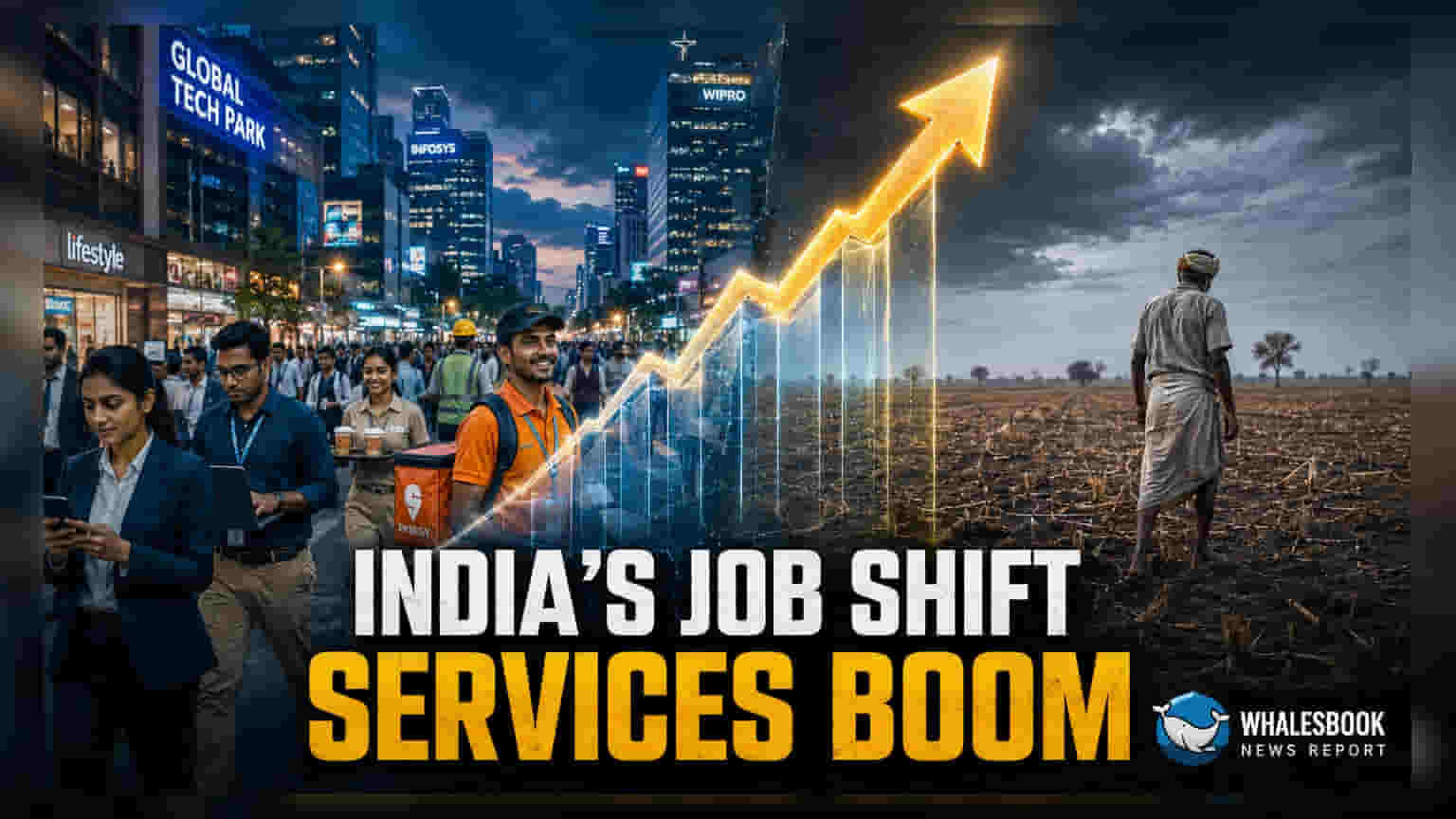
India's million-plus cities are increasingly driven by services, with agriculture shrinking to just 1.6% of urban employment. A new National Statistics Office report reveals a significant rise in formal, salaried jobs, leading to higher wages compared to the national urban average.
What Happened
India’s largest cities are undergoing a fundamental economic transformation, moving rapidly away from traditional sectors toward service-oriented employment. According to a new report from the National Statistics Office (NSO) based on the 2025 Periodic Labour Force Survey (PLFS), cities with populations exceeding one million are now primarily driven by services, including transport and communication. Agriculture now accounts for only 1.6% of jobs in these major metropolitan areas, significantly lower than the 10.1% share found in smaller urban centers.
The Shift Toward Formal Employment
The NSO data highlights a decisive move toward structured work environments. In cities with over a million people, 58.5% of the workforce holds regular salaried positions. This is substantially higher than the 42.9% average seen across the rest of urban India. Conversely, casual labor—which often lacks job security and benefits—accounts for just 6.3% of total employment in these major hubs. This indicates that larger cities are successfully creating a more consistent and stable job environment.
Corporate Activity and Wage Trends
The report confirms that organized public and private sector businesses are the backbone of these metropolitan economies. These entities employ 24.3% of the workforce in major cities, compared to 17.2% in smaller urban regions. This concentration of corporate activity is directly linked to higher compensation levels. Data indicates that self-employed individuals in these cities earn approximately 34% more than the urban average, while salaried workers see a wage premium of nearly 10%. These figures reflect a broader economic restructuring where major cities function as the primary engines of national growth.
What Investors Should Track
For investors and policymakers, this data confirms that the economic value-add is increasingly concentrated in top-tier cities. Monitorables for the broader economy include:
- Consumer Spending Patterns: The rise in formal, higher-paying jobs often translates into increased discretionary spending, which benefits retail, real estate, and financial services companies with a strong urban presence.
- Infrastructure Requirements: As services and logistics become dominant, the demand for office space, digital infrastructure, and efficient urban transport systems will likely remain a long-term focus for government and private investment.
- Economic Disparity: While these cities are growing rapidly, the contrast with smaller urban and rural labor markets suggests that economic development remains uneven, which may continue to influence national government policies and budget allocations toward regional development.