

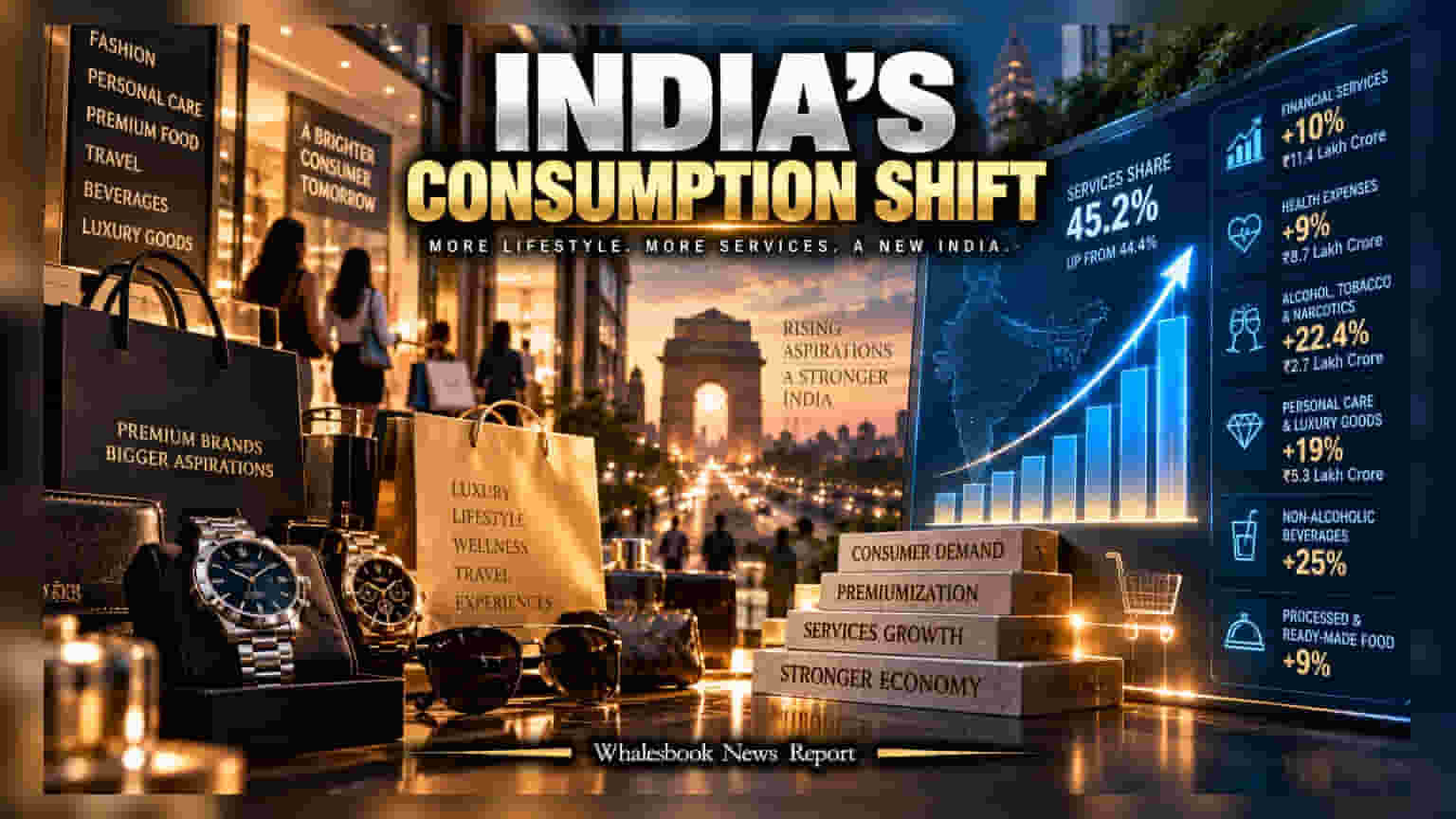
New data from the National Statistical Office shows total household spending in India touched Rs 169 lakh crore in FY25, a 6% increase. Consumption patterns are tilting toward luxury goods, personal care, and lifestyle services, while demand for traditional staples grows at a slower pace.
A clear change in how Indian households spend money was confirmed by the National Statistical Office (NSO) for fiscal year 2025. Total private final consumption expenditure reached Rs 169 lakh crore, representing a 6% growth in real terms compared to the previous year. While this growth figure is steady, the internal data reveals a significant transition, with money flowing faster into premium, discretionary, and lifestyle-oriented products rather than essential commodities.
The most aggressive growth was seen in categories often linked to lifestyle choices. Spending on alcoholic beverages, tobacco, and narcotics jumped by 22.4% to Rs 2.7 lakh crore. Similarly, the segment covering personal care, luxury goods like high-end watches, precious stones, and premium travel gear saw a 19% increase to Rs 5.3 lakh crore. This trend suggests that higher-income and urban households are increasingly prioritizing grooming, wellness, and luxury experiences.
Services are becoming a larger part of the Indian household budget. They now account for 45.2% of total private spending, an increase from 44.4% in the previous year. Financial services and insurance saw a 10% rise to Rs 11.4 lakh crore, while health-related expenses grew by 9% to Rs 8.7 lakh crore. This migration toward services points to an economy where lifestyle-oriented and financial protection needs are rising faster than spending on basic goods.
Even within the food category, the shift toward convenience is evident. Spending on non-alcoholic beverages, such as soft drinks and juices, spiked by 25%. Processed and ready-made food items also grew by 9%, while traditional staples like cereals, fruits, and vegetables saw slower growth rates. This suggests that modern consumers are opting for value-added products that save time and offer convenience over traditional bulk items.
For investors and market observers, these trends offer important insights into corporate performance. Companies that have successfully pivoted their product portfolios toward premium offerings or services have largely benefited from this change. However, this shift creates a challenging environment for mass-market brands that rely on high-volume sales of basic staples, as volume growth in these segments remains under pressure.
Another key monitorable is the valuation of premium-focused companies. As the market places a higher value on firms catering to this discretionary demand, these stocks often trade at higher price-to-earnings ratios. Investors should track whether these companies can sustain high margins if the current consumption trend slows or if inflationary pressures affect disposable income. The reliance on urban consumption also remains a risk, as any moderation in economic growth or employment in high-income sectors could impact the sustainability of this premiumization trend.