

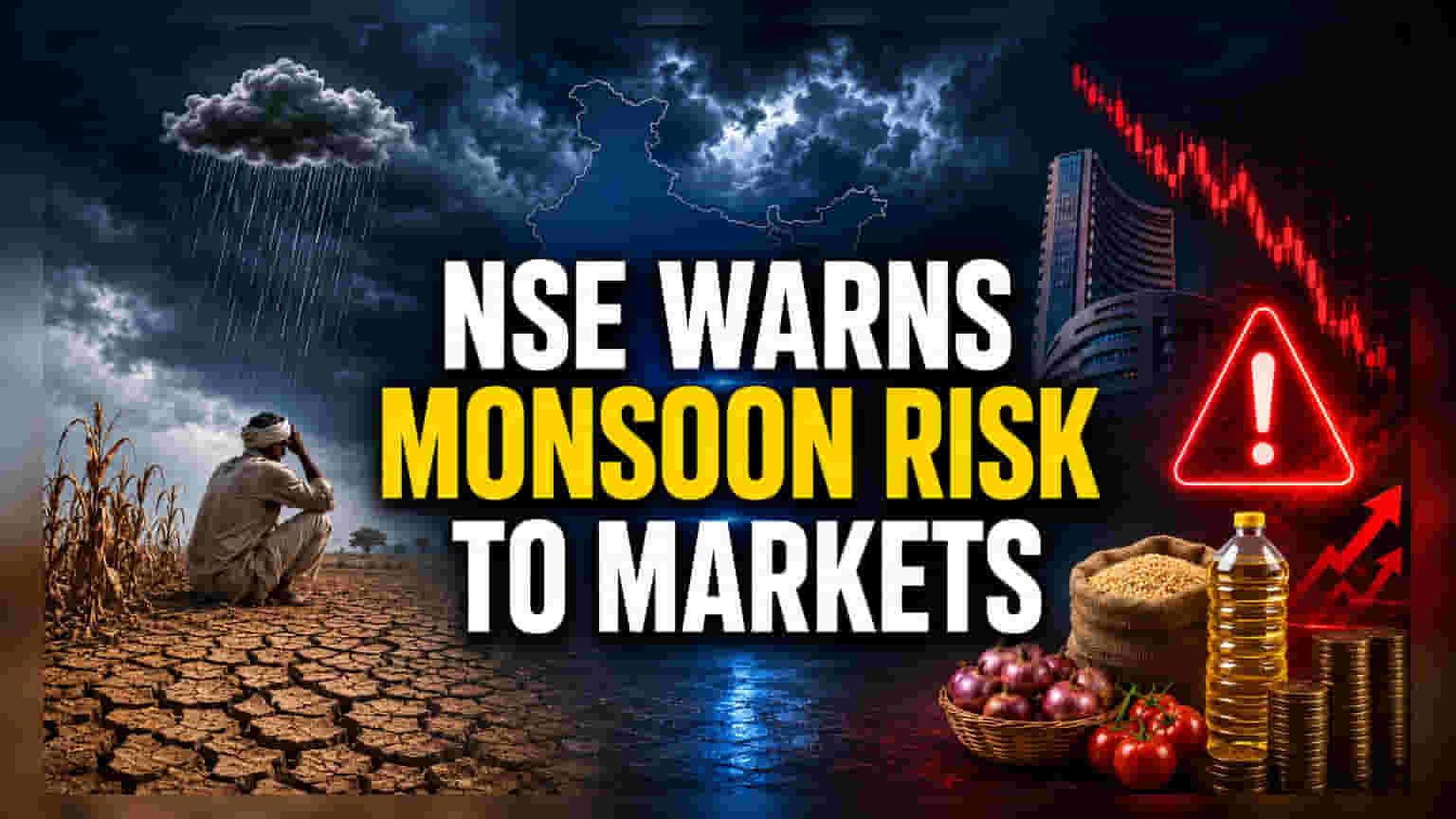
The National Stock Exchange has identified deficient monsoon rainfall as a major risk for India's economy in FY27. With early rainfall 64% below normal, the report warns of potential food inflation and slower rural spending. Investors may watch the impact on rural-focused businesses and inflation trends as the season progresses.
What Happened
The National Stock Exchange (NSE), in its June 2026 'Market Pulse' report, has warned that the upcoming monsoon is a critical risk factor for the Indian economy this fiscal year. The report highlights that weather patterns are no longer just seasonal issues but key economic indicators that can drive inflation and consumption trends. With early data showing rainfall from June 4 to June 15 running 64% below normal, the exchange has raised concerns about the health of the kharif sowing season and the broader economic outlook.
Why Rural Demand Matters For Markets
The Indian economy relies heavily on a normal monsoon. When rainfall is insufficient, agricultural output often declines. This leads to two main problems for listed companies and the stock market: lower rural income and higher food prices.
Rural consumers represent a massive market for many Indian companies, including FMCG firms that sell daily essentials, and automotive companies that sell tractors and two-wheelers. If farmers have lower income due to poor crop yields, they spend less. This can lead to a slowdown in sales for these companies. Additionally, when food production drops, food prices generally rise. Since food is a large part of the average Indian household's budget, high food inflation reduces the money people have to spend on other things, further dampening demand across the economy.
The Inflation And Interest Rate Link
High food prices, often caused by supply shortages after a weak monsoon, increase overall inflation. For investors, this is important because of the Reserve Bank of India (RBI). When inflation remains high, the central bank may keep interest rates high or even raise them to control price increases. High interest rates generally increase the cost of borrowing for companies and individuals, which can put pressure on corporate profit margins and slow down economic growth. The NSE report classifies a weak monsoon as a potential "second supply-side shock," meaning it could make inflation harder to manage regardless of other economic policies.
Sectors That May Feel The Pressure
Investors typically track the impact of monsoon performance on specific sectors:
Agriculture and Agri-Inputs: Companies that sell fertilizers, seeds, and farm chemicals face direct risk if planting is delayed or if farmers reduce spending due to poor moisture levels.
Rural-Focused FMCG: Companies with a high percentage of sales from rural markets may see volume growth slow down if rural purchasing power weakens.
Automotive: Tractor and rural-focused two-wheeler manufacturers often see demand correlate with the success of the harvest season.
What Investors Should Track
Investors can monitor a few key updates to understand the potential impact as the season progresses:
India Meteorological Department (IMD) Updates: These provide the most verified data on whether rainfall is catching up to the long-period average.
Monthly Inflation Data: Reports on the Consumer Price Index (CPI) will show if food inflation is accelerating, which would signal potential pressure on the RBI's interest rate stance.
Company Management Commentary: In upcoming quarterly results, management teams from rural-facing companies will likely provide updates on the 'rural demand' environment, which will confirm whether the weather risk is actually hurting business performance.