

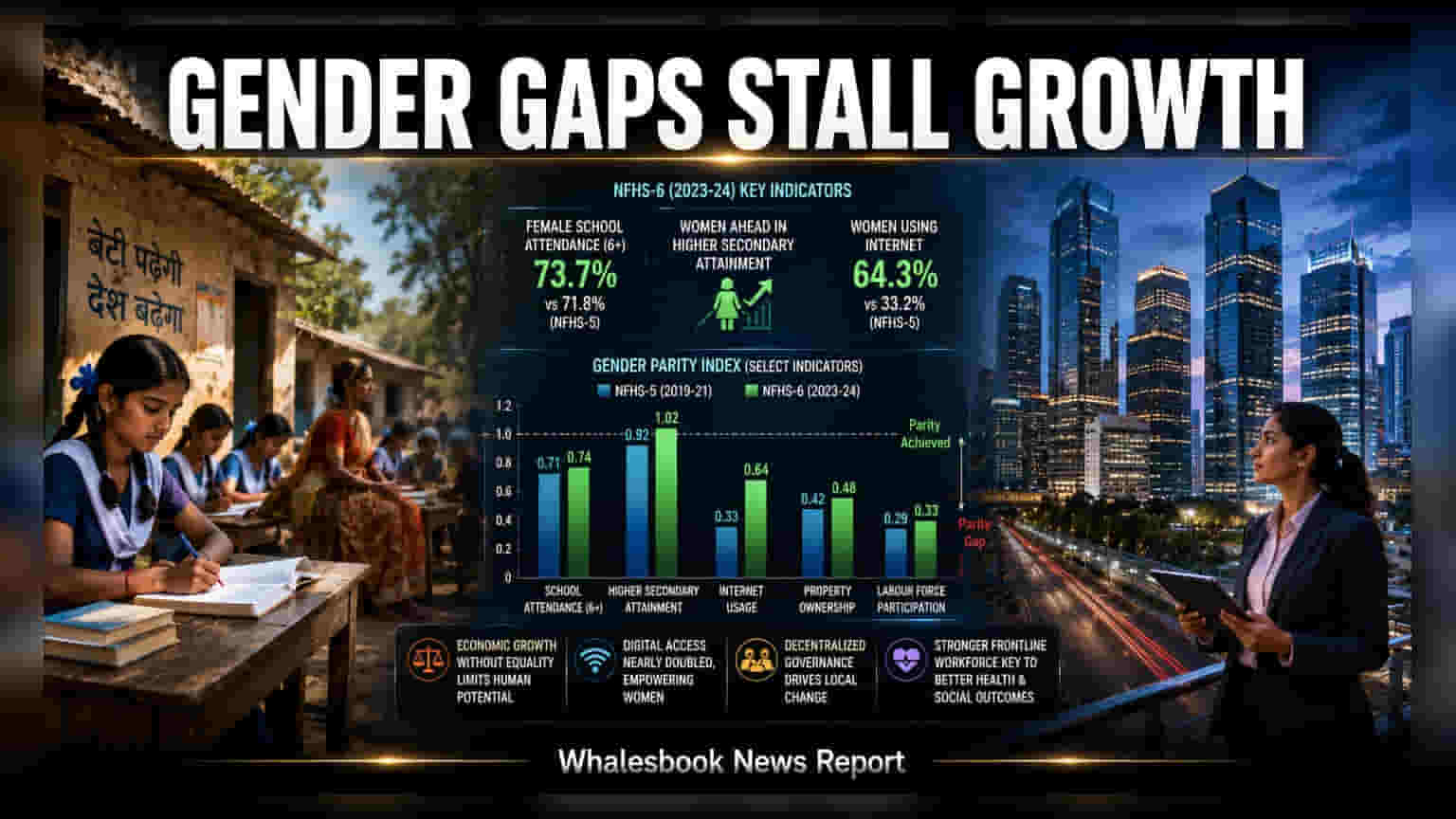
The latest NFHS-6 report for 2023-24 shows national female school attendance has risen to 73.7%. While women have surpassed men in higher secondary attainment, the data reveals a disconnect between economic growth and social development in some states. Long-term productivity remains tied to how these gaps are bridged through improved education and governance.
The National Family Health Survey-6 (NFHS-6), released by the Ministry of Health and Family Welfare in May 2026, provides a critical update on India's social indicators. The survey results for 2023-24 show that national female school attendance for those aged six and older has reached 73.7%, a rise from 71.8% in the previous survey. For the first time, women have also achieved a slight lead over men in higher secondary attainment.
The Economic and Social Paradox
Despite national gains, the data highlights a persistent gap between state-level economic prosperity and social development. High-income states often exhibit lower educational parity, suggesting that financial growth alone does not automatically resolve disparities in access to education or economic security for women. For instance, states like Telangana and Gujarat continue to face challenges regarding women’s education and property ownership. Experts note that when gender-unequal distribution of resources persists, it can hamper long-term human capital formation, which is a vital component of sustainable economic productivity.
Digital Access and Data Changes
One of the most significant positive shifts identified in the latest survey is the rise in digital connectivity. Internet usage among women has nearly doubled, rising from 33.2% in NFHS-5 to 64.3% in NFHS-6. This increased access is a crucial factor for modern labor force participation and digital empowerment. However, the survey itself has undergone structural changes. The number of indicators tracked has been reduced from 131 to 101. Critics and policy analysts have pointed out that the omission of key metrics such as anaemia, infant mortality, and sex ratio at birth may limit the ability to monitor vulnerable populations and track the effectiveness of various social welfare schemes accurately.
Governance and Future Monitorables
Improving these outcomes relies heavily on decentralized governance models, such as integrating Panchayati Raj Institutions with local self-help groups. These models are essential for managing local service delivery, including water access and reproductive health support. A key focus for the future, according to the data insights, will be the formalization and adequate support of the frontline workforce, including Aanganwadi workers and health activists. Investors and policymakers will likely monitor how states address these regional imbalances, as the quality of education and health infrastructure directly influences the country's long-term economic potential and workforce readiness.