

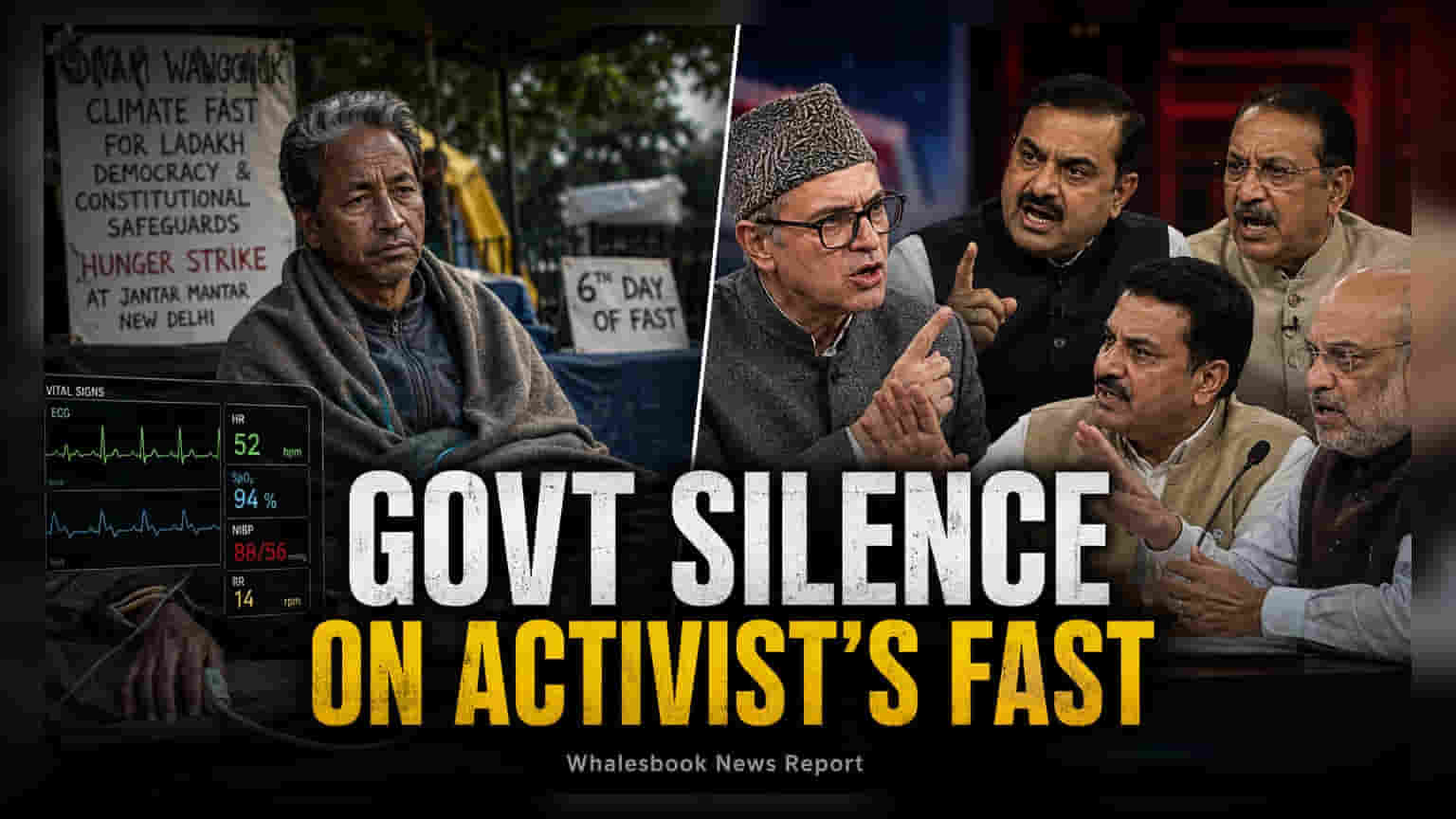
Activist Sonam Wangchuk’s hunger strike against alleged NEET-UG exam irregularities has entered its third week, with health concerns rising. The protest is pressuring the government for accountability regarding examination integrity and education policy.
Activist Sonam Wangchuk continues his hunger strike at Delhi's Jantar Mantar, marking nearly three weeks of protest against alleged irregularities in the National Eligibility cum Entrance Test (NEET-UG). The ongoing demonstration has drawn public attention to concerns regarding the integrity of large-scale competitive examinations in India.
Health Impact and Legal Petitions
As the fast extends into its third week, medical reports indicate significant physical strain on the activist. Dr. Satish Lamba, who has been monitoring his health, confirmed that Wangchuk has lost more than nine kilograms during this period. The deteriorating health condition has led to a formal petition filed in the Delhi High Court, requesting urgent medical intervention and potentially force-feeding to ensure the activist's safety.
Political and Public Discourse
Former Jammu and Kashmir Chief Minister Omar Abdullah has publicly questioned the central government's response to the protest. Comparing the situation to past instances where government officials engaged in dialogue with activists, Abdullah criticized the current lack of official communication regarding Wangchuk's demands. The protesters are specifically calling for an investigation into the NEET-UG examination process and the resignation of the Union Education Minister.
Accountability and Next Steps
The protest is supported by the Cockroach Janta Party (CJP), led by founder Abhijeet Dipke, which is actively seeking a resolution through dialogue. The primary focus of the protesters remains the perceived lack of transparency in examination systems and the government's responsibility toward the students affected by these alleged issues. Investors and market participants often monitor such events when they involve education policy, regulatory shifts, or significant social unrest, as these can sometimes influence the stability of related sectors or public sentiment regarding government administrative efficiency. The immediate future of this situation depends on whether the government chooses to initiate formal talks or if the legal proceedings in the Delhi High Court lead to a court-mandated intervention.