

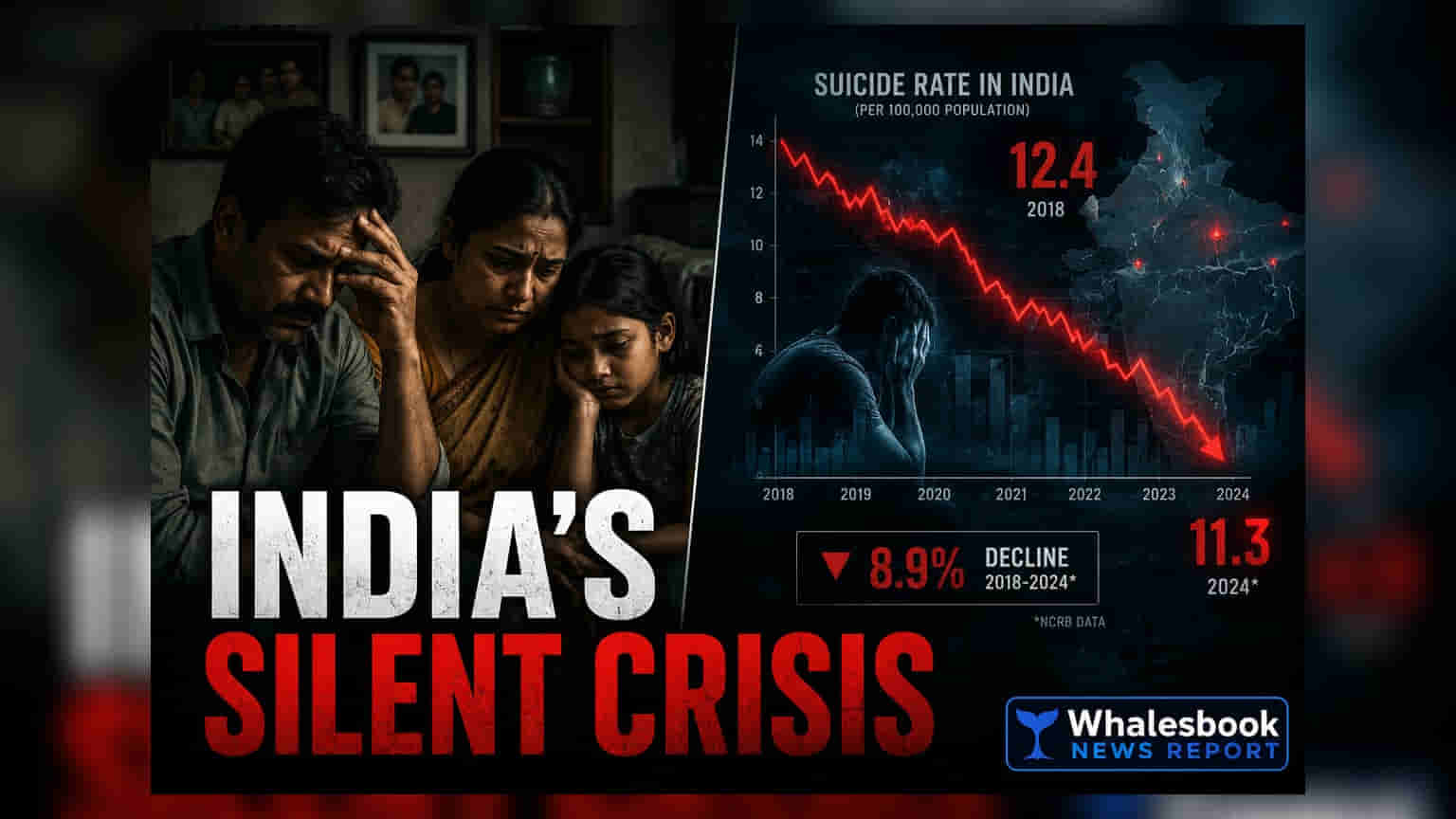
New data from the National Crime Records Bureau indicates that illness, rather than agrarian distress, is now a leading cause of suicide in India. Over 30,600 lives were lost to health-related issues in 2024, a 45% increase over the last decade. This shift highlights a growing public health challenge with significant implications for the healthcare sector and policy planning.
What The NCRB Report Shows
The National Crime Records Bureau (NCRB) recently released its report, "Accidental Deaths and Suicides in India 2024," highlighting a change in the primary drivers of suicide cases across the country. Data for 2024 shows that 30,617 individuals died by suicide due to health-related issues. This figure is notably higher than the 10,546 suicides recorded among farmers and agricultural laborers during the same year.
The report breaks down the illness-related cases, attributing 14,305 deaths to mental health struggles and 14,075 cases to chronic diseases. Illness accounted for 18% of the total 170,746 suicides recorded in 2024, ranking behind family problems, which remained the most cited cause at 33.5%.
A Decade-Long Trend
This data reflects a long-term upward trend. Over the past decade, the number of suicides attributed to illness has surged by nearly 45%, rising from 21,178 in 2015 to 30,617 in 2024. As a result, the share of such cases within the total suicide statistics has climbed from 16% to 18%. This consistent increase underscores the growing burden of healthcare costs and mental health challenges on households across various income groups.
Regional Impact Variations
The data shows that the issue is not uniform across the country. The number of states and Union Territories reporting a higher percentage of illness-linked suicides than the national average increased from 12 in 2015 to 16 in 2024. Punjab recorded a high figure, with 50.4% of its reported suicides linked to health issues. Lakshadweep reported the highest proportion, though the absolute number of cases there was small. Sikkim also noted a high figure at 34.4%.
Implications for the Healthcare Sector
For investors and policymakers, this data serves as a significant indicator of the growing stress on the Indian public health system. The shift suggests that financial strain due to medical expenses, alongside the prevalence of chronic and mental health conditions, is becoming a primary economic and social disruptor.
This trend often translates into higher demand for specialized healthcare services, including mental health support, diagnostic services, and affordable long-term medical care. It also highlights the rising importance of health insurance and government-backed healthcare initiatives, as households increasingly face the financial risk of prolonged illness.
What To Track Next
The key area for observation will be how public health policy evolves to address these gaps. Investors and sector analysts may track government spending on mental health infrastructure, the expansion of health insurance coverage, and the performance of private healthcare providers focusing on chronic disease management. Future updates from the ministry and health organizations regarding accessibility and affordability of care will be important indicators for the healthcare sector's growth and social impact.