

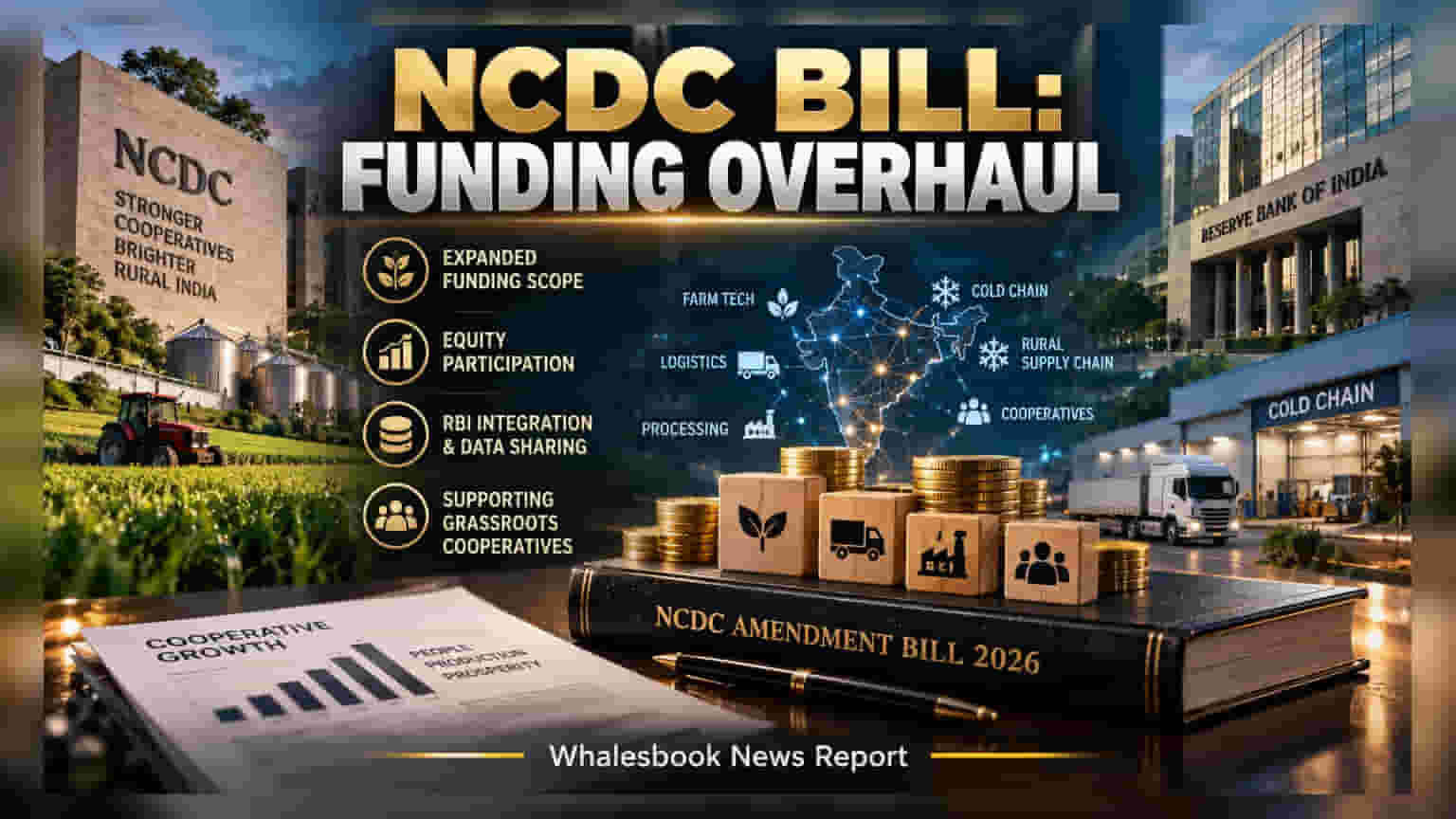
The NCDC Amendment Bill 2026 introduces major changes to how India's cooperative sector is financed. It allows direct equity participation and expands funding to include technology and logistics providers. This move aims to modernise agricultural supply chains but brings new risks regarding the use of public capital.
The government has proposed the NCDC Amendment Bill 2026 to update the National Cooperative Development Corporation's operational framework, which dates back to 1962. The primary goal is to shift how the corporation provides financial support to the cooperative sector. Historically, the NCDC focused on providing debt financing to registered cooperative societies. The new bill intends to broaden this scope significantly.
New Scope for Cooperative Funding
Under the proposed changes, the NCDC will be allowed to fund entities that are not registered cooperative societies but work closely with the sector. This includes technology companies, logistics providers, and processing units. The government expects this to help bridge credit gaps in rural supply chains. For example, a cold chain logistics company or a farm-tech start-up that serves cooperatives could now potentially access funding that was previously restricted to the cooperative societies themselves.
Direct Equity and Capital Risk
Beyond traditional debt, the bill allows the NCDC to take direct equity stakes in cooperative-linked ventures. This is a significant change in how the government deploys capital. While debt provides a predictable return through interest, equity participation means the NCDC will share the business risks of these ventures. For investors and the public, this introduces concerns about potential capital losses. The success of this policy will depend on the strength of the NCDC's due diligence process and its ability to manage exit strategies to ensure public funds are not tied up in failing projects.
Regulatory Integration with RBI
Transparency is a key feature of the proposed legislation. The bill authorises the NCDC to collect and share credit data directly with the Reserve Bank of India. The cooperative sector has often struggled with issues of information asymmetry, where lenders had limited data on the financial health of borrowers. By aligning with RBI standards, the NCDC aims to improve loan recovery rates and ensure that credit appraisal processes are consistent with those of larger financial institutions.
Protecting Grassroots Societies
There is significant discussion regarding how these changes will impact small-scale members. Critics have noted that expanding the mandate to include private or larger commercial entities could potentially divert funds away from the core segment: the Primary Agricultural Cooperative Credit Societies. To address this, the policy framework is expected to include a 'cooperative-benefit test' to ensure that the primary focus remains on supporting small-scale members rather than just funding large commercial projects.
Investors and stakeholders should monitor how the government defines the eligibility criteria for these new entities. The effectiveness of the new framework will ultimately depend on the implementation of strict accountability measures and the NCDC's ability to balance commercial development with its social objective of supporting grassroots cooperatives.