

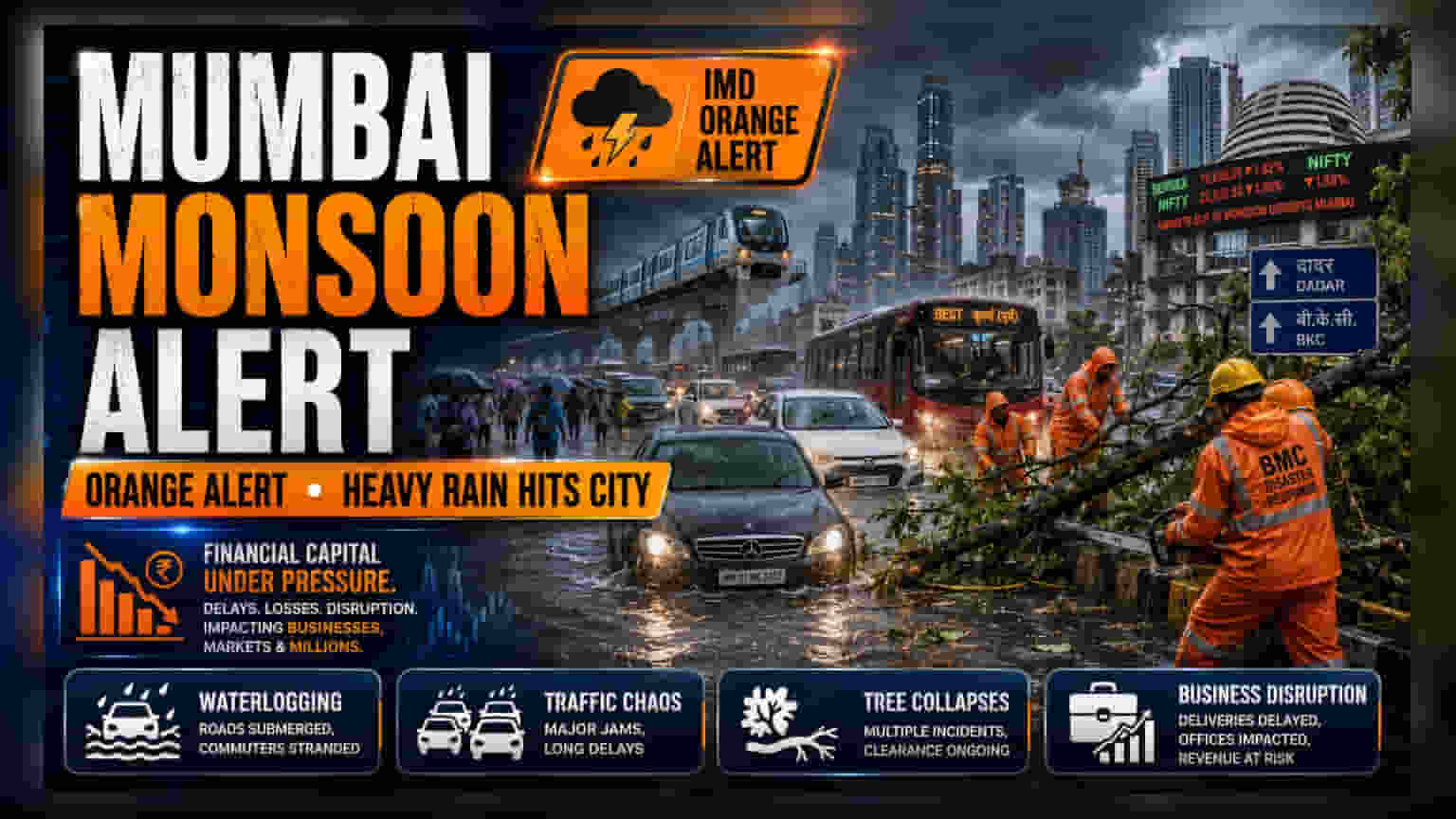
Mumbai is under an Orange Alert for heavy rains, causing infrastructure disruptions and traffic issues. For investors, these events highlight recurring economic costs related to urban logistics, productivity, and the resilience of city infrastructure.
What Happened
On July 1, 2026, the India Meteorological Department (IMD) issued an Orange Alert for Mumbai, Thane, and Palghar, as intense monsoon showers disrupted the city. Heavy rainfall has led to significant waterlogging, uprooted trees, and traffic congestion, particularly affecting western suburbs like Andheri. Infrastructure incidents, such as tree collapses on SV Road and near the DN Nagar Metro Station, have caused transit delays. Authorities are currently managing the situation, with emergency services deployed to clear debris and restore movement in affected areas.
The Economic Footprint of Monsoon Disruptions
Mumbai, as a major financial hub, faces recurring economic costs during the peak monsoon season. While the rain is essential for the region, sudden, intense spells often create logistical hurdles. For businesses, this translates to delays in the supply chain, as waterlogged streets can slow down transport and last-mile delivery services. Companies in the logistics, quick commerce, and retail sectors often experience short-term operational challenges when delivery routes are compromised by poor visibility or flooded roads.
Productivity and Business Continuity
The impact on daily productivity is a standard monitorable for local businesses. As commuting becomes difficult, office attendance and the movement of goods can be temporarily affected. Historically, Mumbai’s infrastructure has been tested by such weather events, leading to periodic discussions regarding the need for robust urban drainage and flood management systems. These structural requirements often drive municipal and state-level spending on public infrastructure, which impacts capital allocation in regional development projects.
Insurance and Business Resilience
From an investor perspective, weather-related events often bring focus to the general insurance sector. Increased incidents of property damage, vehicle waterlogging, and inventory loss can lead to a rise in insurance claims. For businesses, this reinforces the importance of disaster resilience and the value of comprehensive insurance coverage. As cities face more frequent extreme weather patterns, industries are increasingly factoring in climate-related operational risks when planning for long-term growth and business continuity.
What Investors Should Track
Investors monitoring Mumbai’s economic performance typically keep an eye on how quickly local infrastructure recovers from these events. Key monitorables include the efficiency of municipal road clearing operations, the status of major transit lines like the suburban rail and metro, and any updates on long-term infrastructure projects aimed at improving drainage and flood resilience in the city. Additionally, the ability of logistics and retail-focused companies to navigate these periods without significant operational downtime remains a relevant metric for assessing business agility.