

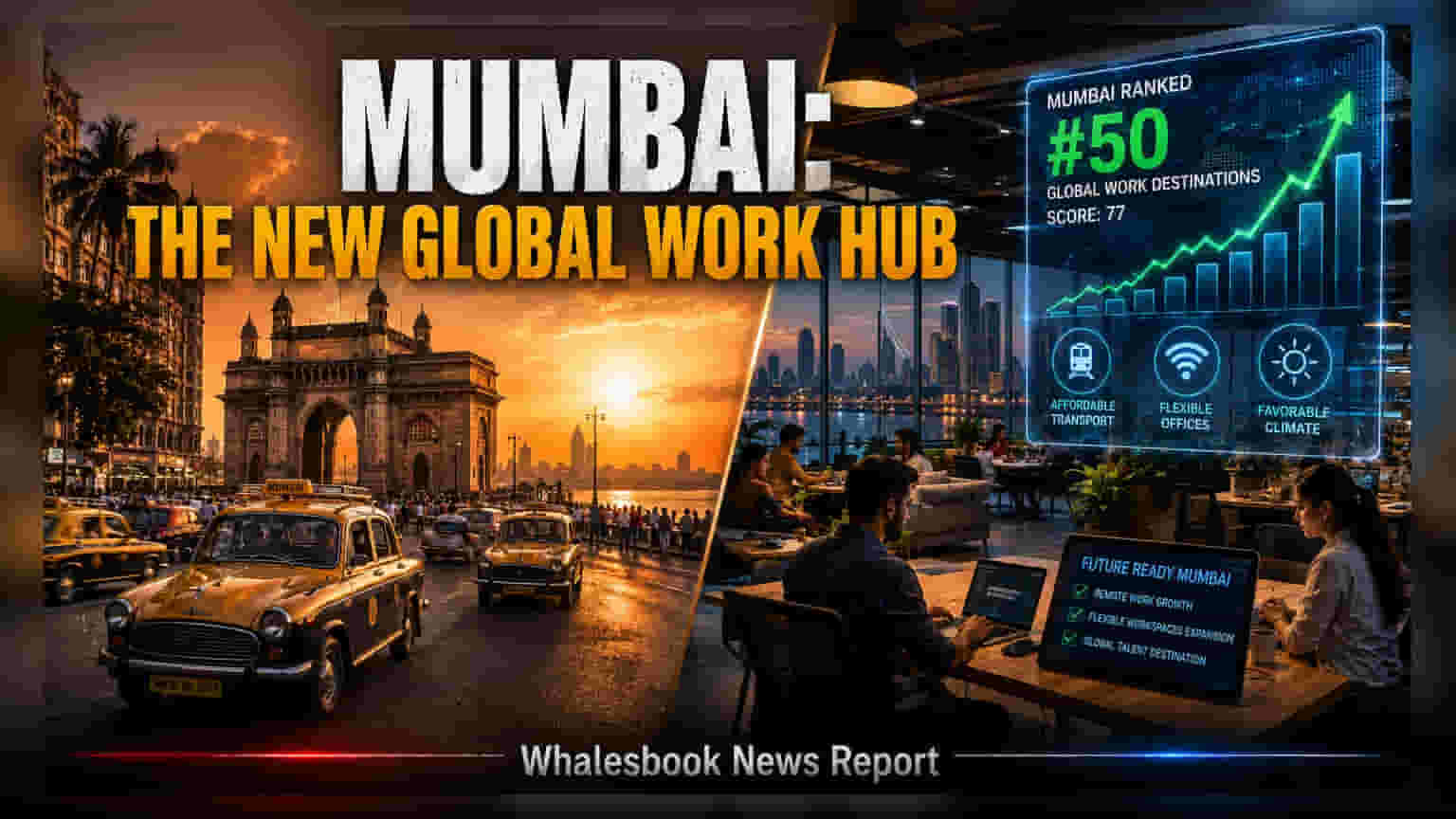
Mumbai has become the first Indian city to feature in the IWG 2026 Work From Anywhere Index, scoring 77 and outranking major global hubs like London. This recognition highlights India's leading position in the flexible workspace market, with national inventory projected to cross 100 million square feet in 2026, offering key context for investors monitoring commercial real estate growth.
Mumbai has debuted on the IWG 2026 Work From Anywhere Index, securing the 50th position globally with a score of 77. This ranking is a significant milestone as it marks the first time an Indian city has been included in this annual assessment of global destinations for remote work. The city performed well in areas like transport affordability, climate, and the availability of flexible office spaces, effectively outperforming established international financial hubs such as London and Miami in these specific metrics.
This development serves as a proxy for the broader transformation of India's commercial real estate sector. The rise in remote and hybrid work policies has accelerated the demand for flexible office solutions. According to industry data from Cushman & Wakefield, India currently leads the global flexible workspace maturity index with a score of 100, significantly outpacing other major economies like the UK and the US. This maturity is driving expansion, with India's total flexible office inventory expected to cross the 100 million square foot milestone in 2026.
For investors, this trend illustrates a shift toward higher-value products in commercial real estate. Developers and operators are increasingly focusing on managed office spaces that cater to the evolving needs of hybrid workers. The ability of a city to attract remote professionals and digital nomads is becoming a factor in long-term urban economic value, which in turn influences demand for commercial property leases.
However, the index also highlights specific risks and infrastructure constraints that investors should monitor. While Mumbai scored well on cost and physical workspace availability, it faced lower scores in categories such as broadband speed and quality, as well as the availability of local cultural events. These infrastructure gaps are critical, as high-quality digital connectivity is a non-negotiable requirement for the sustainable growth of remote work ecosystems. If these bottlenecks are not addressed, they could limit the city's ability to maintain its competitive edge against global peers like Bangkok, Tokyo, and Barcelona, which topped the index.
Additionally, the broader economic context remains a factor. While the flexible workspace sector is currently in a growth phase, it remains sensitive to global macroeconomic shifts. Any slowdown in corporate hiring or changes in corporate real estate strategies could impact leasing velocity in the future. The key monitorable for investors moving forward will be the pace of infrastructure upgrades, the sustained absorption rates in the office leasing market, and how developers manage the balance between expansion and occupancy levels in a changing work environment.