 Whalesbook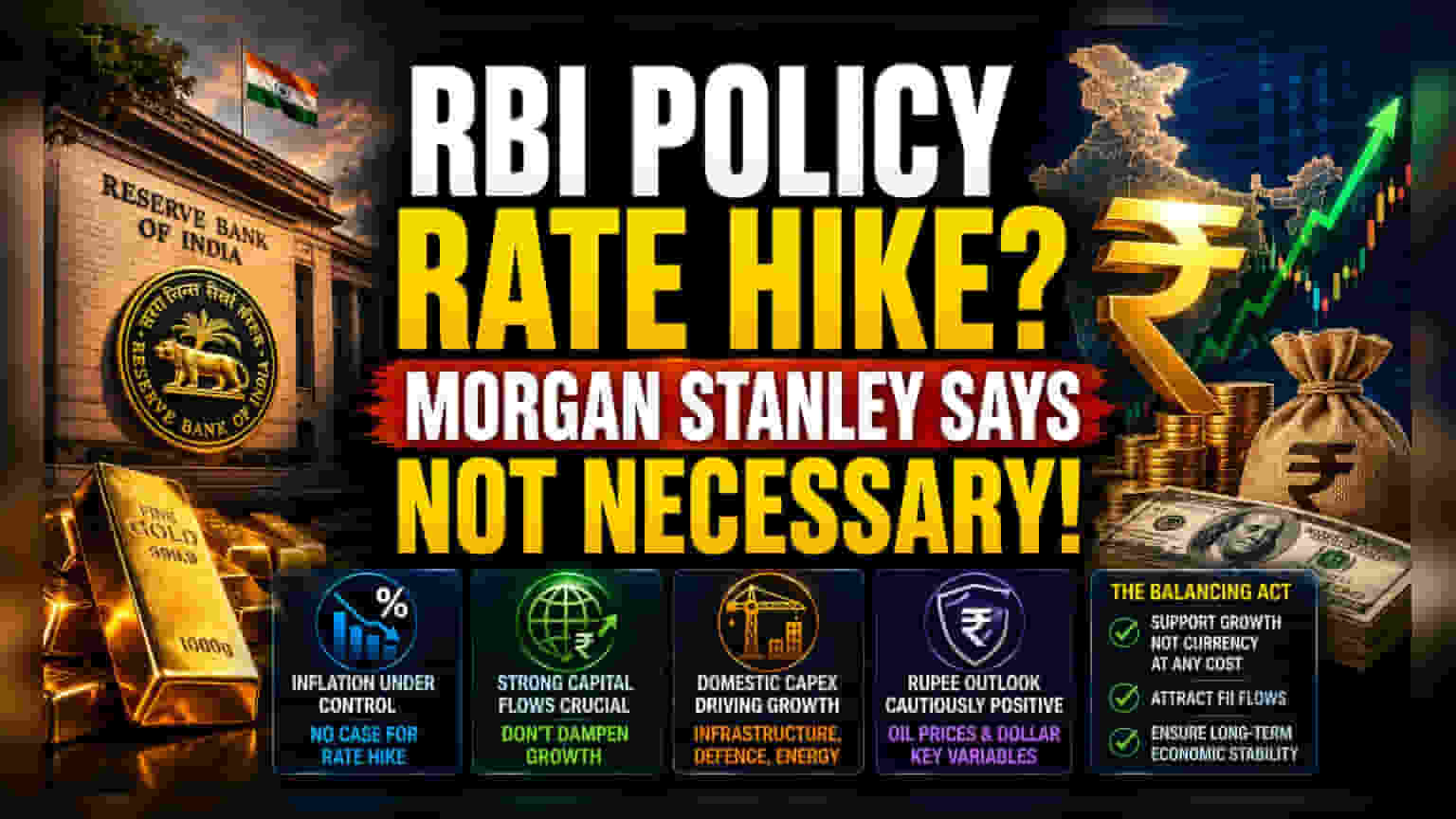


Monetary Policy at a Crossroads
As the Reserve Bank of India prepares for its upcoming monetary policy committee meeting on June 5, the debate surrounding interest rate adjustments has intensified. While market participants often look to rate hikes as a primary lever for currency stabilization, recent analysis from Morgan Stanley challenges the necessity of such moves. The firm contends that current economic indicators, specifically regarding inflation and the current account deficit, do not support a tightening bias. By avoiding aggressive rate increases, the central bank may better position the economy to capture global capital flows rather than triggering a liquidity-driven contraction.
The Equity Risk Premium and Capital Flows
Foreign institutional investment remains a cornerstone of India's equity market stability. The argument against higher rates is rooted in the sensitivity of these flows to domestic yield differentials and broader growth expectations. If the RBI adopts a hawkish stance, it risks dampening the very economic growth that attracts foreign capital in the first place. Morgan Stanley emphasizes that monetary policy should instead focus on mechanisms that simplify and enhance capital inflow accessibility. This shift in strategy reflects a broader institutional view that currency management is better served by strengthening the underlying balance of payments rather than relying on the blunt instrument of interest rate hikes.
Structural Drivers of Domestic Growth
Despite global headwinds, India's investment environment remains robust due to a distinct capital expenditure cycle. This trajectory is supported by long-term structural shifts including the localization of supply chains and significant allocations toward defense and energy transition infrastructure. Unlike other Asian economies that remain heavily reliant on export demand, India is leveraging domestic infrastructure spending to insulate itself from global volatility. This internal focus is expected to provide a floor for growth, provided that monetary policy does not inadvertently stifle the momentum of private and public sector investment.
The Currency Outlook and Institutional Risks
The rupee has faced pressure stemming from balance-of-payments dynamics, yet the outlook remains cautiously constructive. Analysts expect that a cooling in global oil prices combined with potential softening in the U.S. dollar will naturally alleviate the burden on the Indian currency. However, the bear case remains rooted in external shocks; should global energy markets decouple from current expectations or if systemic risk triggers a flight to safety in the U.S. dollar, the RBI could find its current strategy tested. Any divergence between the RBI's accommodative stance and the Federal Reserve's trajectory could widen the yield gap, potentially complicating the firm’s optimistic forecast for domestic growth and capital stability.