 Whalesbook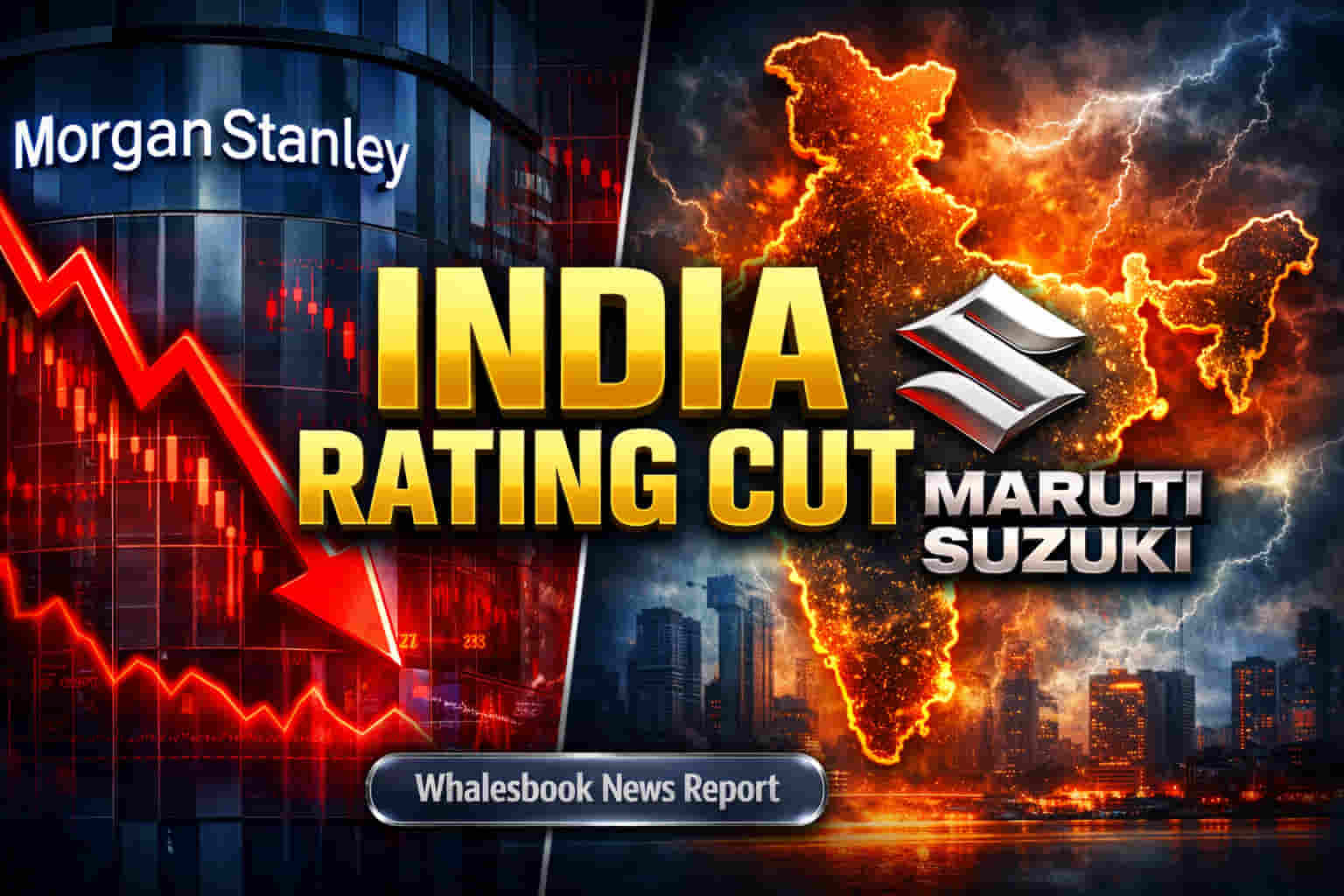


### The Alpha Angle: Strategic Pivot to Tech Havens Amidst AI Disruption
Morgan Stanley's decision to downgrade India to an 'equalweight' rating marks a significant tactical shift, moving beyond generic macroeconomic concerns to identify a more nuanced investor preference. The firm's analysis pivots towards markets like South Korea and Taiwan, which are perceived as better positioned to capitalize on the ongoing artificial intelligence revolution and potential peaks in the technology cycle. This recalibration suggests a move away from India, despite its structural economic improvements, towards regions offering more direct exposure to AI-driven growth themes and potentially more attractive valuations. The exclusion of auto manufacturer Maruti Suzuki from Morgan Stanley's regional focus list further underscores this strategic re-evaluation, hinting at a broader preference for technology-centric growth drivers and a potential reassessment of India's automotive sector prospects in the current global investment climate.
### Market Sentiment Shift and Valuation Discrepancy
The firm's analyst, Jonathan Garner, explicitly linked the downgrade to "wide uncertainties around geopolitical developments" and the "historically negative exposure of the Indian market to oil supply risks." While acknowledging India's reduced oil intensity, Morgan Stanley highlighted that "absolute valuations still expensive" remain a deterrent for international investors. This sentiment is echoed by other analyses indicating that Indian equities, while showing improved absolute metrics, continue to trade at a premium compared to regional peers like China, South Korea, and Taiwan. In contrast, South Korea and Taiwan are seen as offering "much better value-growth propositions amid tech tailwinds, earnings upgrades, and cheaper valuations". Morgan Stanley's current target implies a 15.5% upside for the MSCI Emerging Markets index, notably less than the 20.1% projected for India's Sensex, signalling a preference for diversified emerging market exposure over concentrated Indian holdings [cite: Original News]. This reallocation trend has been observed, with foreign investors increasingly favoring Taiwan and South Korea over India.
### The AI Disruption Factor and Sectoral Preferences
A critical element driving Morgan Stanley's recalibration appears to be the accelerating impact of Artificial Intelligence. While advanced economies and some emerging markets are well-positioned to harness AI, others face challenges due to inadequate infrastructure and skills, risking a competitive disadvantage. Markets like South Korea and Taiwan, with strong technological foundations, are better poised to benefit from AI advancements and semiconductor cycles, which have historically driven their market performance. Conversely, India's services-led economy, while showing resilience, faces concerns about potential AI disruption to its significant IT and business process outsourcing sectors. The absence of a dominant AI theme within the Indian market, unlike the tech-heavy indices of its Asian counterparts, contributes to its relative unattractiveness for global investors currently chasing AI-linked stocks.
### Maruti Suzuki's Exclusion: A Microcosm of Macro Shifts
Morgan Stanley's decision to remove Maruti Suzuki India Ltd. from its Asia-Pacific ex-Japan, GEM, and Asia Thematic Focus List is more than a stock-specific call; it reflects a broader strategic lens. While Maruti Suzuki has shown robust sales figures, particularly in exports, and maintains a strong position in the Indian auto market, the firm's exclusion suggests a potential re-evaluation of its growth prospects or relative attractiveness within a changing global investment landscape. Analysts generally hold a 'Buy' consensus for Maruti Suzuki, citing growth potential and strong market share, but Morgan Stanley's move indicates a tactical decision to prune holdings that may not align with its forward-looking sector preferences, particularly as technology and AI become dominant investment narratives. This action underscores a granular application of the broader macro downgrade, potentially signaling concerns about cyclical industries versus structural technology growth.
### The Bear Case: Geopolitical Shocks, Valuation Pockets, and AI Headwinds
Despite India's reduced oil intensity, its continued reliance on oil imports makes it susceptible to geopolitical shocks originating from West Asia. Escalating tensions can lead to oil price spikes, disrupting supply chains and impacting investor sentiment, despite the structural improvements in India's energy balance. Furthermore, while India's market has experienced weakness, its valuations often remain at a premium compared to other emerging markets, particularly those with significant tech exposure like South Korea and Taiwan. The potential for AI to disrupt India's crucial services export sector presents another layer of risk. Morgan Stanley's previous downgrades, such as that for ITC due to excise duty hikes, highlight the firm's willingness to make decisive calls based on specific sector headwinds and valuation concerns. The historical context also shows Morgan Stanley previously moving 'underweight' on India when it was outperforming peers, favoring South Korea and Taiwan, underscoring a pattern of tactical asset allocation shifts based on evolving risk-reward dynamics.
### Future Outlook and Emerging Market Dynamics
Morgan Stanley's downgrade of India to 'equalweight' occurs within a broader context of shifting investor preferences across emerging markets. While India's macro stability and growth story remain positive according to some strategists at the firm, the immediate focus has pivoted. The firm's preference for South Korea and Taiwan aligns with a global trend of favoring economies with strong technological underpinnings and direct exposure to AI growth stories. The near-term outlook suggests international investors may continue to favor these tech-centric markets until the tech cycle potentially peaks or Indian valuations become more compelling. Any de-escalation in West Asian tensions could alter the risk premium associated with oil-dependent economies, but the AI disruption narrative and ongoing valuation comparisons are likely to remain dominant themes influencing emerging market allocations. Investors will monitor whether India's domestic demand and structural reforms can offset the pull from technologically advanced peers.