

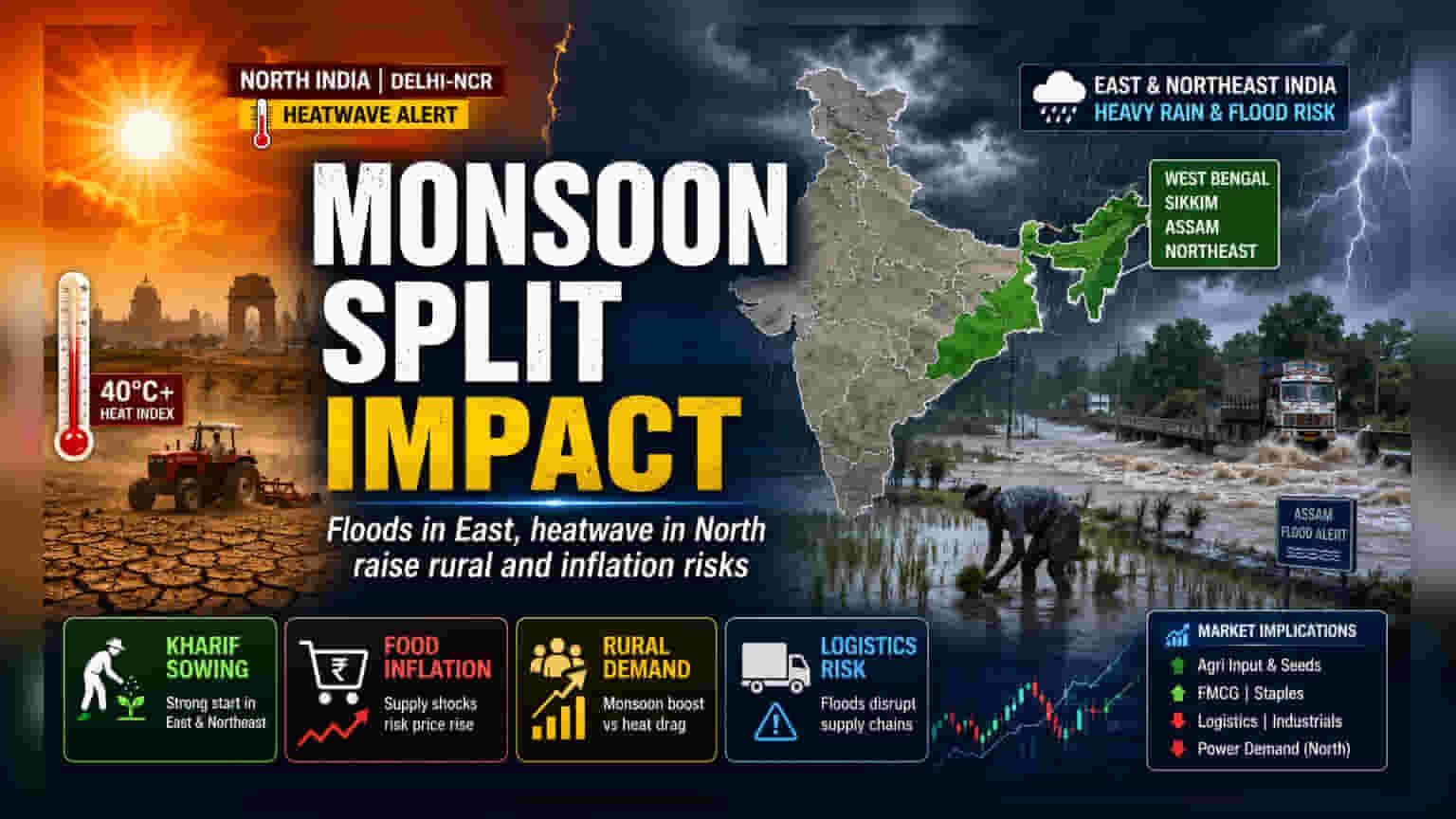
As the southwest monsoon brings heavy rain to eastern India and heatwaves persist in the north, the market is assessing the potential impact on kharif crops and rural spending. Investors are monitoring how this rainfall pattern influences food inflation, consumer goods sales, and demand for agricultural inputs.
What Happened
The India Meteorological Department (IMD) has reported that the southwest monsoon is progressing across India, though its impact is uneven. Eastern and northeastern regions, including West Bengal, Sikkim, and parts of the Northeast, are experiencing heavy rainfall, with red alerts issued for potential flooding and landslides. Conversely, Delhi-NCR and parts of northern India continue to face heatwave conditions, with the monsoon onset in the national capital delayed until early July.
The Rural Economy Connection
For Indian equity markets, the monsoon is a key indicator of economic health, particularly for the rural economy. A normal and well-distributed monsoon is typically the backbone of agricultural output, specifically for Kharif crops like rice, cotton, and oilseeds. When rainfall is timely, rural income usually rises, which often boosts demand for consumer goods, two-wheelers, and tractors. Investors closely watch sowing data in July to gauge if rural purchasing power will improve in the second half of the year.
Inflation and Crop Risks
Erratic rainfall patterns, such as the current contrast between flooding in the East and heatwaves in the North, create risks for agricultural production. If floods damage standing crops or if heatwaves delay sowing, it can reduce supply in the market. Supply disruptions in essential food items often lead to spikes in food inflation, which is a major concern for the Reserve Bank of India (RBI). Higher food prices can impact broader inflation numbers, influencing the RBI's interest rate decisions, which in turn affects borrowing costs for businesses and consumers.
Sectoral Implications
Different sectors react differently to monsoon developments. The fertilizer sector typically sees a surge in demand during the initial sowing months as farmers prepare fields. Conversely, insurance companies that provide crop insurance can see an increase in claim payouts if flooding leads to crop damage in affected states like West Bengal and Assam. For the power sector, persistent heatwaves in Northern India keep electricity demand elevated, which is a factor that market participants track for utility companies.
Infrastructure and Logistics Risks
Heavy rainfall, especially when it leads to flooding as warned by authorities, presents operational risks. In states currently under red and orange alerts, infrastructure projects, mining operations, and logistics networks can face temporary disruptions. These delays can impact the quarterly execution schedules of companies with significant assets in these regions.
What Investors Should Track
The most important monitorable over the next few weeks is the official Kharif sowing data released by the Ministry of Agriculture. Additionally, updates on rainfall distribution compared to the long-period average will clarify whether the monsoon is aiding or hindering crop yields. Market participants will also look for management commentary from FMCG and auto companies in upcoming quarterly results, as these firms often discuss the impact of monsoon performance on their rural sales volumes.