

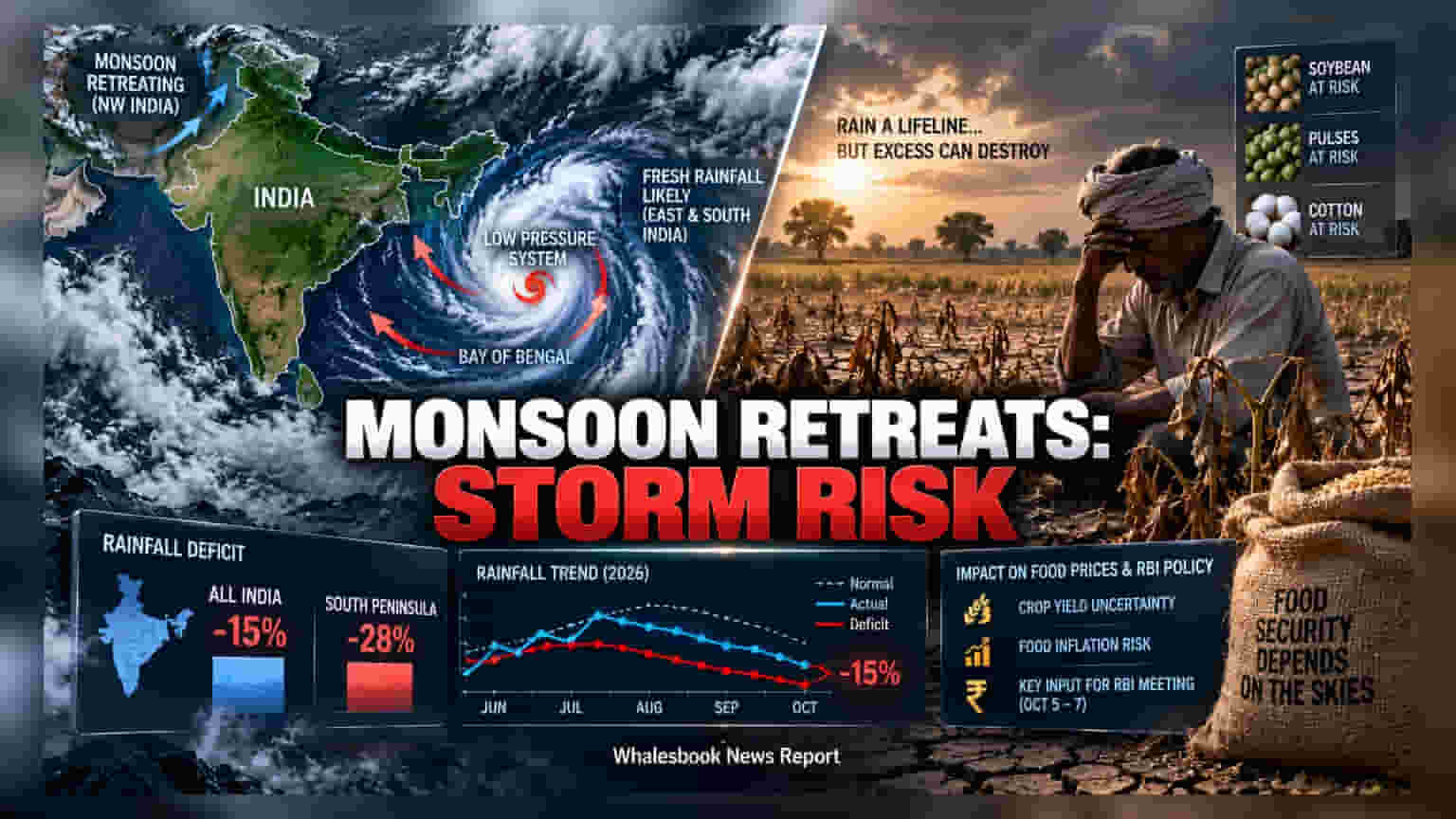
A brewing storm in the Bay of Bengal threatens to damage late-season crops even as the monsoon begins its withdrawal from Northwest India. This weather volatility creates uncertainty for the Reserve Bank of India’s upcoming policy meeting, which takes place before September's inflation data is released.
The Indian monsoon has begun its retreat from Northwest India, trailing about two days behind the usual schedule. While this typically signals the end of the rainy season, a new low-pressure system forming over the Bay of Bengal is now expected to bring fresh rainfall to the South Peninsula and East India. This development introduces significant uncertainty for the farm sector, which currently grapples with a national rainfall deficit of 15 percent, and an even steeper 28 percent shortfall in the South Peninsula.
For farmers, this late-season moisture is a double-edged sword. While parched fields growing soybeans, pulses, and cotton could benefit from timely rain, the risk of an intense storm is high. Excessive rainfall at this stage can lead to water-logging, flooding, or damage to crops that are nearing harvest. Any significant destruction could disrupt supply chains and push food prices higher, creating problems for consumers and businesses alike.
This weather pivot adds a layer of complexity to the Reserve Bank of India’s planning. The Monetary Policy Committee is scheduled to meet between October 5 and October 7 to review interest rates. However, the official September consumer price inflation data will not be available until October 12. Without this critical data, the central bank must rely on indirect indicators, such as reservoir levels and early reports on crop health, to estimate the risks to food inflation.
Investors may monitor reports on crop damage closely, as food prices are a primary driver of overall inflation in India. If the weather system causes widespread crop loss, it could lead to supply-side pressure that keeps inflation elevated. The central bank’s upcoming commentary will be important, as policymakers balance the need for growth against the risk of persistent food-supply volatility. The ultimate impact on interest rates will depend on whether these late-season rains provide relief to soil moisture or become a catalyst for further supply constraints.