 Whalesbook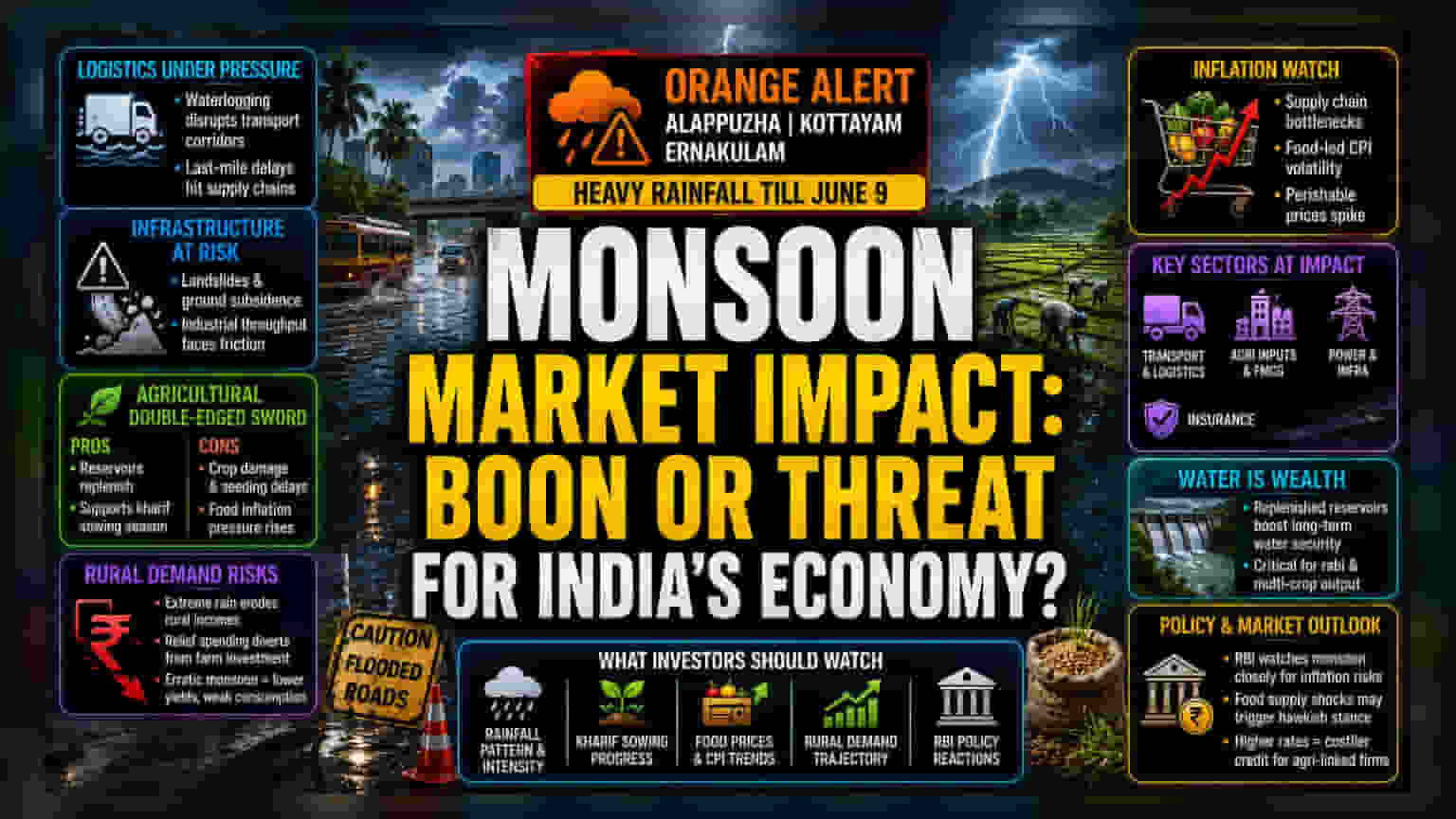


The Logistics of Precipitation
The immediate activation of orange alerts across Alappuzha, Kottayam, and Ernakulam serves as a structural stress test for Kerala’s urban infrastructure. Beyond the obvious hazards of landslides and waterlogging, the concentration of heavy rainfall over a compressed window necessitates a shift in logistics management for state-wide distribution networks. Forecasts indicating sustained downpours through June 9th suggest that industrial throughput in these regions will likely face friction, as localized flooding consistently disrupts last-mile delivery and primary transport corridors. The potential for ground subsidence in high-risk zones adds a secondary layer of operational risk for infrastructure-heavy enterprises operating within the coastal belt.
Agricultural Beta and Inflation Dynamics
Market participants view the monsoon not merely as a meteorological event, but as the primary lever for Indian agricultural output and rural consumption patterns. With agriculture contributing a significant portion to the nation’s GVA, the arrival of the monsoon is the dominant catalyst for the kharif sowing season. However, the current intensity profile presents a dual-sided narrative. While abundant moisture is required to replenish reservoirs—many of which saw depletion over the previous quarter—excessive early-season precipitation can lead to crop damage, seeding delays, and localized inflationary pressure on perishable commodities. Historical data suggests that when early monsoon surges coincide with logistical bottlenecks, food-led CPI components often exhibit heightened volatility in the subsequent two months.
The Structural Bear Case for Rural Demand
While the consensus remains fixated on the benefits of water replenishment, a more cynical view focuses on the erosion of rural disposable income when weather disruptions are severe. Persistent, extreme rainfall events that trigger structural damage often force government and private capital allocation toward immediate relief and reconstruction, diverting funds away from more productive agricultural investment. Furthermore, if the monsoon follows a trajectory of extreme, erratic bursts rather than sustained, moderate showers, the actual yield realization for key kharif staples may fail to meet the projections set by the Ministry of Agriculture. Investors should remain cautious regarding companies heavily exposed to rural consumption, as the disparity between aggregate rainfall and effective agricultural productivity can widen significantly during high-intensity weather cycles.
Forward Guidance and Policy Sensitivity
The central bank and financial policymakers continue to index their stance on the monsoon's health, given its direct correlation with domestic food inflation. Should the rainfall data for the remainder of June deviate significantly from the long-period average, the Reserve Bank of India may find its hands tied regarding liquidity management. The market expects that any sign of supply-side food shocks resulting from prolonged flooding will be met with a more hawkish tone in future monetary policy meetings, potentially impacting the cost of credit for firms heavily leveraged within the agricultural value chain.